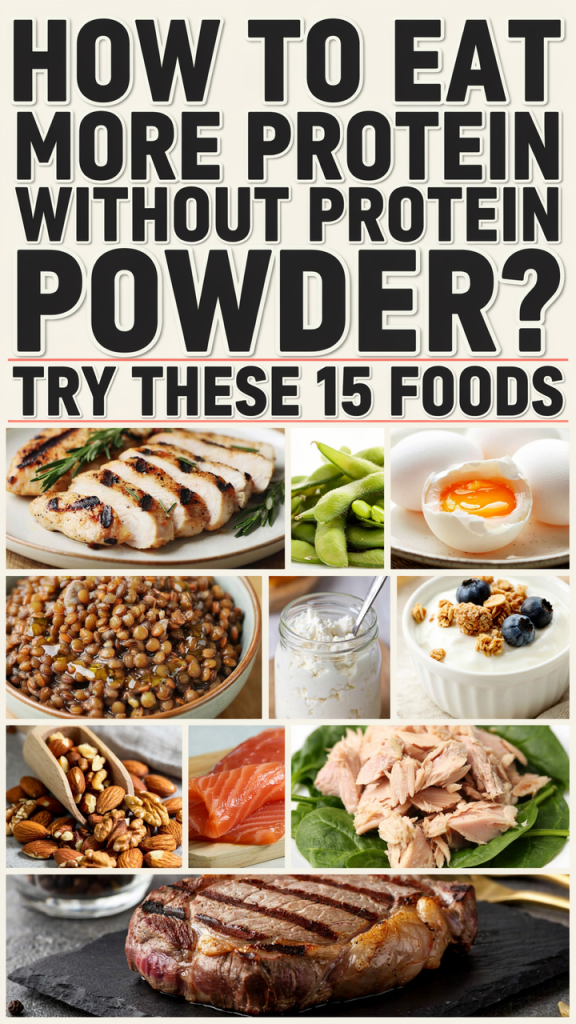
How Can I Eat More Protein Without Protein Powder? Try These 15 Foods
Protein powder is convenient, but it isn’t the only — or always the best — way to hit your protein goals. Whole foods provide not just amino acids but also vitamins, minerals, fiber, and satisfying texture. Below you’ll find 15 practical, tasty, and protein-rich foods, plus recipes, meal ideas, and strategies to boost your daily protein intake without relying on supplements.
Introduction
Whether you’re aiming to build muscle, lose fat, support recovery, or simply feel fuller between meals, protein plays a central role. Many people default to protein powders because they’re fast and concentrated, but whole-food protein sources can be just as effective — and often more enjoyable.
This guide covers 15 foods that are high in protein (no powder required), practical tips for using them, and several easy recipes you can make at home. Each food entry includes protein-per-serving estimates and ways to incorporate it into breakfasts, lunches, dinners, and snacks. By the end you’ll have a realistic toolkit to boost protein across your day using real food.
Why protein matters (brief refresher)
- Supports muscle repair and growth.
- Keeps you feeling full longer, which helps with appetite control.
- Aids in immune function, hormone production, and healthy hair/skin.
- Has a higher thermic effect than carbs and fats (you burn more calories digesting protein).
Now let’s dive into the 15 foods that will help you eat more protein without protein powder.
15 Foods That Pack Protein (No Powder Needed)
1. Eggs
Protein: ~6–7 g per large egg
Eggs are versatile, inexpensive, and complete proteins (they contain all nine essential amino acids). Use them for breakfast, salads, sandwiches, or quick snacks.
Recipe: Veggie Egg Muffins
– Ingredients:
– 6 large eggs
– 1/2 cup chopped spinach
– 1/2 cup diced bell peppers
– 1/4 cup diced onion
– 1/4 cup shredded cheese (optional)
– Salt and pepper to taste
– Instructions:
1. Preheat oven to 350°F (175°C) and grease a 6–8 cup muffin tin.
2. Whisk eggs in a bowl; stir in vegetables, cheese, salt, and pepper.
3. Pour mixture evenly into muffin cups.
4. Bake 18–22 minutes until set. Cool and store in the fridge for 4–5 days.
Quick tip: Pair two eggs with a slice of whole-grain toast and some avocado for a balanced meal.
2. Greek Yogurt
Protein: ~15–20 g per 6-oz (170 g) serving (plain, nonfat)
Greek yogurt is thick, tangy, and rich in protein; it’s perfect for breakfasts, smoothies, or dips.
Recipe: Greek Yogurt Parfait
– Ingredients:
– 1 cup plain Greek yogurt
– 1/2 cup mixed berries
– 2 tbsp chopped nuts (almonds or walnuts)
– 1 tbsp honey or maple syrup (optional)
– Instructions:
1. Spoon half the yogurt into a bowl or jar.
2. Add a layer of berries and half the nuts.
3. Spoon in remaining yogurt, top with berries and nuts, and drizzle honey if using.
Swap flavored yogurts for plain Greek yogurt and add fruit or a touch of sweetener to control added sugars.
3. Cottage Cheese
Protein: ~14 g per 1/2 cup (low-fat)
Cottage cheese is a low-calorie, high-protein dairy choice that works for savory bowls, sweet pairings, or blended into smoothies.
Usage idea: Mix 1/2 cup cottage cheese with sliced peaches and cinnamon for a quick snack.
4. Chicken Breast
Protein: ~26–31 g per 3 oz (85 g) cooked
Lean and adaptable, chicken breast is a go-to for lunch or dinner. Grill, bake, stir-fry, or add to salads and sandwiches.
Recipe: Simple Baked Chicken Breasts
– Ingredients:
– 2 boneless, skinless chicken breasts (~6–8 oz each)
– 1 tbsp olive oil
– 1 tsp garlic powder
– 1 tsp paprika
– Salt and pepper to taste
– Instructions:
1. Preheat oven to 400°F (200°C).
2. Rub chicken with olive oil and seasonings.
3. Place on a baking sheet and bake 18–22 minutes until internal temp reaches 165°F (74°C).
4. Rest 5 minutes, slice, and serve.
Meal idea: Slice leftover chicken over a salad or grain bowl for a protein boost.
5. Turkey Breast
Protein: ~24–29 g per 3 oz (85 g) cooked
Turkey breast is similarly lean to chicken and works well as deli meat, roasted slices, or ground turkey for tacos and sauces.
Quick tip: Choose minimally processed deli turkey and pair with whole-grain bread, greens, and mustard for a protein-forward sandwich.
6. Lean Beef (sirloin, top round)
Protein: ~22–26 g per 3 oz (85 g) cooked
Beef is rich in protein, iron, B12, and zinc. Choose lean cuts and prepare simply to control saturated fat.
Meal idea: Stir-sliced lean beef with broccoli and brown rice makes a satisfying dinner with high protein.
7. Tofu
Protein: ~8–10 g per 3.5 oz (100 g) firm tofu
Tofu absorbs flavors beautifully and is a complete plant protein. It can be grilled, baked, scrambled, or blended.
Recipe: Quick Tofu Stir-Fry
– Ingredients:
– 14 oz firm tofu, drained and cubed
– 2 cups mixed vegetables (bell pepper, broccoli, carrots)
– 2 tbsp soy sauce or tamari
– 1 tbsp sesame oil
– 1 tsp minced garlic
– 1 tsp grated ginger
– Instructions:
1. Heat sesame oil in a pan over medium-high heat. Add garlic and ginger; sauté 30 seconds.
2. Add tofu cubes; brown on all sides (~6–8 minutes).
3. Add vegetables and soy sauce; stir-fry until vegetables are tender-crisp.
4. Serve over rice or quinoa.
Tip: Press tofu for 15–30 minutes to improve texture and crispness.
8. Tempeh
Protein: ~15–20 g per 3 oz (85 g)
Tempeh is fermented soy with a firm texture and nutty flavor. It’s higher in protein and fiber than tofu and great for sandwiches, salads, or stir-fries.
Usage idea: Marinate tempeh in BBQ or teriyaki sauce and bake for sandwiches or grain bowls.
9. Lentils
Protein: ~9 g per 1/2 cup cooked
Lentils are a budget-friendly plant protein loaded with fiber, iron, and B vitamins. They’re great in soups, stews, salads, and veggie burgers.
Recipe: Lemon Lentil Salad
– Ingredients:
– 1 cup cooked green or brown lentils (cooled)
– 1/2 cup diced cucumber
– 1/2 cup cherry tomatoes, halved
– 1/4 cup chopped fresh parsley
– Juice of 1 lemon
– 2 tbsp olive oil
– Salt and pepper to taste
– Instructions:
1. Combine lentils, cucumber, tomatoes, and parsley in a bowl.
2. Whisk lemon juice, olive oil, salt, and pepper; pour over salad.
3. Toss to combine and chill 15 minutes before serving.
Lentils are excellent in meal prep because they hold up well in the fridge.
10. Chickpeas
Protein: ~7–8 g per 1/2 cup cooked; ~15 g per 1/2 cup roasted
Chickpeas are versatile — use them in hummus, salads, curries, or roast them for crunchy snacks.
Recipe: Easy Chickpea Curry
– Ingredients:
– 1 tbsp oil
– 1 small onion, diced
– 2 garlic cloves, minced
– 1 tbsp curry powder
– 1 can (15 oz) chickpeas, drained and rinsed
– 1 can (14 oz) diced tomatoes
– 1/2 cup vegetable broth or water
– Salt and pepper to taste
– Instructions:
1. Heat oil in a pot over medium heat; sauté onion until soft.
2. Add garlic and curry powder; cook 1 minute.
3. Add chickpeas, tomatoes, and broth. Simmer 10–15 minutes.
4. Season to taste and serve with rice or naan.
Roasted chickpeas seasoned with paprika and cumin make a protein-rich snack.
11. Quinoa
Protein: ~8 g per cup cooked
Quinoa is a gluten-free seed that cooks like a grain and is a complete plant protein. It’s a fantastic base for bowls and salads.
Recipe: Quinoa & Edamame Protein Bowl
– Ingredients:
– 1 cup cooked quinoa
– 1/2 cup cooked edamame
– 1/2 cup shredded carrots
– 1/2 avocado, sliced
– 2 tbsp soy sauce or dressing
– Instructions:
1. Layer cooked quinoa in a bowl.
2. Top with edamame, carrots, and avocado.
3. Drizzle with soy sauce or dressing and toss gently.
Quinoa is excellent for meal prep since it stores well in the fridge for 4–5 days.
12. Edamame
Protein: ~8–11 g per 1/2 cup shelled (cooked)
Young soybeans are a great finger food and salad topper. Steam or boil them, sprinkle with sea salt, and snack away.
Serving idea: Add a cup of shelled edamame to a salad to boost protein without changing flavor much.
13. Almonds
Protein: ~6 g per 1 oz (about 23 almonds)
Almonds are a portable snack that provide protein, healthy fats, and fiber. Use them as a topping or blended into nut butter.
Snack idea: Pair a small handful of almonds with a piece of fruit and a string cheese for a balanced mini-meal.
14. Pumpkin Seeds (Pepitas)
Protein: ~8–9 g per 1/4 cup
Pepitas are high in protein and minerals like magnesium and zinc. Sprinkle on yogurt, salads, or oatmeal.
Usage idea: Toast pumpkin seeds with a pinch of salt and cinnamon for a savory-sweet crunchy topping.
15. Salmon (or other fatty fish)
Protein: ~22–25 g per 3 oz (85 g) cooked
Salmon is a protein-rich fish that also provides heart-healthy omega-3 fats and vitamin D.
Recipe: Sheet-Pan Salmon and Vegetables
– Ingredients:
– 2 salmon fillets (~4–6 oz each)
– 2 cups mixed vegetables (asparagus, cherry tomatoes, bell peppers)
– 1 tbsp olive oil
– Salt, pepper, and lemon slices
– Instructions:
1. Preheat oven to 425°F (220°C). Toss vegetables with olive oil, salt, and pepper on a sheet pan.
2. Place salmon fillets on pan and season. Top with lemon slices.
3. Roast 12–15 minutes until salmon flakes easily and vegetables are tender.
4. Serve immediately.
Fish cooks quickly and pairs well with whole grains for a complete meal.
How to combine these foods to meet your protein needs
- Aim for a protein source at every meal and most snacks. Spreading protein across the day improves muscle protein synthesis and satiety.
- Use a mix of animal and plant proteins for variety and fuller nutrient coverage.
- Examples:
- Breakfast: Greek yogurt parfait (15–20 g) + 2 boiled eggs (12–14 g) = ~27–34 g.
- Lunch: Chicken breast salad (4–6 oz chicken = 30–40 g) with quinoa (8 g) = ~38–48 g.
- Snack: Cottage cheese (14 g) with fruit = ~14 g.
- Dinner: Salmon (25 g) + lentil side (9 g) = ~34 g.
- Typical daily protein targets vary by goals and body weight. A common starting point for active adults is 0.6–1.0 g per pound of body weight (1.3–2.2 g/kg). If unsure, consult a dietitian.
Meal prep and shopping strategies
- Batch-cook staples: quinoa, lentils, grilled chicken, and roasted vegetables store well for 3–5 days.
- Keep quick protein snacks on hand: hard-boiled eggs, Greek yogurt, roasted chickpeas, edamame, and nut packs.
- Buy canned beans and canned salmon for long shelf life and quick meals.
- Freeze portioned-out proteins (cooked chicken, tofu-based dishes, salmon filets) to reduce waste and speed dinners.
Frequently asked questions
Is it possible to get enough protein without animal products?
Yes. Combining high-protein plant foods (tofu, tempeh, lentils, quinoa, chickpeas, edamame, nuts/seeds) and eating slightly larger portions can meet protein needs. Track intake for a few days to ensure targets are met.
How much protein is too much?
Very high intakes (well above 2.2 g/kg or 1 g/lb) are rarely necessary for most people. For most healthy adults, intakes up to 2 g/kg are safe. If you have kidney disease or other medical conditions, check with your clinician.
Can I rely on snacks to boost protein?
Yes. Strategic snacks like Greek yogurt, cottage cheese, hard-boiled eggs, or nut + cheese combos can meaningfully contribute to daily protein totals.
Final tips to succeed (encouraging and practical)
- Start small: add one extra protein source to a meal each day for a week and build momentum.
- Make foods you enjoy. If you don’t like tofu, try tempeh or edamame instead.
- Pair proteins with fiber-rich carbs and healthy fats for balance and fullness.
- Use recipes from this article to simplify meal planning — nothing beats a few go-to meals you enjoy.
Conclusion
Eating more protein without protein powder is not only possible, it can be delicious and nutritionally superior. The 15 foods listed here — from eggs, Greek yogurt, and chicken to quinoa, lentils, and salmon — give you a flexible toolkit for crafting high-protein breakfasts, lunches, dinners, and snacks. With a little meal prep and a handful of simple recipes, you can hit your protein goals using whole foods that nourish your body beyond just amino acids.
Pick a few foods from this list to incorporate this week, try one recipe, and notice how your energy and fullness respond. If you want personalized protein targets or meal plans, consider consulting a registered dietitian. You’re already on the right track by seeking practical, whole-food strategies — keep going!