
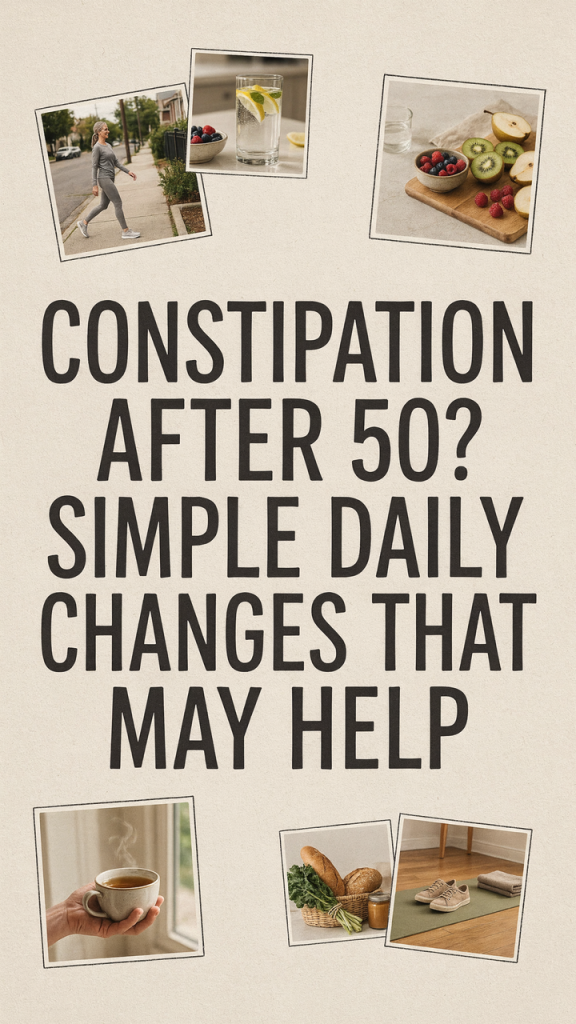
Constipation After 50? Simple Daily Changes That May Help
Constipation is a common and often frustrating problem, especially as we get older. If you’re over 50 and find yourself straining, feeling bloated, or going fewer than three times a week, you’re not alone — but the good news is that small, consistent daily changes can make a big difference. This article explains why constipation becomes more common after 50, practical lifestyle and diet strategies to relieve it, safe over-the-counter options, when to see your healthcare provider, and easy recipes and meal ideas to help you add fiber and beneficial nutrients to your day.
Read on for straightforward, evidence-based tips and simple recipes you can start using today — all written in an encouraging, no-nonsense tone.
Why constipation becomes more common after 50
Several factors increase the risk of constipation as we age:
- Slower gut motility: Intestinal muscles may move food more slowly, which allows more water to be absorbed from stool and makes it harder.
- Diet changes: Older adults sometimes eat fewer whole foods and less fiber due to appetite changes, dental issues, or convenience.
- Dehydration: Thirst sensation can decline with age, and many people drink less.
- Reduced physical activity: Less movement slows bowel transit time.
- Medications: Common drugs for blood pressure, mood, pain, and other conditions (e.g., opioids, anticholinergics, calcium-channel blockers, iron supplements) can cause constipation.
- Pelvic floor changes: Childbirth history, pelvic surgery, or weakening of pelvic muscles can affect bowel emptying.
- Medical conditions: Hypothyroidism, diabetes, Parkinson’s disease, and neurological disorders can contribute.
Understanding these causes helps target practical solutions: food, fluids, movement, toileting habits, and a medication review.
What “normal” bowel habits look like
There’s a wide range of normal. Most people have bowel movements anywhere from three times per day to three times per week. The key is whether stools are easy to pass and whether you feel comfortable and regular. If you go longer than three days, strain frequently, or need to rely on laxatives daily, it’s time to take action or consult a clinician.
Simple daily changes that may help (practical, step-by-step)
Below are evidence-based, practical strategies you can add into your daily routine. Aim to introduce changes gradually — sudden large increases in fiber can cause gas and bloating.
H2: Diet — focus on fiber, variety, and regular meals
Diet is one of the most powerful levers for helping constipation.
H3: How much fiber to aim for
– Institute of Medicine recommendations (general guidance): women 51+ — about 21 grams/day; men 51+ — about 30 grams/day.
– Many experts suggest a practical target of 25–30 grams/day for most older adults, adjusted based on symptoms and tolerance.
– Increase fiber slowly over 2–4 weeks and pair it with adequate fluids.
H3: Types of fiber and their benefits
– Soluble fiber (oats, beans, apples, psyllium) absorbs water and can help form soft, manageable stools.
– Insoluble fiber (whole grains, nuts, seeds, vegetables) adds bulk and helps speed transit.
– Both types are helpful; aim for a variety.
H3: High-fiber food ideas to include daily
– Whole grains: oats, barley, brown rice, whole-wheat bread
– Legumes: lentils, chickpeas, black beans
– Fruits: prunes, pears, apples (with skin), berries
– Vegetables: broccoli, Brussels sprouts, carrots, leafy greens
– Seeds/nuts: chia seeds, flaxseeds, almonds
H2: Fluids — drink regularly and mind alcohol/caffeine
- Aim for roughly 6–8 cups (1.5–2 liters) of fluids daily as a starting point. Individual needs vary by activity, body size, medications, and climate.
- Warm fluids in the morning can stimulate the gut (warm water or herbal tea).
- Limit excessive alcohol and caffeinated drinks that may dehydrate you.
- If you have heart, kidney, or fluid-restriction issues, follow your provider’s guidance.
H2: Movement — stay active every day
Regular physical activity stimulates bowel function.
- Aim for at least 30 minutes of moderate movement most days (walking, swimming, cycling).
- Even short, frequent walks after meals help.
- Core-strengthening and gentle abdominal massage (circular strokes from lower right abdomen up, across, and down) can assist transit.
- Try yoga poses that support digestion (gentle twists, child’s pose) if comfortable.
H2: Toilet habits and posture — small changes, big benefits
- Respond to the urge: don’t delay bowel movements; holding stool can make constipation worse.
- Create a routine: try sitting on the toilet for 5–10 minutes about 20–30 minutes after a meal to take advantage of the gastrocolic reflex.
- Improve posture: elevating feet on a small stool (knees higher than hips, similar to a squat) can help relax the pelvic floor and make passing stool easier.
H2: Supplements and safe over-the-counter options
Always check with your healthcare provider, especially if you take multiple medications or have health conditions.
- Bulk-forming fiber (psyllium husk): gentle and effective; mix with water; take with plenty of fluids.
- Osmotic laxatives (polyethylene glycol / PEG): effective for longer-term use under guidance; often recommended for chronic constipation.
- Stool softeners (docusate): can help if stools are very hard.
- Saline laxatives (magnesium citrate): effective short-term; check kidney function and medications.
- Stimulant laxatives (bisacodyl, senna): effective but consider intermittent use; long-term daily use may reduce bowel function for some people.
- Probiotics: some strains (Lactobacillus, Bifidobacterium) may modestly improve stool frequency and consistency. Effects vary by strain and individual.
H2: Check medications and medical causes
- Review your medications with your doctor or pharmacist. Drugs commonly linked to constipation include opioids, iron supplements, certain blood pressure meds, anticholinergic drugs, some antidepressants, and calcium supplements.
- If you suspect a medication is contributing, do not stop it abruptly — talk to your clinician about alternatives or adjustments.
- If constipation is new, severe, or accompanied by red flags (blood in stool, unexplained weight loss, severe abdominal pain, repeated vomiting), seek medical care promptly.
H2: Pelvic floor dysfunction and biofeedback
- In some people, pelvic floor muscles do not coordinate properly (they tighten instead of relaxing) and make bowel emptying difficult. This can be more common with age or following pelvic surgeries.
- Pelvic floor physical therapy and biofeedback techniques can be highly effective for this condition. Ask your provider for a referral if you have straining despite fiber, fluids, and laxatives.
H2: When to see your healthcare provider
Seek medical attention if you have:
– Severe, persistent, or worsening constipation
– Blood in stool or black/tarry stools
– Unexplained weight loss or fever
– Vomiting or severe abdominal pain
– New constipation after age 50 that’s persistent and not improving with lifestyle changes
Your clinician may run tests (blood work, colon evaluation, imaging) and recommend specific treatments.
Recipes and meal ideas to support regularity
Below are simple, tasty recipes and meal ideas designed to increase fiber and hydration. Each recipe lists ingredients and step-by-step instructions.
High-Fiber Overnight Oats with Chia and Berries
Ingredients:
– 1/2 cup rolled oats
– 1 tablespoon chia seeds
– 1/2 cup plain Greek yogurt (or plant-based yogurt)
– 1/2 cup milk (dairy or plant-based)
– 1/2 cup mixed berries (fresh or frozen)
– 1 tablespoon ground flaxseed (optional)
– 1 teaspoon honey or maple syrup (optional)
– Pinch of cinnamon
Instructions:
1. In a jar or bowl, combine oats, chia seeds, ground flaxseed, yogurt, milk, honey/maple syrup, and cinnamon.
2. Stir well to combine, pressing chia seeds and oats down so they soak.
3. Top with berries and secure the lid or cover the bowl.
4. Refrigerate overnight (or at least 4 hours).
5. Stir before eating. Add an extra splash of milk if too thick. Enjoy cold or warmed briefly.
Prune-Banana Smoothie (quick natural laxative)
Ingredients:
– 4 pitted prunes (soaked in warm water for 10 minutes if hard)
– 1 medium ripe banana
– 1 cup milk or plant-based milk
– 1/2 cup plain yogurt or kefir (optional for probiotics)
– 1 tablespoon chia seeds or ground flaxseed
– Ice cubes as desired
Instructions:
1. Place prunes, banana, milk, yogurt/kefir (if using), and chia/flaxseed in a blender.
2. Blend until smooth, adding ice for desired temperature and thickness.
3. Pour into a glass and drink in the morning or between meals to support bowel movements that day.
Lentil and Vegetable Soup (fiber-rich, low-effort)
Ingredients:
– 1 cup dried red or green lentils (rinsed)
– 1 tablespoon olive oil
– 1 medium onion, chopped
– 2 carrots, diced
– 2 stalks celery, diced
– 3 cloves garlic, minced
– 1 can (14 oz) diced tomatoes
– 4 cups low-sodium vegetable or chicken broth
– 2 cups chopped spinach or kale
– 1 teaspoon dried thyme or Italian seasoning
– Salt and pepper to taste
– Optional: squeeze of lemon and a drizzle of olive oil to finish
Instructions:
1. In a large pot, heat olive oil over medium heat. Add onion, carrot, and celery and sauté until softened, about 5–7 minutes.
2. Add garlic and cook 1 minute until fragrant.
3. Stir in lentils, diced tomatoes, broth, and dried herbs. Bring to a simmer.
4. Reduce heat and simmer 20–25 minutes (red lentils cook faster and will break down; green lentils hold shape).
5. Stir in chopped spinach/kale and cook until wilted, about 3 minutes. Season with salt and pepper.
6. Finish with a squeeze of lemon and a drizzle of olive oil if desired. Serve warm with whole-grain bread.
Simple Bean and Avocado Salad (fast fiber boost)
Ingredients:
– 1 can (15 oz) cannellini or chickpeas, drained and rinsed
– 1 ripe avocado, diced
– 1 small cucumber, diced
– 1/4 red onion, finely chopped
– Handful of cherry tomatoes, halved
– 1 tablespoon olive oil
– 1 tablespoon lemon juice or apple cider vinegar
– Salt and pepper to taste
– Optional: chopped fresh parsley or cilantro
Instructions:
1. In a bowl, combine the beans, avocado, cucumber, red onion, and cherry tomatoes.
2. Drizzle olive oil and lemon juice over salad and toss gently to combine.
3. Season with salt and pepper and add herbs if using.
4. Serve chilled or at room temperature as a side or light main with whole-grain crackers.
Daily checklist you can try for 2–4 weeks
Try implementing this simple routine and adjust to what fits your life:
- Morning:
- Drink a warm glass of water or herbal tea upon waking.
- Have a fiber-rich breakfast (overnight oats or prune smoothie).
- Take a 10–20 minute walk after breakfast.
- Midday:
- Drink water consistently — carry a bottle to remind you.
- Eat lunch with vegetables and a whole grain (lentil soup, bean salad).
- Afternoon:
- Gentle abdominal massage or short walk if feeling sluggish.
- Evening:
- Have a fiber-containing dinner (vegetables, legumes, whole grains).
- Try to sit on the toilet for a few minutes about 20–30 minutes after supper if that’s your usual time for bowel movement.
- Daily:
- Aim for 6–8 cups of fluid.
- Add a tablespoon of ground flaxseed or chia to at least one meal.
- Track bowel movements and symptoms — note consistency (Bristol Stool Chart can help) and frequency to share with your clinician if needed.
Managing expectations and troubleshooting
- Give changes time: fiber and lifestyle shifts can take several days to weeks to show consistent improvement.
- If increasing fiber causes gas or bloating, reduce the increase, slow down, or try different fiber sources (psyllium is sometimes better tolerated).
- If you have chronic constipation despite these measures, your provider may recommend tests or prescription medications (lubiprostone, linaclotide, plecanatide, or prescription-strength agents) depending on cause.
- Avoid long-term daily stimulant laxative reliance without medical advice.
Conclusion
Constipation after 50 is common but often manageable with gentle, practical daily changes. Focus on gradual increases in fiber, regular hydration, consistent movement, improved toilet habits, and a medication review with your clinician. Simple recipes like overnight oats, a prune-banana smoothie, lentil soup, and a bean-avocado salad can make adding fiber and beneficial nutrients enjoyable and doable. If lifestyle tweaks don’t help or you have concerning symptoms, seek medical evaluation — there are effective tests and treatments available.
Start with one or two changes this week — for example, add a high-fiber breakfast and a daily walk — and build from there. Small, steady habits can restore comfort and regularity and help you feel better every day. You’ve got this.

