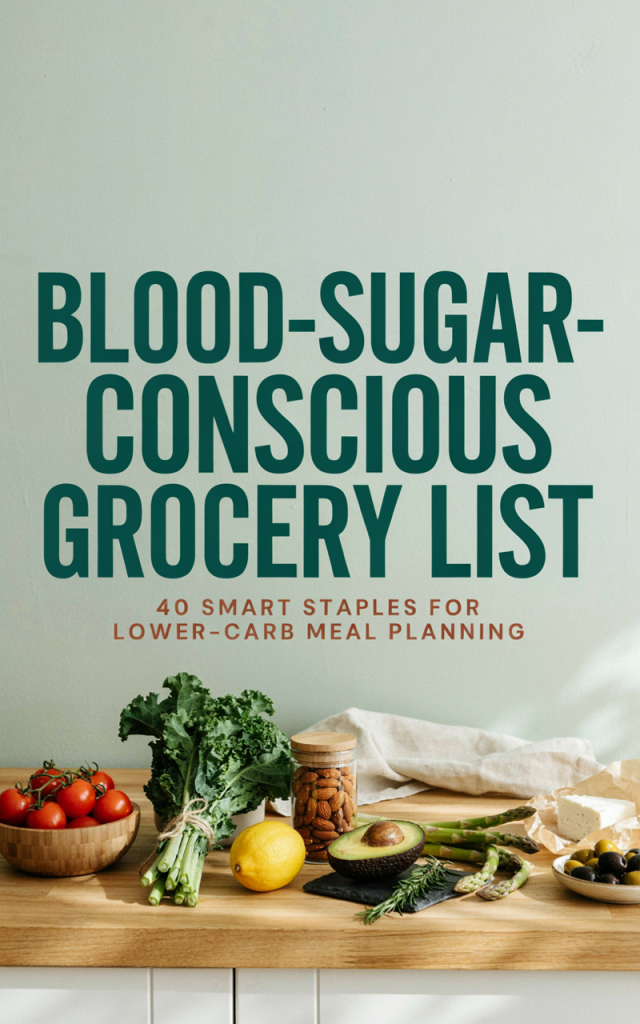
Blood-Sugar-Conscious Grocery List: 40 Smart Staples for Lower-Carb Meal Planning
Eating to support steady blood sugar doesn’t mean boring food. With the right staples on hand, you can build satisfying, flavorful meals that are lower in carbs, higher in fiber and protein, and friendly to blood-sugar control. This post gives you a practical, categorized shopping list of 40 smart staples plus meal ideas and simple recipes you can make this week. Use it to streamline grocery trips, batch-cook, and stay consistent with lower-carb meal planning that supports your health goals.
Why a blood-sugar-conscious grocery list matters
Choosing whole foods that blend fiber, lean protein, healthy fats, and low-glycemic produce helps blunt blood sugar spikes and keeps energy stable between meals. A focused grocery list removes decision fatigue, helps you avoid impulse buys of refined carbs and sugary snacks, and makes it simpler to cook at home — the single biggest habit change associated with better blood-sugar control.
This list prioritizes nonstarchy vegetables, quality proteins, healthy fats, low-sugar fruits, and pantry items that let you make quick, lower-carb meals and snacks.
How to use this list
- Build meals from the “plate method”: half nonstarchy vegetables, a quarter protein, a quarter healthy carbs or starchy vegetables (if any).
- Pair carbs with protein and fat to slow absorption.
- Batch-prep cookable items (chicken, cauliflower rice, hard-boiled eggs) to save time.
- Keep a running grocery list and rotate perishable items weekly so nothing goes to waste.
Blood-Sugar-Conscious Grocery List — 40 Smart Staples
- Spinach (fresh or baby) — versatile for salads, smoothies, scrambles
- Kale — hearty for sautés and salads that last a few days
- Broccoli — roasted, steamed, or tossed into bowls
- Cauliflower (whole) — roast, mash, or rice yourself
- Zucchini — make zoodles or roast slices
- Bell peppers — color, crunch, and vitamin C
- Tomatoes (cherry or vine) — bright flavor, low sugar per serving
- Cucumbers — hydrating, great in salads and dips
- Avocados — healthy fats to slow glucose rises
- Mushrooms — umami and low-carb bulk for meals
- Red onion — a little goes a long way for flavor
- Garlic — essential for flavor without sugar
- Eggs — affordable, high-quality protein for any meal
- Chicken breast (or thigh) — lean, easy to prep in batches
- Salmon (or other fatty fish) — omega-3s and protein-rich
- Shrimp — quick-cooking lean protein
- Canned tuna (in water) — pantry-friendly protein for salads
- Plain Greek yogurt — high-protein snack or base for dressings
- Cottage cheese — versatile, high-protein choice
- Almonds (raw, unsalted) — crunchy, quick snack with healthy fats
- Walnuts — great for omega-3 plant-based fats and texture
- Chia seeds — fiber and gel-forming for stabilizing glucose
- Ground flaxseed — add to yogurt, smoothies, or baking
- Almond flour (or almond meal) — low-carb baking and coating option
- Extra-virgin olive oil — heart-healthy fat for dressings and cooking
- Avocado oil — neutral high-heat oil for roasting and searing
- Unsweetened almond butter — spread or add to smoothies
- Low-sodium broth (chicken or vegetable) — soups, stews, and flavor
- Tamari (low-sodium) or low-sodium soy sauce — savory seasoning without sugar
- Apple cider vinegar — for dressings and flavor that can improve glycemic response
- Dijon mustard — low-calorie flavor booster and binder for dressings
- Fresh herbs (basil, parsley, cilantro) — flavor without added carbs
- Ground cinnamon — comforting spice that pairs well with fruit and yogurt
- Turmeric (ground) — anti-inflammatory and adds warm color/flavor
- Fresh lemons — acid brightens dishes and supports flavor without sugar
- Berries (strawberries, blueberries, raspberries) — lower-sugar fruit options, high in antioxidants
- Shirataki noodles (konjac) — very low-carb noodle alternative
- Cauliflower rice (fresh or frozen) — time-saver and rice replacement
- Frozen mixed nonstarchy vegetables (green beans, Brussels sprouts, etc.) — convenient and inexpensive
- Dark chocolate (70% cocoa or higher) — small-portion treat for blood-sugar-friendly dessert
Tip: Keep at least one item from each category (vegetables, protein, fats, pantry) on your weekly list for balanced meals.
Meal ideas and quick strategies
Below are simple, concrete recipes and meal ideas using staples from the list. Each recipe includes ingredients (bulleted) and step-by-step instructions (numbered) so you can get cooking right away.
1) Quick Veggie Egg Scramble (Breakfast or Brunch)
Ingredients
– 2 eggs
– 1 cup fresh spinach, chopped
– 4 cherry tomatoes, halved (or 1 small tomato, diced)
– 1/2 cup sliced mushrooms
– 1 tsp extra-virgin olive oil
– 1 clove garlic, minced
– Salt and pepper to taste
– Fresh herbs (optional), chopped
Instructions
1. Heat the olive oil in a nonstick skillet over medium heat. Add the garlic and sliced mushrooms; sauté 2–3 minutes until softened.
2. Add the cherry tomatoes and spinach; cook until spinach wilts, about 1–2 minutes.
3. Whisk the eggs with salt and pepper, pour into the skillet, and gently scramble with the vegetables until set to your liking.
4. Remove from heat, sprinkle with fresh herbs, and serve immediately.
Why it works: Protein and fat from eggs stabilizes blood sugar while vegetables add fiber and volume.
2) Cauliflower “Fried Rice” with Shrimp (Dinner)
Ingredients
– 3 cups cauliflower rice (fresh or frozen, thawed)
– 8–10 large shrimp, peeled and deveined
– 1/2 red onion, finely chopped
– 1/2 bell pepper, diced
– 2 cloves garlic, minced
– 1 tbsp avocado oil (or olive oil)
– 1–2 tbsp tamari (low-sodium)
– 1 egg, lightly beaten (optional for extra protein)
– Fresh herbs or green bits of herbs for garnish
Instructions
1. Heat oil in a large skillet or wok over medium-high heat. Add shrimp and cook 1–2 minutes per side until opaque; remove and set aside.
2. In the same pan, add a touch more oil if needed and sauté the red onion, bell pepper, and garlic until softened.
3. Add cauliflower rice and tamari; stir-fry 3–5 minutes until cauliflower is tender but not mushy.
4. Push the cauliflower mixture to one side, pour the beaten egg into the cleared space (if using), scramble it quickly, then mix into the cauliflower.
5. Return shrimp to the pan, toss to combine, season to taste, and serve garnished with herbs.
Why it works: Cauliflower rice keeps carbs low; pairing with shrimp and eggs boosts protein and satiety.
3) Lemon-Herb Zucchini Noodle Bowl with Grilled Chicken (Lunch)
Ingredients
– 2 medium zucchini, spiralized into noodles (zoodles)
– 1 cooked chicken breast, sliced
– 1 tbsp extra-virgin olive oil
– 1 clove garlic, minced
– Juice of 1/2 lemon
– 2 tbsp fresh basil and parsley, chopped
– Cherry tomatoes (optional), halved
– Salt and pepper to taste
Instructions
1. Toss zoodles with olive oil, garlic, lemon juice, and herbs in a bowl; let sit 5 minutes to soften slightly.
2. Warm a skillet over medium heat; add zoodles and sauté 1–2 minutes just to warm through (do not overcook).
3. Arrange zoodles on a plate, top with sliced grilled chicken and cherry tomatoes.
4. Season with salt and pepper and a final squeeze of lemon before serving.
Why it works: Zoodles cut refined carbs while still delivering pasta-like texture; chicken and olive oil stabilize blood sugar.
4) Greek Yogurt Berry Parfait (Snack or Light Breakfast)
Ingredients
– 1 cup plain Greek yogurt
– 1/2 cup mixed berries (strawberries, blueberries, raspberries)
– 1 tbsp chia seeds
– 1 tbsp chopped almonds or walnuts
– 1/4 tsp ground cinnamon
Instructions
1. Spoon half the yogurt into a glass or bowl.
2. Layer half the berries and half the chia seeds.
3. Add the remaining yogurt, top with remaining berries and nuts, and sprinkle with cinnamon.
4. Serve immediately or chill for a grab-and-go snack.
Why it works: High-protein yogurt plus fiber-rich berries and seeds support steady glucose and curb cravings.
5) Mediterranean Tuna-Stuffed Avocado (Quick Lunch or Snack)
Ingredients
– 1 can tuna in water, drained
– 1 ripe avocado, halved and pitted
– 2 tbsp finely chopped red onion
– 1/4 cup diced cucumber
– 1 tbsp extra-virgin olive oil
– Juice of 1/2 lemon
– 1 tbsp chopped parsley or cilantro
– Salt and pepper to taste
Instructions
1. In a bowl, combine drained tuna, red onion, cucumber, olive oil, lemon juice, parsley, salt, and pepper.
2. Spoon the tuna mixture into the avocado halves, dividing evenly.
3. Serve immediately.
Why it works: Healthy fats, fiber, and protein make this dish filling and blood-sugar friendly.
6) Almond-Crusted Salmon (Simple Low-Carb Dinner)
Ingredients
– 2 salmon fillets (4–6 oz each)
– 1/3 cup almond flour
– 1 tbsp Dijon mustard
– Juice of 1/2 lemon
– 1 tbsp extra-virgin olive oil
– Salt and pepper to taste
Instructions
1. Preheat oven to 400°F (200°C). Line a baking sheet with parchment.
2. Pat salmon dry, brush the top of each fillet with Dijon mustard and lemon juice.
3. Press almond flour onto the mustard-coated side to form a crust.
4. Place salmon on the baking sheet, drizzle lightly with olive oil, season with salt and pepper.
5. Bake 10–14 minutes depending on thickness until salmon is cooked through and crust is golden. Serve with a side of steamed broccoli or salad.
Why it works: Almond flour keeps the coating low-carb and adds healthy fats; salmon provides satiating protein and omega-3s.
Pantry and shopping habits for success
- Shop the perimeter first: produce, proteins, dairy. Add pantry items like almond flour and seeds as needed from the center aisles.
- Buy frozen vegetables and fish for convenience and cost control — they’re often just as nutritious as fresh.
- Read labels: watch for added sugars in yogurts, condiments, and broths. Pick low-sodium options where possible.
- Plan three meals and two snacks per day. Use the staples above to map each meal around a protein + vegetable core.
- Batch-cook proteins and cauliflower rice, and pre-chop vegetables to speed weeknight cooking.
Portion and timing tips
- Combine protein and fat at each meal to slow digestion (eggs + avocado, yogurt + nuts).
- Aim for at least 20–30 grams of protein at main meals (adjust to your needs).
- Spread carbohydrate-containing foods across the day rather than loading them into one meal.
- If you use continuous glucose monitoring or testing, observe how different foods affect your own blood sugar — individuals vary.
When to talk to a professional
If you have diabetes, are on glucose-lowering medications, or have a medical condition, consult your healthcare team before making major changes to diet, especially if you plan to lower carbohydrate intake substantially. They can help adjust medications safely and set target glucose goals.
Conclusion
This Blood-Sugar-Conscious Grocery List of 40 Smart Staples gives you practical building blocks for lower-carb, nutrient-dense meal planning. Keep a stocked pantry and fridge with these staples, pair protein and healthy fats with nonstarchy vegetables, and try the simple recipes above to make better blood-sugar choices enjoyable and sustainable. Small, consistent changes — a weekly shopping list, a couple of batch-cooked proteins, and a rotation of go-to recipes — add up to steadier energy, fewer spikes, and better long-term health.
You’ve got this: start with a few swaps (cauliflower rice for regular rice, berries instead of high-sugar desserts, olive oil dressings instead of sugary sauces), and build a routine that fits your tastes and schedule. If you want, tell me which staples you already buy and I’ll suggest a 7-day lower-carb meal plan using only items from this list.