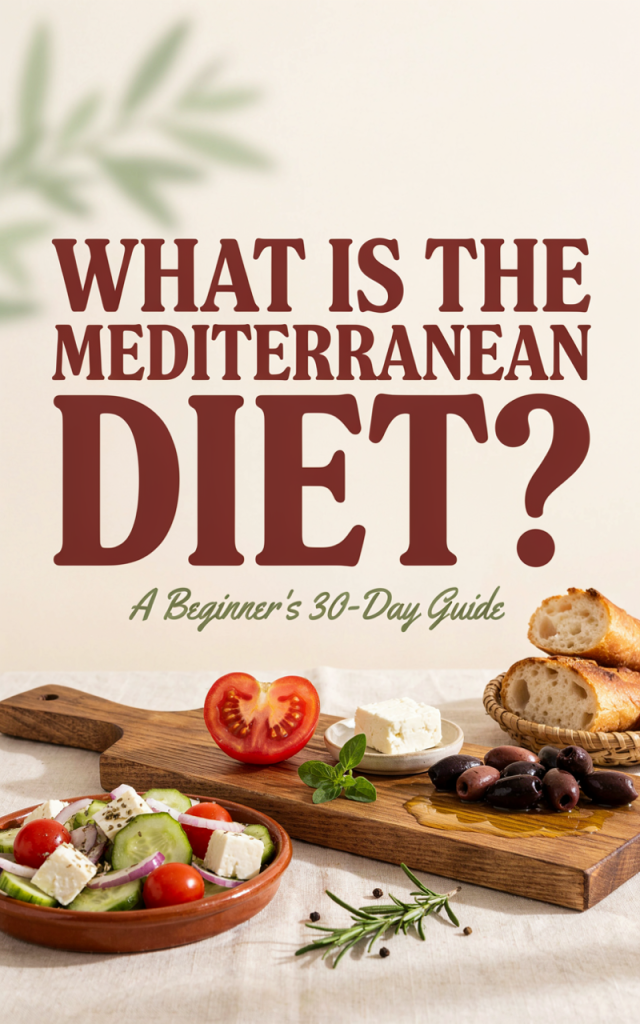
What Is the Mediterranean Diet? A Beginner’s 30-Day Guide
The Mediterranean diet — often called the Mediterranean eating pattern — is one of the most talked-about ways of eating today. It’s less a strict diet and more a flexible, food-focused approach inspired by traditional cuisines of countries bordering the Mediterranean Sea. If you’re curious about what to eat, how to shop, and how to make this style of eating part of your daily life, this 30-day beginner’s guide shows you how to start, one practical step at a time.
Ready to make Mediterranean eating easier? Get the 30-Day Mediterranean Meal Plan System with a complete 30-day calendar, 53 recipes, grocery lists, preparation guidance, and three bonus guides. You can also add the 30-page Quick-Meal Vault for fast, practical meal ideas.
This article explains the essentials, offers easy meal ideas and recipes, and gives you a day-by-day plan with simple actions you can take right away.
What the Mediterranean eating pattern actually is
At its core, the Mediterranean eating pattern emphasizes plant-based foods, healthy fats, whole grains, and modest portions of animal proteins. It’s characterized by:
- Plenty of vegetables, fruits, legumes, nuts, and seeds
- Whole, minimally processed grains (like farro, barley, and whole wheat)
- Olive oil as the primary added fat
- Moderate amounts of fish and seafood
- Limited red meat and sweets
- Moderate dairy, mainly yogurt and cheese
- Flavor from herbs, spices, lemon, and garlic rather than heavy sauces
- Meals often enjoyed with others and paired with physical activity
This approach is flexible: it fits omnivores, pescatarians, and many vegetarians. The emphasis is on variety, seasonality, and nutrient-dense choices.
Key foods to focus on
Focus your weekly shopping and meal building around these staples:
- Vegetables: leafy greens, tomatoes, eggplant, peppers, broccoli, zucchini
- Fruits: citrus, grapes, apples, figs, berries
- Whole grains: brown rice, bulgur, farro, whole-grain pasta, oats
- Legumes: chickpeas, lentils, beans
- Healthy fats: extra-virgin olive oil, olives, avocado
- Nuts & seeds: almonds, walnuts, sunflower seeds
- Fish & seafood: salmon, sardines, mackerel, shrimp
- Poultry: chicken and turkey in moderation
- Dairy: plain yogurt, kefir, small portions of cheese (feta, pecorino)
- Herbs & spices: oregano, rosemary, basil, parsley, cumin, cinnamon
- Minimal sugar and sweets; limited processed foods
Foods to limit
- Large servings of red and processed meats
- Highly processed snacks and sugary drinks
- Refined grains and pastries as regular staples
- Excessive use of added sugars and ultra-processed condiments
How this pattern fits into everyday life
The Mediterranean eating pattern is not prescriptive meal-by-meal. Instead, it guides choices:
- Breakfasts that include whole grains, fruit, yogurt, or eggs
- Lunches that center on vegetables, legumes, whole grains, or fish
- Dinners that feature vegetables, a modest portion of protein, and olive oil
- Snacks like fruit, nuts, olives, or whole-grain toast with hummus
- Drinking water as the main beverage; coffee and tea in moderation; wine optional and modest for those who already drink
Practical pantry and shopping checklist
Stock your pantry and fridge with these items to make following the pattern easier:
- Extra-virgin olive oil
- Canned chickpeas and tomatoes
- Whole-grain pasta, brown rice, bulgur
- Rolled oats
- Nuts (almonds, walnuts) and seeds
- Canned tuna or sardines in olive oil
- Plain yogurt
- Garlic, onions, lemons
- Fresh or dried herbs
- Seasonal vegetables and fruits
Buy fresh produce in season, buy frozen vegetables for convenience, and keep a few canned staples for quick meals.
Beginner’s 30-Day Guide — one small step a day
Below are exactly 30 actionable daily steps to introduce you to the Mediterranean eating pattern. Each day is designed to be doable and build into a sustainable habit.
- Day 1: Replace cooking oil with extra-virgin olive oil for dressings and light sautéing.
- Day 2: Add one extra serving of vegetables to your lunch.
- Day 3: Have a bowl of plain yogurt topped with fresh fruit and a sprinkle of nuts for breakfast.
- Day 4: Swap refined bread for a whole-grain option at one meal.
- Day 5: Make a chickpea or lentil salad as a meat-free lunch.
- Day 6: Eat fish or seafood for dinner (grilled, baked, or pan-seared).
- Day 7: Use herbs and lemon to flavor a roasted vegetable tray.
- Day 8: Snack on a small handful of mixed nuts instead of chips or candy.
- Day 9: Cook a whole-grain like farro, barley, or brown rice to use across meals this week.
- Day 10: Prepare a simple hummus and vegetable platter for an afternoon snack.
- Day 11: Try a tomato-and-cucumber salad with olive oil, herbs, and a touch of vinegar.
- Day 12: Make a breakfast of oats topped with fruit and a swirl of olive oil or nut butter.
- Day 13: Swap a sugary drink for sparkling water with lemon or fresh fruit slices.
- Day 14: Prepare a one-pan meal: chicken or chickpeas with vegetables and olive oil.
- Day 15: Add leafy greens to your sandwich or wrap.
- Day 16: Make a batch of overnight oats or grain salad for grab-and-go breakfasts.
- Day 17: Try a baked or grilled fish recipe with garlic, herbs, and lemon.
- Day 18: Replace dessert once this week with fresh fruit and a few nuts.
- Day 19: Make a Mediterranean-style pizza: whole-grain crust, tomato, vegetables, a little cheese.
- Day 20: Use legumes as the base for lunch (lentil soup, chickpea stew, bean salad).
- Day 21: Incorporate a new herb or spice into a favorite recipe.
- Day 22: Have a meatless dinner centered on vegetables and grains.
- Day 23: Make a spinach- or kale-based salad with a simple olive oil–lemon dressing.
- Day 24: Prepare grilled vegetables and store them for easy additions to meals.
- Day 25: Try small portions of cheese paired with whole-grain bread and fruit.
- Day 26: Cook with garlic and onions to boost flavor without heavy sauces.
- Day 27: Enjoy tea or coffee without added sugar; flavor with cinnamon or vanilla if needed.
- Day 28: Invite someone to share a meal to enjoy the social aspect of eating.
- Day 29: Plan next week’s meals using mainly the Mediterranean staples from your pantry.
- Day 30: Reflect on what felt good — variety, energy, taste — and set three practical goals to keep this pattern going.
Use this list in any order if you prefer; the point is to make gradual, sustainable changes.
Ready to make Mediterranean eating easier? Get the 30-Day Mediterranean Meal Plan System with a complete 30-day calendar, 53 recipes, grocery lists, preparation guidance, and three bonus guides. You can also add the 30-page Quick-Meal Vault for fast, practical meal ideas.
Sample recipes to try this week
Below are simple, Mediterranean-style recipes you can use to practice the eating pattern. Ingredients are bulleted and instructions numbered.
1. Greek Yogurt Breakfast Bowl
Ingredients:
– 1 cup plain Greek yogurt
– 1/2 cup mixed berries (fresh or frozen)
– 1 tablespoon chopped walnuts
– 1 teaspoon honey or a sprinkle of cinnamon (optional)
– 1 teaspoon chia seeds (optional)
Instructions:
1. Spoon the yogurt into a bowl.
2. Top with berries, walnuts, and chia seeds.
3. Drizzle with honey or sprinkle with cinnamon if you like extra sweetness. Serve immediately.
2. Quick Mediterranean Chickpea Salad
Ingredients:
– 1 can (15 oz) chickpeas, drained and rinsed
– 1 cup cherry tomatoes, halved
– 1/2 cucumber, diced
– 1/4 red onion, thinly sliced
– 2 tablespoons chopped parsley
– 2 tablespoons extra-virgin olive oil
– 1 tablespoon red wine vinegar or lemon juice
– Salt and pepper to taste
– Optional: 2 tablespoons crumbled feta
Instructions:
1. In a large bowl, combine chickpeas, tomatoes, cucumber, onion, and parsley.
2. Whisk olive oil and red wine vinegar (or lemon juice) in a small bowl; season with salt and pepper.
3. Pour dressing over salad and toss to combine. Add feta if using and serve chilled or at room temperature.
3. Baked Lemon-Herb Salmon with Vegetables
Ingredients:
– 2 salmon fillets (4–6 oz each)
– 2 tablespoons extra-virgin olive oil, divided
– 1 lemon, sliced (and juice of 1/2 lemon)
– 2 cloves garlic, minced
– 1 teaspoon chopped fresh rosemary or dill (or 1/2 teaspoon dried)
– 2 cups mixed vegetables (zucchini, bell pepper, cherry tomatoes)
– Salt and pepper to taste
Instructions:
1. Preheat oven to 400°F (200°C). Line a baking sheet with parchment.
2. Toss vegetables with 1 tablespoon olive oil, salt, and pepper; spread on the baking sheet.
3. Place salmon fillets among the vegetables. Drizzle salmon with the remaining olive oil, lemon juice, and sprinkle with garlic, herbs, salt, and pepper. Top with lemon slices.
4. Bake 12–15 minutes, until salmon flakes easily with a fork and vegetables are tender. Serve warm.
4. Whole-Grain Pasta with Spinach and Garlic
Ingredients:
– 8 oz whole-grain pasta
– 2 tablespoons extra-virgin olive oil
– 3 cloves garlic, thinly sliced
– 4 cups fresh spinach
– 1 cup cherry tomatoes, halved
– 2 tablespoons grated Parmesan or pecorino (optional)
– Salt and pepper to taste
– Red pepper flakes (optional)
Instructions:
1. Cook pasta according to package instructions until al dente; reserve 1/2 cup pasta water and drain.
2. Meanwhile, heat olive oil in a large skillet over medium heat. Add garlic and sauté 30–60 seconds until fragrant.
3. Add cherry tomatoes and cook 2–3 minutes until they begin to soften. Add spinach and cook until wilted.
4. Toss cooked pasta into the skillet with vegetables. Add reserved pasta water a little at a time to create a light sauce. Season with salt, pepper, and red pepper flakes. Sprinkle with cheese if desired and serve.
Eating out and traveling — simple swaps
- Choose dishes with vegetables, legumes, and whole grains as primary components.
- Favor grilled, baked, or steamed preparations over deep-fried.
- Ask for olive oil and lemon instead of creamy dressings.
- Share a few small plates to increase variety and reduce oversized portions.
- Keep portable snacks like nuts, fruit, and whole-grain crackers handy when traveling.
Vegetarian and vegan adaptations
The Mediterranean pattern adapts well to plant-based diets:
- Replace fish with tofu, tempeh, or extra legumes for protein.
- Use tahini or mashed chickpeas as spreads instead of fish-based options.
- Increase variety of beans, lentils, and whole grains to ensure balanced protein and fiber.
- Include fortified foods or supplements if you have specific nutrient needs (e.g., B12 for vegans) — discuss with a healthcare professional if needed.
Budget-friendly tips
- Buy seasonal produce and frozen vegetables to save money and reduce waste.
- Use canned beans and tuna for inexpensive, protein-rich staples.
- Cook larger batches and use leftovers for lunches.
- Swap expensive ingredients (like salmon) for more affordable options (sardines, mackerel, or canned fish).
- Embrace legumes and whole grains as low-cost meal foundations.
How to measure success without promises
The Mediterranean eating pattern is about long-term food choices and lifestyle. Instead of aiming for guaranteed weight loss or claiming medical cures, you can monitor practical, non-medical indicators of progress:
- Increased daily servings of vegetables and whole grains
- Greater meal variety and satisfaction
- More frequent home-cooked meals and less reliance on processed foods
- Improved energy, satiety, and enjoyment of meals
- Easier grocery shopping and meal prep routines
If you have medical conditions or specific dietary needs, consult a healthcare professional or registered dietitian before making major changes.
Staying motivated and making it social
- Cook with friends or family; meals are often shared in Mediterranean cultures.
- Try a new recipe each week and rotate favorites into your routine.
- Keep a list of go-to meals for busy nights.
- Use herbs and spices to keep flavors interesting without added calories or salt.
Final notes and next steps
The Mediterranean eating pattern is flexible, flavorful, and built on whole, minimally processed foods. This 30-day beginner’s guide gives you a manageable series of steps and recipes to start today. The most sustainable changes happen gradually: focus on adding vegetables, choosing whole grains, using olive oil, and enjoying meals with others. After 30 days, pick three habits that worked well for you and make them part of your regular routine.
Embrace variety, patience, and curiosity — the Mediterranean approach is about food that nourishes and fits your life, not a short-term fix.
Ready to make Mediterranean eating easier? Get the 30-Day Mediterranean Meal Plan System with a complete 30-day calendar, 53 recipes, grocery lists, preparation guidance, and three bonus guides. You can also add the 30-page Quick-Meal Vault for fast, practical meal ideas.