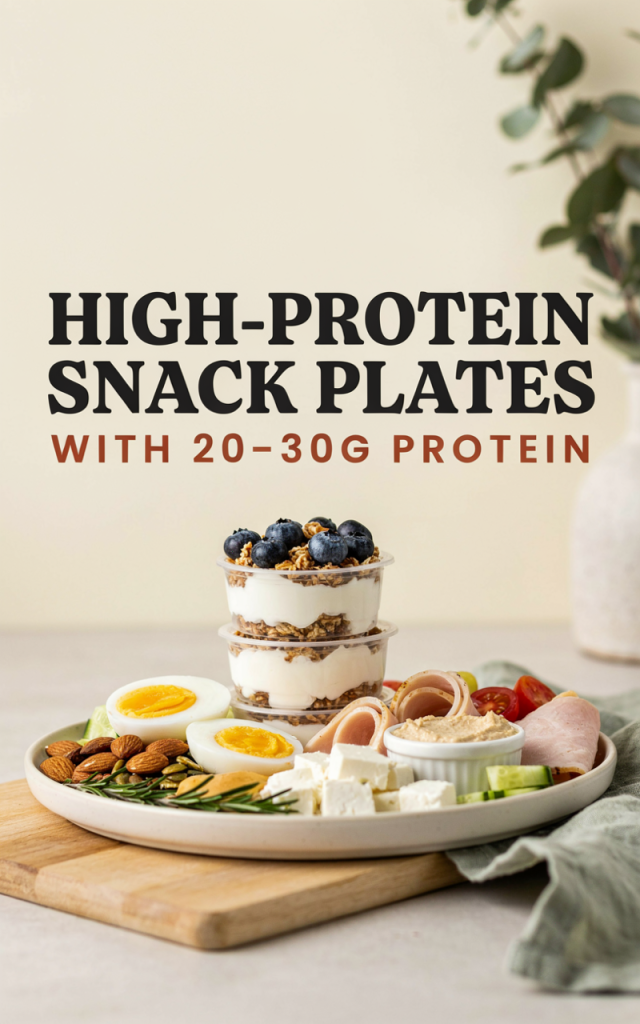
High-Protein Snack Plates With 20–30 Grams of Protein
An energizing, balanced snack can be the difference between a mid-afternoon slump and a productive burst of focus. If you’re trying to build or maintain muscle, lose weight sustainably, or simply stay fuller longer between meals, aiming for 20–30 grams of protein per snack is a smart, science-backed strategy. This post gives you clear, practical snack plate recipes that hit that protein sweet spot — each plate includes ingredients, step-by-step instructions, and an estimated protein total so you can plan with confidence.
Whether you’re vegetarian, flexible, or a committed carnivore, you’ll find approachable, tasty plates that are quick to assemble and easy to scale. Read on for 12 high-protein snack plate ideas (each delivering roughly 20–30 g protein), plus tips for customizing, prepping, and measuring success.
Why aim for 20–30 grams of protein per snack?
- Protein supports muscle repair and synthesis and helps preserve lean mass during weight loss.
- A moderate, protein-rich snack stabilizes blood sugar and cravings, making it easier to stick to your nutrition goals.
- 20–30 grams is a practical target: high enough to be effective, but small enough to be portable and snack-sized.
Use the plates below as templates: swap similar protein sources, add veggies or whole grains, and adjust portions based on your calorie and macro goals.
How to build a 20–30 g protein snack plate (quick rules)
- Include a concentrated protein source: lean meat, fish, dairy, eggs, tofu/tempeh, legumes, or a quality protein powder.
- Add a small complex carb or fiber-rich vegetable to increase satiety and deliver micronutrients.
- Include a healthy fat in moderation (nuts, seeds, avocado, olive oil) to improve flavor and fullness.
- Keep portion sizes realistic — the goal is a snack, not a full meal.
12 High-Protein Snack Plates (each ~20–30 g protein)
Below are 12 explicit snack plate recipes. Each entry lists ingredients as bullets and preparation steps as numbered instructions. Estimated protein is provided based on common serving sizes — adjust to meet your needs.
1. Tuna & Whole-Grain Crackers Plate
Estimated protein: ~24 g
Ingredients
– 1 can (3.5 oz / ~100 g drained) tuna in water, drained
– 2 tablespoons plain Greek yogurt (optional, for creaminess)
– 1 teaspoon lemon juice, salt and pepper to taste
– 6–8 whole-grain crackers
– 1 cup sliced cucumber or cherry tomatoes (for volume and fiber)
Instructions
1. Flake the drained tuna into a bowl and stir in Greek yogurt, lemon juice, salt, and pepper until combined.
2. Arrange crackers and vegetables on a plate and spoon the tuna salad alongside.
3. Assemble bites: top crackers with tuna and enjoy, using vegetables as sides.
Notes: Swap the Greek yogurt for 1 tablespoon mayonnaise if preferred (adds calories).
2. Greek Yogurt Bowl with Fruit & Almonds
Estimated protein: ~26 g
Ingredients
– 1 cup (245 g) plain nonfat Greek yogurt (~20–23 g protein)
– 2 tablespoons sliced almonds (about 14 g) or 1/4 cup whole almonds
– 1/2 cup mixed berries or a chopped apple
– 1 teaspoon honey or cinnamon (optional)
Instructions
1. Spoon Greek yogurt into a bowl.
2. Top with berries or chopped apple, then sprinkle almonds and cinnamon or honey if using.
3. Stir and eat by spoonfuls, or layer the fruit and nuts for texture contrast.
Notes: To make vegan, use a fortified soy yogurt and add a 1-scoop plant protein powder (mix thoroughly).
3. Cottage Cheese & Veggie Toast Plate
Estimated protein: ~27–28 g
Ingredients
– 1 cup (226 g) low-fat cottage cheese (~25 g protein)
– 1 slice whole-grain toast (or 2 small rice cakes)
– 1/2 cup sliced cherry tomatoes and cucumber
– Fresh herbs (optional) and black pepper
Instructions
1. Toast the bread.
2. Spoon cottage cheese onto the toast or serve next to it, season with pepper and herbs.
3. Arrange sliced vegetables on the side and savor bites with cottage cheese and toast.
Notes: Add a sprinkle of chia or hemp seeds for extra omega-3s and ~3 g additional protein.
4. Smoked Salmon & Bagel Thin Plate
Estimated protein: ~25 g
Ingredients
– 3 oz (85 g) smoked salmon (~17–18 g protein)
– 1 whole-grain bagel thin or 1 small whole-grain bagel (~5–6 g)
– 2 tablespoons light cream cheese or Greek yogurt spread (~1–2 g)
– 1/4 small red onion, capers, and lemon wedge for garnish
Instructions
1. Spread the cream cheese or Greek yogurt on the bagel thin.
2. Layer smoked salmon slices on top and add red onion and capers.
3. Serve with lemon wedges and enjoy.
Notes: Substitute with canned salmon for a lower-sodium option; 3 oz canned salmon has similar protein.
5. Grilled Chicken & Hummus Plate
Estimated protein: ~28 g
Ingredients
– 3 oz (85 g) cooked grilled chicken breast, sliced (~25 g protein)
– 3 tablespoons hummus (~3 g protein)
– 1/2 cup carrot sticks, bell pepper strips, and cucumber
– A few whole-wheat pita triangles (optional)
Instructions
1. Slice the cooked chicken breast and arrange on a plate.
2. Add hummus in a small bowl and place veggies and pita triangles around it.
3. Dip chicken and veggies into the hummus and enjoy.
Notes: Use rotisserie chicken for convenience (watch for added salt).
6. Tempeh & Edamame Protein Plate (Vegetarian)
Estimated protein: ~25 g
Ingredients
– 3 oz (85 g) tempeh, pan-seared (~16 g protein)
– 1/2 cup shelled edamame (~9 g protein)
– 1 tablespoon low-sodium soy sauce or tamari
– 1 cup shredded cabbage or mixed greens
Instructions
1. Slice tempeh and pan-sear for 3–4 minutes per side until golden; drizzle with soy sauce.
2. Steam or microwave shelled edamame until hot.
3. Arrange tempeh slices over greens, add edamame on the side, and enjoy.
Notes: Tempeh is fermented soy and offers a nutty flavor; marinate before cooking for more flavor.
7. Turkey & Cheese Roll-Up Plate
Estimated protein: ~25 g
Ingredients
– 3 oz (85 g) roasted turkey breast slices (~18 g protein)
– 1 oz (28 g) cheddar or Swiss cheese (~7 g protein)
– 1/2 cup grape tomatoes or a handful of baby carrots
– 1 tablespoon mustard or light mayo for dipping
Instructions
1. Lay turkey slices flat and place cheese on top; roll up into pinwheels.
2. Arrange roll-ups with tomatoes and carrots on the plate.
3. Dip roll-ups into mustard or mayo and enjoy.
Notes: Use nitrate-free turkey if available; replace cheese with reduced-fat goat cheese for lighter flavor.
8. Protein Smoothie Bowl Plate
Estimated protein: ~28 g
Ingredients
– 1 scoop whey protein powder (approx. 20–24 g protein) — vanilla or chocolate
– 1/2 cup plain Greek yogurt (~8 g)
– 1/4 cup frozen berries and 1/4 frozen banana for texture
– 1 tablespoon ground flaxseed (optional)
Instructions
1. Blend protein powder, Greek yogurt, and frozen fruit with a splash of water or milk until thick and smooth.
2. Pour into a bowl and sprinkle flaxseed or a few sliced almonds on top.
3. Eat with a spoon like a thick smoothie bowl.
Notes: For vegan, use a pea or soy protein powder (check protein per scoop).
9. Hard-Boiled Eggs & Lentil Salad Plate
Estimated protein: ~21 g
Ingredients
– 2 large hard-boiled eggs (~12 g protein)
– 1/2 cup cooked green or brown lentils (~9 g protein)
– 1/4 cup diced cucumber and red bell pepper
– 1 teaspoon olive oil, lemon juice, salt, and pepper
Instructions
1. If not already cooked, boil eggs to desired doneness and cool.
2. Toss cooked lentils with diced vegetables, olive oil, lemon juice, salt, and pepper.
3. Serve eggs halved beside the lentil salad and enjoy spoonfuls of lentils with egg.
Notes: Add chopped herbs (parsley, dill) for freshness. Swap in canned lentils for convenience (drain well).
10. Shrimp Cocktail & Avocado Toast Plate
Estimated protein: ~27 g
Ingredients
– 4 oz (110 g) cooked shrimp (~24 g protein)
– 1 slice whole-grain toast
– 1/4 medium avocado, mashed and seasoned (~2–3 g)
– Cocktail sauce or lemon wedge for serving
Instructions
1. Toast the bread and spread mashed avocado on top; season with salt and pepper.
2. Arrange cooked shrimp alongside the toast and add cocktail sauce or lemon.
3. Take a bite of toast with shrimp for a balanced flavor profile.
Notes: Use chilled shrimp from the seafood counter or thawed frozen shrimp; buy precooked to save time.
11. Beef Jerky & Cottage Cheese Combo Plate
Estimated protein: ~27 g
Ingredients
– 1.5 oz beef jerky (~15 g protein)
– 1/2 cup low-fat cottage cheese (~12 g protein)
– 1/2 apple, sliced or a small handful of cherry tomatoes
Instructions
1. Spoon cottage cheese into a small bowl.
2. Arrange beef jerky and the fruit or tomatoes around the bowl.
3. Take alternating bites of cottage cheese, jerky, and fruit for contrast.
Notes: Choose lower-sodium jerky varieties where possible; turkey jerky is an alternate lean option.
12. Tofu & Peanut Butter Rice Cake Plate (Vegan-Friendly)
Estimated protein: ~24 g
Ingredients
– 200 g firm tofu, pressed and cubed (~16 g protein)
– 2 tablespoons natural peanut butter (~8 g protein)
– 1 large rice cake or 2 small ones
– Soy sauce or tamari and a sprinkle of sesame seeds (optional)
Instructions
1. Press and cube the tofu, then sauté quickly in a nonstick pan until lightly golden; season with a little soy sauce.
2. Spread peanut butter on the rice cake(s).
3. Top the peanut-buttered rice cake(s) with tofu cubes and a sprinkle of sesame seeds; serve.
Notes: If you prefer a cold plate, use baked tofu and skip sautéing. Swap peanut butter for almond butter (~7 g) if desired.
Meal-prep and portability tips
- Batch-cook proteins: grill several chicken breasts, boil multiple eggs, or roast salmon at the beginning of the week for quick assembly.
- Use bento boxes or divided containers to keep wet items separate from crackers and toast.
- Store sauces (hummus, dressing, spreads) in small containers to prevent sogginess.
- For travel, keep cold items in an insulated lunch bag with an ice pack.
Substitutions and modifications
- Dairy-sensitive? Swap Greek yogurt and cottage cheese for fortified soy yogurt and silken tofu-based spreads.
- Vegetarian? Use legumes, tempeh, tofu, edamame, and high-protein dairy alternatives.
- Lower sodium? Choose no-salt-added canned proteins, low-sodium jerky, and rinse canned beans or tuna.
- If you need more protein, increase the portion of the main protein (e.g., add 1/2 scoop protein powder, add another egg, or increase meat portion slightly).
Quick protein reference for common portions
(helps you mix/match to hit 20–30 g)
– 3 oz cooked chicken/turkey: ~24–25 g
– 3 oz cooked tuna or salmon: ~20–22 g
– 1 cup nonfat Greek yogurt: ~20–23 g
– 1 cup low-fat cottage cheese: ~25 g
– 1 scoop whey protein: ~20–25 g (varies by brand)
– 1/2 cup cooked lentils: ~9 g
– 1 cup edamame (shelled): ~17 g
– 3 oz tempeh: ~16 g
– 2 large eggs: ~12 g
– 2 tbsp peanut butter: ~8 g
– 1 oz cheddar cheese: ~7 g
Use these building blocks to create personalized plates that meet your target.
Frequently asked questions
Q: Are these snack plates suitable for weight loss?
A: Yes — protein increases satiety and preserves lean mass. Keep portion sizes and overall calorie intake aligned with your goals.
Q: How often should I eat a high-protein snack?
A: It depends on your daily protein target and meal timing. A mid-morning and/or mid-afternoon snack can help reach daily protein goals and control hunger.
Q: Can athletes rely on these for recovery?
A: These plates are great for moderate recovery needs. For heavy training, pair snacks with a post-workout meal that includes carbs for glycogen replenishment.
Conclusion
Snack time can be purposeful, enjoyable, and powerful. These high-protein snack plates—each intentionally built to deliver roughly 20–30 grams of protein—are practical templates you can adapt to tastes, dietary needs, and schedules. Whether you want a quick Greek yogurt bowl, a savory smoked salmon plate, or a plant-based tempeh and edamame combo, these options will help you stay energized, curb cravings, and support muscle and metabolic health.
Start with one or two favorites, batch-prep key ingredients, and swap in seasonal produce to keep things fresh. With a little planning, every snack can be a small step toward stronger, healthier habits. You’ve got this—one delicious, protein-rich plate at a time.