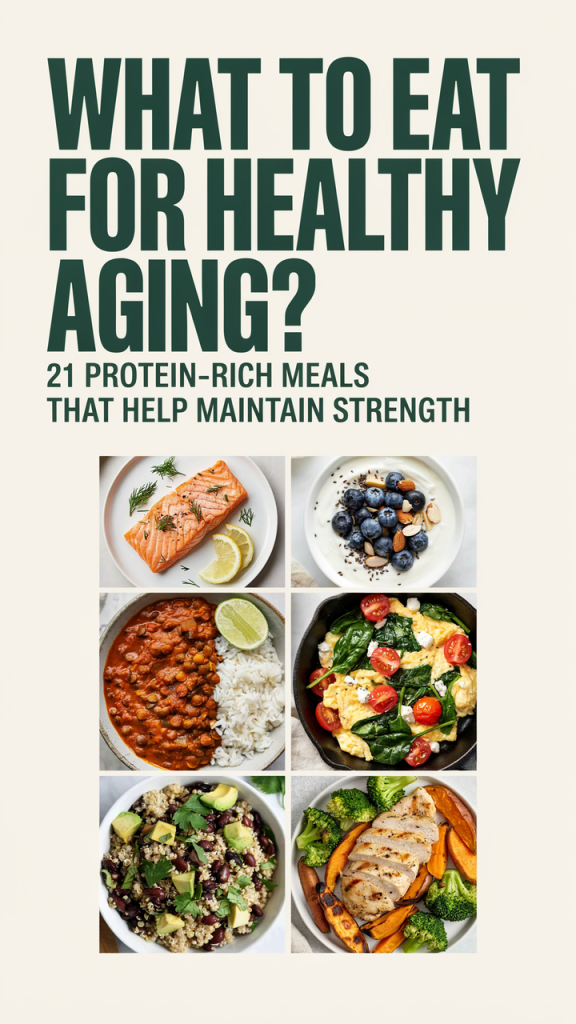
What Should I Eat for Healthy Aging? 21 Protein-Rich Meals That Help Maintain Strength
Aging well is about more than skincare and supplements — it’s about preserving muscle, maintaining bone health, supporting immune function, and keeping your energy high so you can do the things you love. Protein plays a central role in all of that. This article explains why protein matters as we age, how much to aim for, practical tips to build balanced meals, and—most importantly—gives you 21 delicious, protein-rich meals you can add to your weekly rotation. Each meal below includes ingredients and step-by-step instructions so you can cook confidently and enjoy the benefits of stronger aging.
Why protein matters for healthy aging
As we get older, the natural rate of muscle protein synthesis slows and muscle mass tends to decline — a process called sarcopenia. Adequate protein helps:
- Preserve lean muscle mass and strength
- Support bone health and reduce fracture risk
- Maintain immunity and aid recovery from illness
- Improve functional capacity and independence
Combining quality protein with resistance exercise yields the best outcomes, but diet alone makes a big difference. Distributing protein across meals (rather than eating most at dinner) helps stimulate muscle protein synthesis more effectively.
How much protein do older adults need?
General recommendations vary, but many experts suggest older adults aim for:
– A daily target of about 1.0–1.2 grams per kilogram of body weight (higher if recovering from illness or very active).
– A per-meal target of roughly 25–35 grams of protein to maximally stimulate muscle protein synthesis, depending on body size.
Work with a healthcare provider or registered dietitian for personalized targets, especially if you have kidney disease or other medical conditions that affect protein needs.
Tips for building protein-forward meals
- Prioritize a high-quality protein source (eggs, dairy, fish, poultry, lean beef, legumes, tofu, tempeh).
- Add a whole grain or starchy vegetable for energy and fiber.
- Include colorful vegetables for micronutrients and antioxidants.
- Add healthy fats (olive oil, nuts, avocado) to support nutrient absorption and satiety.
- Use simple seasonings and mixing techniques to make protein tastes appealing.
- Prepare batch-cook components (grains, beans, roasted vegetables) to simplify meals all week.
21 Protein-Rich Meals
Below are 21 explicitly listed protein-rich meals with ingredients and clear instructions. These meals are balanced, practical, and suitable for older adults looking to maintain strength and vibrancy.
1. Greek Yogurt Parfait with Nuts and Berries
Ingredients:
– 1 cup plain Greek yogurt (2% or higher)
– 1/2 cup mixed berries (fresh or frozen)
– 2 tbsp chopped walnuts or almonds
– 1 tbsp chia seeds
– 1 tsp honey or maple syrup (optional)
Instructions:
1. Spoon Greek yogurt into a bowl or jar.
2. Top with berries, then sprinkle chopped nuts and chia seeds.
3. Drizzle honey if desired and enjoy immediately.
2. Salmon and Quinoa Power Bowl
Ingredients:
– 4–6 oz cooked salmon fillet (grilled, baked, or pan-seared)
– 1 cup cooked quinoa
– 1 cup steamed broccoli florets
– 1/4 avocado, sliced
– 1 tbsp olive oil, lemon juice, salt and pepper to taste
Instructions:
1. Cook quinoa as package directs and steam broccoli until tender-crisp.
2. Season and cook salmon to preferred doneness.
3. Assemble a bowl with quinoa, broccoli, salmon, and avocado.
4. Drizzle with olive oil and lemon, season with salt and pepper.
3. Lentil and Sweet Potato Stew
Ingredients:
– 1 cup dry brown or green lentils, rinsed
– 1 medium sweet potato, peeled and cubed
– 1 small onion, diced
– 2 cloves garlic, minced
– 4 cups low-sodium vegetable or chicken broth
– 1 tsp cumin, 1 tsp smoked paprika, salt and pepper to taste
– 1 tbsp olive oil
Instructions:
1. Sauté onion and garlic in olive oil until soft.
2. Add sweet potato, lentils, spices and broth. Bring to a boil.
3. Reduce heat and simmer 20–30 minutes until lentils and potato are tender.
4. Adjust seasoning and serve warm.
4. Chicken and Vegetable Stir-Fry
Ingredients:
– 6 oz boneless, skinless chicken breast, thinly sliced
– 2 cups mixed vegetables (bell pepper, snap peas, carrots)
– 1 tbsp low-sodium soy sauce or tamari
– 1 tbsp sesame oil or olive oil
– 1 tsp grated ginger, 1 clove garlic minced
– 1/2 cup cooked brown rice
Instructions:
1. Heat oil in a skillet or wok, add ginger and garlic, sauté briefly.
2. Add chicken and cook until browned and cooked through.
3. Add vegetables and soy sauce, stir-fry until vegetables are tender-crisp.
4. Serve over brown rice.
5. Tofu Scramble with Spinach and Mushrooms
Ingredients:
– 8 oz firm tofu, drained and crumbled
– 1 cup baby spinach, chopped
– 1/2 cup mushrooms, sliced
– 1/4 tsp turmeric, salt and pepper to taste
– 1 tbsp olive oil or avocado oil
Instructions:
1. Heat oil in a nonstick pan, sauté mushrooms until tender.
2. Add crumbled tofu and turmeric, cook until heated through.
3. Stir in spinach and cook until wilted; season with salt and pepper.
4. Serve with whole-grain toast or roasted potatoes.
6. Cottage Cheese Bowl with Fruit and Walnuts
Ingredients:
– 1 cup low-fat cottage cheese
– 1/2 cup sliced pear or peach
– 2 tbsp chopped walnuts
– 1 tsp ground cinnamon or honey (optional)
Instructions:
1. Scoop cottage cheese into a bowl.
2. Top with sliced fruit and chopped walnuts.
3. Sprinkle cinnamon or drizzle honey as desired.
7. Turkey and Avocado Wrap
Ingredients:
– 4–6 oz sliced turkey breast (cooked)
– 1 whole-grain tortilla or wrap
– 1/4 avocado, mashed
– 1/2 cup mixed greens and sliced tomato
– 1 tsp Dijon mustard or hummus
Instructions:
1. Spread avocado and mustard or hummus on the tortilla.
2. Layer turkey, greens, and tomatoes.
3. Roll tightly and slice in half.
8. Beef and Vegetable Kebabs with Brown Rice
Ingredients:
– 6–8 oz lean beef sirloin, cubed
– 1 cup bell peppers, onion, cherry tomatoes on skewers
– 1 tbsp olive oil, 1 tsp dried oregano, salt, pepper
– 1/2–1 cup cooked brown rice
Instructions:
1. Toss beef cubes and vegetables with oil and seasonings.
2. Thread onto skewers and grill or broil until beef reaches desired doneness and vegetables are charred.
3. Serve over brown rice.
9. Chickpea and Kale Salad with Tahini Dressing
Ingredients:
– 1 cup canned chickpeas, drained and rinsed
– 2 cups chopped kale, stems removed
– 1/4 cup diced cucumber, 1/4 cup cherry tomatoes halved
– 2 tbsp tahini, juice of 1 lemon, 1 tbsp water, salt to taste
Instructions:
1. Massage the kale with a pinch of salt until tender.
2. Whisk tahini, lemon juice and water to make a smooth dressing.
3. Toss chickpeas, kale and vegetables with dressing and serve.
10. Baked Cod with Lemon, Herbs, and Roasted Asparagus
Ingredients:
– 4–6 oz cod fillet
– 1 bunch asparagus, trimmed
– 1 tbsp olive oil, 1 lemon (zest and juice), 1 tsp chopped parsley, salt and pepper
Instructions:
1. Preheat oven to 400°F (200°C). Place cod on a baking sheet.
2. Drizzle cod and asparagus with olive oil, lemon zest, salt and pepper.
3. Bake 12–15 minutes until cod flakes and asparagus is tender.
4. Finish with lemon juice and parsley.
11. Egg and Veggie Frittata
Ingredients:
– 3 large eggs (or 2 eggs + 1 egg white)
– 1/2 cup chopped mixed vegetables (spinach, bell pepper, onion)
– 1 tbsp olive oil, salt and pepper
– 1–2 tbsp grated Parmesan or crumbled feta (optional)
Instructions:
1. Preheat oven to 375°F (190°C).
2. Sauté vegetables in an oven-safe skillet with olive oil until soft.
3. Whisk eggs, season, pour over vegetables and sprinkle cheese.
4. Cook on stovetop 2–3 minutes, then transfer to oven and bake 8–10 minutes until set.
12. Edamame and Brown Rice Sushi Bowl
Ingredients:
– 1 cup cooked brown rice
– 3/4 cup shelled edamame, cooked
– 1/2 cucumber sliced, 1/2 avocado sliced
– 1 tbsp low-sodium soy sauce, 1 tsp rice vinegar, sesame seeds
Instructions:
1. Cook brown rice and edamame as directed.
2. Assemble rice, top with edamame, cucumber, and avocado.
3. Drizzle with soy sauce and rice vinegar, sprinkle sesame seeds.
13. Shrimp and Whole-Wheat Pasta with Tomato Basil
Ingredients:
– 6–8 oz peeled shrimp
– 1 cup whole-wheat pasta cooked
– 1 cup cherry tomatoes halved, 1 clove garlic, 1 tbsp olive oil
– Handful fresh basil, salt and pepper
Instructions:
1. Cook pasta according to package instructions.
2. Sauté garlic in olive oil, add shrimp and cook until pink.
3. Add tomatoes to warm and toss with pasta and basil. Season and serve.
14. Black Bean and Quinoa Stuffed Peppers
Ingredients:
– 2 large bell peppers, halved and seeded
– 1 cup cooked quinoa
– 1 cup cooked black beans
– 1/4 cup corn, 1 tsp cumin, salt and pepper, 2 tbsp shredded cheese (optional)
Instructions:
1. Preheat oven to 375°F (190°C).
2. Mix quinoa, black beans, corn and seasonings.
3. Fill pepper halves with mixture, top with cheese if using.
4. Bake 20–25 minutes until peppers are tender.
15. Greek-Style Lentil Salad with Feta
Ingredients:
– 1 cup cooked lentils
– 1/2 cup diced cucumber, 1/4 cup diced red onion, 1/2 cup cherry tomatoes
– 2 tbsp crumbled feta, 1 tbsp olive oil, 1 tbsp lemon juice, salt and pepper
Instructions:
1. Combine lentils and vegetables in a large bowl.
2. Whisk olive oil, lemon juice, salt and pepper and toss with salad.
3. Sprinkle with feta and serve chilled or at room temperature.
16. Protein Smoothie with Spinach, Banana, and Protein Powder
Ingredients:
– 1 scoop whey or plant-based protein powder (~20–25 g protein)
– 1 cup unsweetened almond milk or milk of choice
– 1 banana, 1 cup spinach, 1 tbsp nut butter (optional)
– Ice as desired
Instructions:
1. Combine all ingredients in a blender.
2. Blend until smooth and creamy.
3. Pour into a glass and drink within an hour for best protein utilization.
17. Pork Tenderloin with Roasted Brussels Sprouts and Apples
Ingredients:
– 4–6 oz pork tenderloin, trimmed
– 2 cups Brussels sprouts, halved
– 1 apple, sliced
– 1 tbsp olive oil, 1 tsp rosemary, salt and pepper
Instructions:
1. Preheat oven to 400°F (200°C).
2. Toss Brussels sprouts and apple with olive oil, seasonings and spread on a baking sheet.
3. Roast 20–25 minutes until caramelized. Roast pork separately 20–25 minutes (or until internal temp reaches 145°F), then rest 5 minutes.
4. Slice pork and serve with roasted vegetables.
18. Sardine or Mackerel Toast with Whole-Grain Bread and Avocado
Ingredients:
– 1 can sardines or smoked mackerel in olive oil
– 1 slice whole-grain bread, toasted
– 1/4 avocado, mashed
– Lemon wedge, black pepper
Instructions:
1. Toast the bread and spread mashed avocado.
2. Top with sardines or mackerel.
3. Squeeze lemon and season with black pepper.
19. Tempeh and Vegetable Curry with Cauliflower Rice
Ingredients:
– 6 oz tempeh, cubed
– 1 cup mixed vegetables (bell pepper, zucchini, carrots)
– 1 cup light coconut milk, 1 tbsp curry paste or powder
– 1 tbsp olive oil or coconut oil
– 1 cup cauliflower rice (or brown rice)
Instructions:
1. Sauté tempeh in oil until golden.
2. Add vegetables and curry paste, cook briefly.
3. Add coconut milk, simmer until vegetables are tender.
4. Serve over cauliflower rice.
20. Cottage Cheese Pancakes with Berries
Ingredients:
– 1 cup low-fat cottage cheese
– 2 eggs
– 1/2 cup rolled oats (blend for smoother texture if preferred)
– 1/2 tsp vanilla, pinch of salt
– 1/2 cup mixed berries for topping
Instructions:
1. Blend cottage cheese, eggs, oats, vanilla and salt until batter forms.
2. Heat a nonstick skillet and spoon batter into small pancakes.
3. Cook 2–3 minutes per side until golden and set.
4. Top with berries and a light drizzle of maple syrup if desired.
21. Seared Turkey Burgers with Baked Sweet Potato Fries
Ingredients:
– 6 oz lean ground turkey (formed into a patty)
– 1 whole-wheat burger bun or lettuce wrap
– 1 medium sweet potato, cut into fries
– 1 tbsp olive oil, salt, pepper, paprika
Instructions:
1. Preheat oven for sweet potato fries to 425°F (220°C). Toss fries with oil and seasoning and bake 20–25 minutes until crisp.
2. Season turkey patty and sear in a skillet 4–5 minutes per side until internal temp reaches 165°F.
3. Assemble burger on bun or lettuce and serve with fries.
Practical meal planning strategies
- Rotate proteins across meals: combine animal and plant proteins to get a variety of amino acids and nutrients.
- Keep ready-to-eat protein options on hand: Greek yogurt, cottage cheese, canned fish, cooked legumes.
- Aim for at least two meals a day that hit 25–35 g of protein when possible.
- Incorporate strength exercises 2–3 times per week to maximize the muscle-preserving effects of dietary protein.
- If appetite is low, use smoothies, puddings, or nutrient-dense mini-meals to boost intake without large volumes.
Safety and special considerations
- If you have chronic kidney disease, diabetes, or other conditions, consult your healthcare provider before increasing protein significantly.
- Drink enough water, especially when increasing protein intake.
- Monitor your tolerance to new foods (e.g., fiber increases, certain proteins) and adjust slowly.
Conclusion
Healthy aging is an active, achievable process. Prioritizing protein-rich meals helps preserve muscle, maintain function, and support overall wellbeing. The 21 meals above offer a broad range of flavors, textures, and protein sources—so you can eat well without boredom and with real nutritional purpose. Start by picking two or three recipes to try this week, and gradually build routines that combine protein with whole grains, healthy fats, and colorful vegetables. Pair your nutrition with regular strength-focused movement, and you’ll be giving your body a powerful foundation for strength, resilience, and vibrant years ahead.