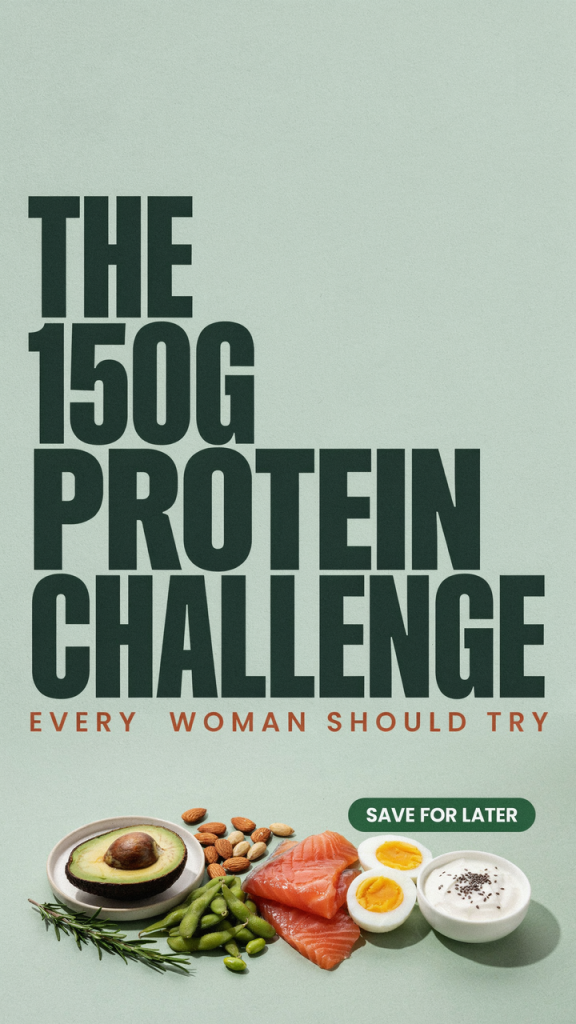
The 150g Protein Challenge Every Woman Should Try
Protein is the unsung hero of health, fitness, and sustainable weight loss. For many active women, aiming for a higher daily protein target—like 150 grams—can dramatically improve strength, recovery, body composition, satiety, and long-term metabolic health. This article walks you through why 150g matters, who should try it, how to reach it without feeling overwhelmed, and provides concrete recipes and a sample day that get you there. Consider this your practical, encouraging blueprint for taking on the 150g Protein Challenge.
Why 150g of Protein? The benefits for women
Hitting 150 grams of protein a day offers several evidence-backed benefits, especially for women who are physically active or focused on body composition:
- Muscle maintenance and growth: Higher protein supports muscle protein synthesis, helping preserve or build lean mass—particularly important during calorie cuts or as we age.
- Better recovery: Protein supplies amino acids needed to repair muscle after strength training or intense workouts.
- Increased satiety: Protein is the most filling macronutrient, which helps curb hunger and reduce overall calorie intake.
- Metabolic support: Higher protein diets can increase resting energy expenditure slightly and help maintain metabolic rate during weight loss.
- Bone and overall health: Dietary protein supports bone health, immune function, and hormone production.
Note: 150g is not a one-size-fits-all prescription. It’s a target most suited to active women—especially those weight training, involved in endurance sports, or aiming for aggressive recomposition. See the “Is 150g right for you?” section below.
Is 150g of protein right for you?
Consider 150g if:
– You’re strength training regularly (3+ sessions/week).
– You weigh 140 lb (64 kg) or more and want to prioritize muscle retention or growth.
– You’re in a calorie deficit and want to preserve lean mass.
– You’re an athlete or extremely active daily.
How to roughly assess your individual requirement:
– General recommendation for active people: 1.6–2.2 g/kg body weight.
– At 1.6 g/kg, a 70 kg (154 lb) woman would need ~112 g/day; at 2.2 g/kg, she’d need ~154 g/day.
– So 150g is toward the higher end and ideal if you’re training hard or aiming for fast recomposition.
Safety and special conditions:
– If you have kidney disease or other chronic medical conditions, consult your healthcare provider before increasing protein.
– Stay well-hydrated; increased protein requires more water for processing amino acids.
– Pregnant or breastfeeding individuals should check with a clinician; needs vary.
How to hit 150g: strategy and distribution
Key principles:
– Spread protein evenly across 3–6 meals/snacks. Aim for ~25–40g per meal.
– Use high-quality protein sources: poultry, fish, lean red meat, eggs, dairy, whey protein, soy, legumes, tempeh, seitan.
– Use protein-rich snacks (Greek yogurt, cottage cheese, jerky, edamame, protein shakes).
– Fortify meals with protein powder or Greek yogurt when necessary.
Suggested distribution example:
– Breakfast: 30–40g
– Mid-morning snack: 20–30g
– Lunch: 35–45g
– Afternoon snack: 15–25g
– Dinner: 30–40g
This spreads intake and maximizes muscle protein synthesis across the day.
High-protein foods to keep in your kitchen
Stock these staples to make 150g realistic and convenient:
– Whey, casein, or plant protein powder
– Greek yogurt and skyr
– Cottage cheese
– Eggs and egg whites
– Chicken breast, turkey breast
– Salmon, tuna, white fish
– Lean beef or pork tenderloin
– Canned tuna or salmon
– Edamame, tempeh, tofu
– Lentils, black beans, chickpeas
– Quinoa and buckwheat
– Seitan (wheat gluten)
– Nuts and nut butters (use for added calories & flavor)
– Shelf-stable jerky (low-sugar)
– Milk or fortified plant milks (soy has higher protein)
Practical tips to reach 150g without feeling stuffed
- Start with liquid protein: A mid-day protein smoothie (whey + milk) provides 20–30g without much volume.
- Use Greek yogurt as a base or topping rather than heavy whole-milk yogurts.
- Add powdered protein to oatmeal, soups, and pancake batters.
- Prioritize protein at breakfast—many women under-consume early in the day.
- Prepare protein in bulk (grilled chicken, baked tofu, lentils) so assembly is fast.
- Combine proteins—for example, beans + grain + a dairy or animal source—boosts total per meal.
- Watch fats and carbs if total calories are a concern; lean or reduced-fat options help increase protein density.
Sample Day: Omnivore 150g Protein Plan (practical + realistic)
Below is one practical day that totals ~150 grams. Portions and protein values are approximate and rounded.
- Breakfast: Protein Oat Bowl — 36 g
- Mid-morning: Whey Protein Smoothie with milk — 28 g
- Lunch: Grilled Chicken + Quinoa + Edamame Bowl — 42 g
- Afternoon snack: Cottage Cheese + Almonds — 18 g
- Dinner: Pan-Seared Salmon + Lentils + Greens (smaller portion) — 26 g
- Estimated total: 150 g
You’ll find recipes for several of these below so you can prepare them easily.
Recipes and meal ideas (explicitly listed)
Here are recipes you can use immediately. Each recipe lists ingredients (bulleted) and instructions (numbered) as requested. Protein estimates per serving are included.
Protein Oat Bowl (Breakfast) — estimated protein: ~36 g
Ingredients:
– 1/2 cup old-fashioned rolled oats
– 1 cup unsweetened soy or cow’s milk
– 1 scoop (≈25 g) whey or vegan protein powder (~20 g protein depending on powder)
– 1/2 cup nonfat Greek yogurt (~10 g)
– 1 tbsp chia seeds or 1 tbsp peanut butter (optional, ~3–4 g)
– Pinch of cinnamon and a few berries for flavor
Instructions:
1. Combine oats and milk in a small pot and bring to a simmer; cook according to package instructions until creamy.
2. Remove from heat and stir in protein powder until fully dissolved and smooth.
3. Transfer to a bowl and stir in Greek yogurt gently.
4. Add chia seeds or peanut butter and top with berries and cinnamon.
5. Eat warm. Total protein: approximated at 36 g depending on protein powder.
Whey + Milk Smoothie (Mid-Morning Snack) — estimated protein: ~28 g
Ingredients:
– 1 scoop whey protein powder (~20–25 g protein per scoop)
– 1 cup skim milk or high-protein plant milk (soy) (~8 g)
– 1 small banana or 1/2 cup frozen berries
– 1/2 cup ice (optional)
Instructions:
1. Add protein powder and milk to a blender.
2. Add banana/berries and ice.
3. Blend until smooth and creamy.
4. Pour and drink immediately. Total protein: ~28 g.
Grilled Chicken + Quinoa + Edamame Bowl (Lunch) — estimated protein: ~42 g
Ingredients:
– 5 oz (approx. 140 g) cooked chicken breast (~33 g protein)
– 3/4 cup cooked quinoa (~6 g protein)
– 1/2 cup shelled edamame (~9 g protein)
– 1–2 cups mixed salad greens and roasted veggies
– 1 tbsp olive oil, lemon juice, salt, and pepper
Instructions:
1. Season chicken breast with salt, pepper, and your favorite herbs; grill or pan-sear until internal temperature reaches 165°F (74°C). Let rest and slice.
2. Cook quinoa according to package directions (1 part quinoa to 2 parts water), fluff with fork.
3. Steam or microwave edamame until heated through.
4. Assemble bowl with greens, quinoa, edamame, and sliced chicken. Drizzle with olive oil and lemon juice.
5. Toss and serve. Protein estimate: ~42 g.
Cottage Cheese + Almond Snack Bowl (Afternoon Snack) — estimated protein: ~18 g
Ingredients:
– 1/2 cup low-fat cottage cheese (~14 g protein)
– 1 tablespoon sliced almonds (~1.6 g protein) or 1 oz whole almonds (~6 g) depending on preference
– 1 tsp honey or fruit for sweetness (optional)
– Sprinkle of cinnamon
Instructions:
1. Spoon cottage cheese into a small bowl.
2. Top with sliced almonds and a drizzle of honey or fruit.
3. Sprinkle cinnamon and enjoy. Protein will vary by almond amount—estimate ~18 g with 1 oz almonds.
Pan-Seared Salmon + Lentils + Greens (Dinner) — estimated protein: ~24–28 g
Ingredients:
– 3.5 oz (100 g) salmon fillet (~20–22 g protein)
– 1/3 cup cooked green or brown lentils (~6–7 g protein)
– 1 cup steamed or sautéed leafy greens (spinach/kale)
– 1 tsp olive oil, salt, pepper, lemon wedge
Instructions:
1. Season salmon with salt and pepper. Heat a non-stick skillet with 1 tsp oil on medium-high.
2. Sear salmon skin-side down for 3–4 minutes, flip and cook another 2–3 minutes until cooked to desired doneness.
3. Heat cooked lentils in a pot or microwave; season lightly.
4. Sauté or steam greens until wilted and tender.
5. Plate salmon over lentils and greens, squeeze lemon over top. Total protein: ~26 g.
Tofu Stir-Fry (Vegan Recipe — high-protein option) — estimated protein: ~30 g
Ingredients:
– 7 oz (200 g) firm tofu (~22 g protein)
– 1/2 cup cooked edamame (~9 g)
– 2 cups mixed stir-fry vegetables (bell pepper, broccoli, snow peas)
– 1 tbsp soy sauce or tamari, 1 tsp sesame oil, garlic, ginger
– 1/2 cup cooked brown rice or cauliflower rice (optional)
Instructions:
1. Press tofu to remove excess moisture, then cube.
2. Heat a skillet with sesame oil. Add tofu cubes and cook until golden on all sides.
3. Add garlic and ginger, then vegetables; stir-fry until crisp-tender.
4. Stir in edamame and soy sauce; heat through.
5. Serve over brown rice or cauliflower rice for lower carbs. Protein estimate: ~30 g (may vary with tofu brand).
Vegetarian and Vegan sample day options (explicitly listed)
You can reach 150g on a vegetarian or vegan pattern with planning. Here are compact sample-day ideas (combining recipes above and swaps):
Vegetarian sample day (approx. 150 g):
– Breakfast: Protein Oat Bowl with whey or dairy-free high-protein powder + Greek yogurt (36 g)
– Snack: Cottage cheese + walnuts (20 g)
– Lunch: Lentil salad with quinoa and 3 oz tempeh (40 g)
– Snack: Protein smoothie made with soy milk and vegan protein (25 g)
– Dinner: Tofu Stir-Fry (30 g)
– Total ≈ 151 g
Vegan sample day (approx. 150 g):
– Breakfast: Oatmeal with 2 scoops vegan protein powder + soy milk (40 g)
– Snack: Edamame + almonds (20 g)
– Lunch: Tempeh quinoa bowl + chickpeas (45 g)
– Snack: Vegan protein smoothie with almond butter and soy milk (25 g)
– Dinner: Black bean & lentil chili with nutritional yeast and seitan or extra tempeh (20 g)
– Total ≈ 150 g
Tips for vegetarians and vegans:
– Use a high-quality vegan protein blend (pea + rice) with ~20–25 g per scoop.
– Combine legumes and grains for a complete amino acid profile.
– Use tofu, tempeh, seitan, and edamame liberally—they’re protein-dense.
Quick strategies to add 10–20g when you’re short
If you finish the day at 130–140g and want to hit 150:
– Add 1 scoop whey or vegan protein powder mixed with water or milk (~20–25 g).
– Add a cup of Greek yogurt as a snack (~15–20 g).
– Eat 3–4 oz of deli turkey or chicken breast (~20–25 g).
– Add 1 cup of cooked lentils or beans (~16 g).
Common FAQs
Q: Will 150g of protein make me bulky?
A: No. Women generally don’t have the hormonal profile to bulk up like men. Additional protein supports lean mass and helps shape your body, not bulk it unless paired with an aggressive calorie surplus and specific hypertrophy training.
Q: Is such a high protein intake hard on kidneys?
A: For healthy individuals, increased dietary protein is generally safe. If you have kidney disease or other serious medical conditions, consult your provider.
Q: When is the best time to eat protein?
A: Distribute protein across meals for optimal muscle protein synthesis: aim for 3–4 protein-containing meals/snacks. A post-workout protein dose within 1–2 hours is practical for recovery.
Q: Do I need protein powders?
A: No, but they’re a convenient, low-volume way to add 20–30 g of high-quality protein quickly—especially useful for busy days.
Tracking and progress
- Use a food app for a week to see your usual protein intake and where you can add density.
- Aim to add protein first to the meals where you’re lowest—usually breakfast and snacks.
- If you’re strength training, monitor strength and recovery; if progress stalls, you may need slightly more calories or protein.
Final encouragement: try the 150g Protein Challenge for 4 weeks
Make this a 4-week experiment: plan, prep, and track. Many women report improved energy, better recovery, easier weight management, and feeling stronger. Start gradually—add a protein-rich snack, switch to Greek yogurt, or tack a protein scoop into your breakfast. Small changes compound.
Conclusion
The 150g Protein Challenge is a practical, empowering way to prioritize muscle, satiety, and metabolic health. It’s not about extremes; it’s about intentionally distributing high-quality protein across your day so your body has the amino acids it needs to recover, build, and stay satisfied. Whether you’re omnivore, vegetarian, or vegan, sensible swaps and a few simple recipes (like the protein oat bowl, a whey smoothie, a chicken-quinoa bowl, or tofu stir-fry) can make 150g achievable and pleasant. Try the sample day, adapt the recipes, and see how your body and performance respond. If you have medical conditions, consult a healthcare professional. Otherwise—pick a start date, prep a few meals, and take on the 150g Protein Challenge. You’ve got this.