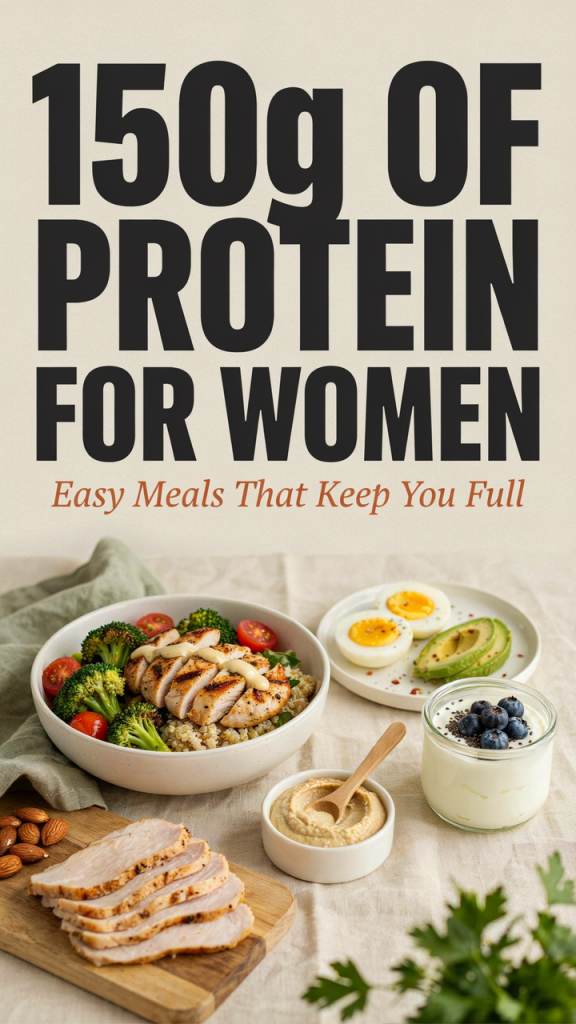
150g of Protein for Women: Easy Meals That Keep You Full
Eating 150 grams of protein in a day might sound intimidating — especially for women balancing work, workouts, and life — but it’s absolutely achievable with smart meal choices and simple recipes. Whether your goal is to build or maintain muscle, support recovery after workouts, manage appetite, or shift body composition, a higher-protein plan can be very effective. This guide is packed with practical advice, sample meal plans, and easy recipes you can make any day of the week. Everything below is designed to be realistic, filling, and delicious.
Read on for a full-day sample that hits 150g of protein, plus multiple recipes and swaps so you can mix-and-match based on preference, time, and dietary needs.
Why 150g of Protein? Who is it for?
- The Recommended Dietary Allowance (RDA) for protein is 0.8 g/kg body weight — but that’s a minimal requirement to prevent deficiency, not an optimal level for active people.
- Women who are highly active, strength-training, trying to lose fat while preserving muscle, pregnant or breastfeeding (with medical guidance), or following higher-protein plans often aim for between 1.6–2.4 g/kg or simply target an absolute goal like 120–150 g/day.
- 150g is a common target for women who lift weights regularly and want to maximize recovery, satiety, and lean mass retention.
Important: If you have kidney disease, are pregnant, breastfeeding, or have other health conditions, consult your healthcare provider before significantly increasing protein intake.
How to distribute 150g sensibly
- Aim for 3–6 meals/day with protein at each eating occasion. Distributing protein evenly (e.g., 30 g per meal across 5 meals) improves muscle protein synthesis.
- Combine complete animal proteins (meat, fish, eggs, dairy) or pair complementary plant proteins (legumes + grains) to ensure adequate essential amino acids.
- Include a protein-rich snack after workouts or between meals.
- Use high-quality protein powders if you need a convenient boost without a lot of extra calories.
Below I lay out a sample day that totals ~150 g of protein and include explicit recipes for each meal and snack.
Sample Day: 150g Protein (balanced and filling)
- Breakfast — Protein Oatmeal: 40g protein
- Morning snack — Greek Yogurt Power Parfait: 15g protein
- Lunch — Chicken, Quinoa & Veg Bowl: 35g protein
- Afternoon snack — Tuna & Avocado Rice Cakes: 20g protein
- Dinner — Pan-Seared Salmon with Lentils & Greens: 30g protein
- Evening snack — Cottage Cheese with Cinnamon & Almonds: 10g protein
Total: 150g protein
Each of the recipes below includes ingredients and step-by-step instructions so you can cook with confidence.
Breakfast (40 g protein)
Protein Oatmeal with Peanut Butter & Berries
Ingredients
– 1/2 cup (40 g) rolled oats
– 1 cup (240 ml) skim milk or fortified soy milk (about 8–9 g protein)
– 1 scoop (25 g protein) whey or plant-based protein powder (adjust based on powder)
– 2 tbsp natural peanut butter (7–8 g protein)
– 1/2 cup mixed berries (fresh or frozen)
– Pinch of salt and cinnamon to taste
Instructions
1. Combine oats and milk in a small pot; cook over medium heat, stirring until thickened (about 5 minutes).
2. Remove from heat and stir in protein powder until smooth (if thick, add a splash of milk).
3. Stir in peanut butter until combined.
4. Top with berries, a pinch of cinnamon, and a small sprinkle of salt.
5. Serve warm. (If using plant protein that is less concentrated, adjust scoop size to hit the protein target.)
Protein estimate: ~40 g (varies with exact protein powder and milk choice)
Morning Snack (15 g protein)
Greek Yogurt Power Parfait
Ingredients
– 1 cup (245 g) plain nonfat Greek yogurt (approx. 15–20 g protein depending on brand; choose 15 g for this snack)
– 2 tbsp chopped walnuts or almonds
– 1 tsp honey or maple syrup (optional)
– 2 tbsp chia seeds (optional extra fiber)
Instructions
1. Spoon Greek yogurt into a bowl or jar.
2. Sprinkle nuts and chia seeds over the yogurt.
3. Drizzle with honey if you want a touch of sweetness.
4. Stir gently and enjoy.
Protein estimate: ~15 g (use a 3/4 cup if your brand has higher protein to balance day total)
Lunch (35 g protein)
Chicken, Quinoa & Veg Bowl
Ingredients
– 5 oz (140 g) cooked chicken breast, sliced (approx. 33 g protein)
– 1/2 cup cooked quinoa (about 4 g protein)
– 1 cup steamed broccoli or mixed vegetables
– 1 tbsp olive oil or avocado oil
– Juice of 1/2 lemon, salt, and pepper
– Optional: 1/4 avocado, chopped
Instructions
1. If chicken is not cooked, season and grill or pan-sear a chicken breast for 6–8 minutes per side until internal temp reaches 165°F (75°C). Let rest, then slice.
2. Cook quinoa according to package instructions (usually 1 part quinoa to 2 parts water; bring to a boil then simmer 15 minutes).
3. Steam broccoli or roast mixed vegetables until tender-crisp.
4. Assemble bowl: quinoa base, add chicken slices and vegetables.
5. Drizzle with olive oil and lemon juice; season with salt and pepper. Top with avocado if using.
Protein estimate: ~35 g (depending on chicken portion)
Afternoon Snack (20 g protein)
Tuna & Avocado Rice Cakes
Ingredients
– 1 can (5 oz / 140 g) tuna in water, drained (about 20–25 g protein; use 5 oz to hit 20 g)
– 1/4 avocado, mashed
– 2 plain brown rice cakes
– Salt, pepper, lemon juice, and chopped chives or red onion to taste
Instructions
1. In a small bowl, flake the drained tuna and mix with mashed avocado, lemon juice, salt, pepper, and chives.
2. Spread the tuna-avocado mixture over rice cakes.
3. Serve immediately.
Protein estimate: ~20 g
Dinner (30 g protein)
Pan-Seared Salmon with Lentils & Greens
Ingredients
– 4 oz (115 g) salmon fillet (about 23 g protein)
– 1/2 cup cooked green or brown lentils (about 8–9 g protein)
– 2 cups mixed greens (spinach, arugula)
– 1 tsp olive oil
– Lemon wedge, salt, pepper, optional herbs (dill or parsley)
Instructions
1. Cook lentils according to package instructions (usually simmer 20–25 minutes) and season lightly.
2. Heat a nonstick skillet over medium-high heat. Season salmon with salt and pepper.
3. Add a tiny amount of oil to the pan and place salmon skin-side down; cook 4–5 minutes until crisp, flip and cook another 3–4 minutes until desired doneness.
4. Toss mixed greens with a squeeze of lemon and a drizzle of olive oil.
5. Plate salmon over lentils and greens. Garnish with herbs and extra lemon.
Protein estimate: ~30–32 g
Evening Snack (10 g protein)
Cottage Cheese with Cinnamon & Almonds
Ingredients
– 1/2 cup low-fat cottage cheese (approx. 12–14 g protein; use 1/3–1/2 cup to match 10 g)
– 1 tbsp sliced almonds
– Sprinkle cinnamon
– Optional: small handful of sliced apple or berries
Instructions
1. Place cottage cheese in a small bowl.
2. Top with sliced almonds and a sprinkle of cinnamon.
3. Add fruit if desired and enjoy.
Protein estimate: ~10–12 g (adjust portion to meet final daily total)
Vegetarian & Vegan Alternatives (each is an explicit recipe)
If you prefer plant-based options, here are high-protein swaps that still keep you around the 150 g goal. Each is written with ingredients and instructions.
Tofu & Edamame Stir-Fry (Vegetarian/Vegan)
Ingredients
– 8 oz (225 g) extra-firm tofu, pressed and cubed (approx. 20 g protein)
– 1 cup cooked edamame (shelled) (~17 g protein)
– 2 cups mixed stir-fry vegetables (bell pepper, broccoli, carrots)
– 2 tbsp low-sodium soy sauce or tamari
– 1 tbsp sesame oil
– 1 tsp grated ginger and 1 clove garlic, minced
– Optional: 1/2 cup cooked brown rice
Instructions
1. Press and cube tofu; pat dry.
2. Heat sesame oil in a large pan; sauté garlic and ginger for 30 seconds.
3. Add tofu cubes and pan-sear until golden on all sides.
4. Add vegetables and edamame; stir-fry until tender-crisp.
5. Add soy sauce and toss to coat. Serve over rice if using.
Protein estimate: ~37 g (with edamame and tofu; increase portions to reach daily target)
Lentil & Quinoa Power Salad (Vegetarian)
Ingredients
– 1 cup cooked lentils (~18 g protein)
– 1/2 cup cooked quinoa (~4 g protein)
– 1/4 cup chopped pumpkin seeds (~8–9 g protein)
– Mixed greens, cherry tomatoes, cucumber
– Dressing: olive oil, lemon juice, mustard, salt and pepper
Instructions
1. Combine cooked lentils and quinoa in a bowl.
2. Add vegetables and pumpkin seeds.
3. Whisk dressing and toss salad.
4. Serve chilled or at room temperature.
Protein estimate: ~30 g
Protein Smoothie (Quick vegan option)
Ingredients
– 1.5 scoops plant-based protein powder (approx. 25 g protein)
– 1 cup fortified soy milk (7–9 g protein)
– 1 tbsp peanut butter (4 g protein)
– 1/2 banana and ice
Instructions
1. Place all ingredients in a blender.
2. Blend until smooth.
3. Pour and enjoy immediately.
Protein estimate: ~35–40 g (depending on powder)
Quick swaps and hacks to boost protein without extra cooking
- Add a scoop of protein powder to oatmeal, yogurt, smoothies, or pancake batter. (Ingredients and instructions: scoop + stir — keep it simple.)
- Snack on 2 hard-boiled eggs (12–14 g protein) — Ingredients: 2 eggs. Instructions: boil 9–12 minutes then cool, peel, and eat.
- Keep single-serve canned tuna or salmon in the pantry for a 20–25 g protein snack — Ingredients: 1 can tuna. Instructions: drain and enjoy on crackers or salad.
- Use Greek yogurt instead of sour cream or mayo in dressings to add 8–15 g protein per cup.
- Top meals with hemp seeds or chia for small protein boosts (hemp ~9 g per 3 tbsp).
Note: For these quick swaps, present ingredients as listed and the instructions are the simple one- or two-step actions above.
Tips for success and staying full
- Prioritize fiber-rich vegetables and whole grains alongside protein to maximize satiety.
- Drink enough water — dehydration can be mistaken for hunger.
- Start with a protein-rich breakfast to reduce mid-morning cravings.
- Prepare proteins in bulk: grill chicken, roast salmon, cook a pot of lentils or quinoa, and store in portioned containers.
- Use measuring tools or a nutrition app at first to learn portion sizes and protein counts; it becomes intuitive over time.
Grocery list (basics to hit 150 g/day consistently)
- Lean proteins: chicken breast, canned tuna, salmon fillets
- Dairy & alternatives: Greek yogurt, cottage cheese, milk or fortified plant milk
- Legumes & grains: lentils, quinoa, oats
- Protein powder (whey or plant-based)
- Nuts, seeds, nut butters
- Fresh produce: berries, greens, broccoli, avocados
- Eggs and tofu
- Olive oil, herbs, spices, rice cakes
Addressing common concerns
- Will eating this much protein cause weight gain? Protein itself is not fattening — calories matter. Protein can increase satiety and help preserve lean mass while dieting. If overall calories exceed needs, weight gain can occur.
- Is 150 g safe for women? For most healthy women, yes. If you have kidney disease, speak with your healthcare provider.
- Does protein timing matter? Spread protein across meals for better muscle protein synthesis. Post-workout protein within a couple of hours is helpful for recovery.
How to track progress without obsession
- Track protein and calories for the first 1–2 weeks to learn portion sizes.
- After that, aim for a mental checklist: protein at every meal, at least one high-protein snack, and a post-workout protein source.
- Monitor energy, recovery, hunger, and body composition rather than fixating on the scale.
Conclusion
Hitting 150 grams of protein a day as a woman is a practical goal when you plan a mix of concentrated sources (lean meats, dairy, protein powder) and complementary plant proteins (legumes, quinoa, seeds). The recipes in this guide — from a hearty protein oatmeal to a satisfying salmon dinner — are straightforward, filling, and mix-and-match friendly so you can adapt them to your schedule and preferences. Start by testing the sample day, swap in vegetarian options if needed, and prepare simple staples in bulk to make high-protein eating effortless.
You’ve got this. With a little planning, you can feel fuller longer, recover faster, and support your fitness goals — all while enjoying real, delicious food. If you’re new to higher-protein eating, try increasing protein gradually and consult a healthcare professional if you have any chronic conditions.