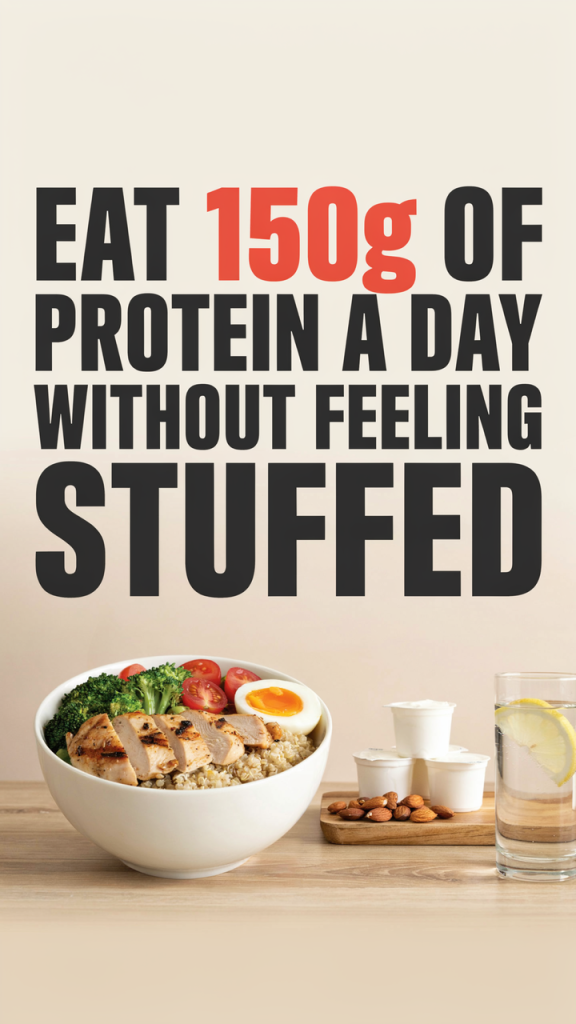
How to Eat 150g of Protein a Day Without Feeling Stuffed
Eating 150 grams of protein a day can sound intimidating — images of giant steaks, endless chicken breasts, and a constant feeling of being overfull come to mind. But hitting that target doesn’t have to mean stuffing yourself at every meal. With smarter choices, better timing, and a few practical strategies, you can reach 150g while feeling comfortable, energized, and satisfied.
In this guide you’ll find:
– Why someone might aim for 150g/day
– Principles that make high-protein intake comfortable
– The best protein-dense foods and combinations
– Practical strategies (timing, texture, volume control)
– Eight easy, realistic meal ideas/recipes (with ingredients and step-by-step instructions) designed to help you hit ~150g without feeling stuffed
– Three sample day plans and a short FAQ
Read on — this is a doable, sustainable approach that blends science with real-life eating.
Why 150g of protein?
Hitting 150 grams of protein per day is a common target for:
– People aiming to build or preserve muscle while losing fat
– Athletes and strength trainers with higher protein needs
– People who want to feel fuller for longer while maintaining lean mass
For many adults training regularly, 1.6–2.2 g/kg of body weight is recommended to support muscle growth and recovery. For someone around 70–95 kg (155–210 lb), 150g falls right into that range. But the challenge is not just the absolute amount — it’s how to spread that protein across the day so you digest comfortably and keep appetite under control.
Core principles to avoid feeling stuffed
H2-level quick checklist:
– Spread protein across 4–6 eating occasions. Don’t put it all at one meal.
– Use protein-dense, low-volume items (e.g., whey/plant protein powders, Greek yogurt, cottage cheese).
– Include more liquids and semi-liquids (shakes, soups) which deliver protein with less bulk.
– Combine lean, concentrated proteins with fibrous veggies and healthy fats for satiety and nutrient balance.
– Prioritize protein quality and digestibility (animal complete proteins, or intentional plant combinations).
– Adjust portion sizes and energy density: smaller, more protein-focused portions can provide protein without large plate volume.
Protein-dense food categories (what to prioritize)
Animal proteins
- Whey, casein, other protein powders — concentrated and low-volume
- Greek yogurt, Skyr, cottage cheese — high protein per cup
- Lean poultry, fish, lean beef — high-quality complete proteins
- Eggs & egg whites — versatile; egg whites especially low-volume
Plant proteins
- Tofu, tempeh, seitan — high protein per serving, great for meals
- Lentils, chickpeas, black beans — combine with grains for completeness
- Pea/soy protein powders — valuable for shakes and baking
Concentrated snacks
- Jerky (beef/turkey) — lightweight, high protein
- Protein bars/bites — look for >15–20g protein per bar without excessive sugar
- Nuts and seeds — protein-dense but calorie-dense; use for boosting without bulk
Dairy & alternatives
- Milk (cow or soy) — adds protein to shakes and oats
- Fortified plant milks (soy) — better protein than most plant milks
Practical strategies: How to structure the day
- Aim for 25–40 g protein at breakfast, 20–40 g at lunch, 20–40 g at dinner, and 10–30 g across 1–3 snacks/shakes.
- Use a protein shake for one eating occasion (fast, low volume).
- Replace one heavy meal with a protein-forward bowl (smaller volume, denser protein).
- Snack intentionally: cottage cheese, Greek yogurt, jerky, or protein bites.
- If you’re not used to high protein, increase gradually to avoid digestive upset.
- Drink water and include enzymes or probiotics if you notice bloating (consult your clinician if persistent).
How to make protein feel light
- Choose moist, tender preparations: poached fish, shredded chicken, smoothies, stews.
- Use small plates/bowls: perception matters — smaller portion, bigger satisfaction.
- Add flavor without volume: sauces, spices, vinegar, citrus — small amounts go a long way.
- Use protein fortifiers: sprinkle protein powder into yogurt, soups, pancakes.
- Incorporate blended soups or blended dips to deliver nutrients with less chewing fatigue.
8 Recipes & Meal Ideas (ingredients + instructions)
Below are eight practical recipes designed to be enjoyable, not filling — each includes an approximate protein estimate so you can tally toward 150g. Swap in alternatives (plant proteins, dairy-free options) where noted.
1) Berry Protein Smoothie — ~35 g protein
Ingredients:
– 1 scoop (25–30g) whey or pea protein powder (~20–25 g protein)
– 1 cup (240 mL) unsweetened soy milk (8 g protein) or cow’s milk (8 g)
– 1/2 cup plain Greek yogurt (approx. 10–12 g protein)
– 1/2 cup mixed berries (fresh or frozen)
– 1 handful spinach (optional)
– 1 tbsp peanut butter or almond butter (optional, flavor and calories)
– Ice cubes as needed
Instructions:
1. Add the soy milk and protein powder to the blender; blend briefly to dissolve.
2. Add Greek yogurt, berries, spinach, and peanut butter.
3. Blend until smooth, adding ice for desired thickness.
4. Taste and adjust sweetness with a small drizzle of honey or a zero-calorie sweetener if desired. Serve cold.
Notes: Swap to plant-based protein powder to keep vegan. This is fast, hydrating, and easy to sip without feeling heavy.
2) Savory Egg-White & Cottage Cheese Omelette — ~35 g protein
Ingredients:
– 6 large egg whites (approx. 20 g protein)
– 1/2 cup low-fat cottage cheese (approx. 14 g protein)
– 1 cup baby spinach, roughly chopped
– 1/4 cup diced tomatoes or bell pepper
– 1 tsp olive oil or cooking spray
– Salt, pepper, and herbs to taste
Instructions:
1. Whisk egg whites with salt and pepper until slightly frothy.
2. Heat oil in a non-stick pan over medium heat and sauté spinach and peppers until wilted.
3. Pour egg whites into the pan and cook gently until edges set.
4. Spoon cottage cheese onto one half of the omelette and fold the other half over.
5. Reduce heat, cover for 1–2 minutes to warm through, then slide onto a plate and serve.
Notes: Egg whites provide concentrated protein without the volume and fat of whole eggs. Cottage cheese adds creaminess and more protein.
3) High-Protein Overnight Oats (Greek Yogurt + Powder) — ~30 g protein
Ingredients:
– 1/2 cup rolled oats
– 3/4 cup unsweetened soy milk or cow’s milk
– 1/2 cup plain Greek yogurt (~10–12 g protein)
– 1 scoop protein powder (~20–25 g protein)
– 1 tbsp chia seeds (optional)
– 1/2 cup sliced berries or banana
– Pinch of cinnamon and vanilla extract
Instructions:
1. In a jar or bowl, combine oats, milk, Greek yogurt, and protein powder; stir until well mixed.
2. Add chia seeds and fruit, then cover and refrigerate overnight (or at least 2–3 hours).
3. Stir before eating and top with extra fruit or a sprinkle of nuts if desired.
Notes: This is a dense but semi-solid breakfast that sits light if you keep the serving size moderate.
4) Chicken & Quinoa Power Bowl — ~40 g protein
Ingredients:
– 5 oz (140 g) cooked chicken breast, sliced (~35–40 g protein)
– 1/2 cup cooked quinoa (~4 g protein)
– 1 cup mixed salad greens or shredded kale
– 1/4 cup roasted chickpeas or edamame (~3–6 g protein)
– 1 tbsp olive oil and lemon vinaigrette
– Herbs, salt, pepper, and optional 1 tbsp feta
Instructions:
1. Warm or chill the cooked chicken and quinoa as preferred.
2. Assemble greens in a bowl, add quinoa and chicken, and top with chickpeas or edamame.
3. Drizzle with dressing and toss lightly. Finish with herbs and a squeeze of lemon.
Notes: A balanced bowl that is protein-forward without a huge plate volume. Make chicken in bulk and portion to save time.
5) Tuna Salad Lettuce Wraps — ~30–40 g protein (depending on tuna amount)
Ingredients:
– 1 can (165 g drained) tuna in water (approx. 40 g protein) — adjust to half the can if you prefer ~20 g
– 2 tbsp plain Greek yogurt or light mayo
– 1 tsp Dijon mustard
– 1/4 cup diced celery and red onion
– 4–6 large lettuce leaves (butter or romaine)
– Salt, pepper, lemon juice, and chopped herbs
Instructions:
1. Drain tuna and flake into a bowl.
2. Stir in Greek yogurt (or mayo), mustard, celery, onion, lemon juice, salt, and pepper.
3. Spoon portions onto lettuce leaves, fold into wraps, and serve.
Notes: Lettuce wraps reduce volume and carbs while delivering concentrated protein; ideal as a light lunch that still packs a protein punch.
6) Tempeh Stir-Fry with Broccoli & Snap Peas — ~30 g protein
Ingredients:
– 175 g tempeh (about 1 cup cubed) (~30 g protein)
– 1 cup broccoli florets
– 1/2 cup snap peas
– 1 tbsp soy sauce or tamari
– 1 tsp sesame oil, garlic, and ginger
– 1 tsp olive oil for cooking
– Optional 1/2 cup cooked brown rice (adds ~3 g protein) if you want more carbs
Instructions:
1. Press and cube tempeh. In a pan, heat oil and brown tempeh cubes on all sides.
2. Add garlic and ginger, then add broccoli and snap peas; stir-fry until tender-crisp.
3. Add soy sauce/tamari and toss to coat. Serve hot over rice or enjoy solo.
Notes: Tempeh is a fermentation-boosted soy product that’s filling but not heavy — a great vegetarian option.
7) Cottage Cheese Snack Bowl — ~28 g protein
Ingredients:
– 1 cup low-fat cottage cheese (~24–28 g protein)
– 1 tbsp ground flaxseed or chia
– 1/4 cup fresh berries or sliced cucumber (for savory version)
– 1 tbsp almond slivers or a sprinkle of hemp seeds
– Drizzle of honey (optional for sweet) or cracked pepper and herbs (savory)
Instructions:
1. Spoon cottage cheese into a bowl.
2. Top with chosen mix-ins (sweet or savory).
3. Stir gently and enjoy as a snack or mini-meal.
Notes: Cottage cheese is compact in protein but low in bulk; excellent for mid-morning or evening protein hits.
8) No-Bake Protein Energy Bites — ~6–8 g protein per ball (makes 12)
Ingredients:
– 1 cup oats
– 1/2 cup natural peanut butter (~14 g protein total across the batch)
– 1/2 cup vanilla protein powder (~20–25 g protein)
– 1/4 cup honey or maple syrup
– 2 tbsp ground flax or chia
– 1/4 cup dark chocolate chips (optional)
Instructions:
1. Mix oats, protein powder, flax/chia, peanut butter, and honey in a bowl until a sticky dough forms.
2. Fold in chocolate chips if using.
3. Roll into 12 equal balls, refrigerate for 30–60 minutes to firm up.
4. Store in the fridge for up to 1 week.
Notes: Great for on-the-go protein that doesn’t feel heavy; have 1–2 balls as a snack to top up protein.
Sample day plans (use the recipes above to build days near 150g)
Each plan aims for roughly 140–170 g protein. Adjust portions depending on exact protein powder and product labels.
Sample Day A — Shake-focused (easier on appetite)
- Breakfast: Berry Protein Smoothie (35 g)
- Mid-morning snack: Cottage Cheese Snack Bowl (28 g)
- Lunch: Tuna Salad Lettuce Wraps (30 g)
- Afternoon snack: 2 Protein Energy Bites + black coffee (12–16 g)
- Dinner: Chicken & Quinoa Power Bowl (40 g)
Estimated total: ~145–150 g
Sample Day B — Whole-food-heavy
- Breakfast: Egg-White & Cottage Cheese Omelette (35 g)
- Snack: Greek yogurt + protein powder stirred in (20–25 g)
- Lunch: Tempeh Stir-Fry with veggies (30 g)
- Afternoon snack: Jerky + small apple (15–20 g)
- Dinner: High-Protein Overnight Oats as evening snack/dessert if needed (~30 g)
Estimated total: ~150–160 g
Sample Day C — Vegetarian approach
- Breakfast: High-Protein Overnight Oats (30 g)
- Snack: Protein Smoothie with pea protein (30–35 g)
- Lunch: Tempeh Stir-Fry (30 g)
- Snack: Cottage Cheese Snack Bowl (28 g) or protein energy bites (12–16 g)
- Dinner: Lentil & quinoa salad (combine half-cup lentils ~9 g + quinoa 4 g + add tofu 10–15 g)
Estimated total: ~150 g
Common questions
Will eating this much protein harm my kidneys?
For healthy individuals, higher protein diets are generally safe. If you have pre-existing kidney disease or other medical conditions, consult your physician before making major changes.
What about digestion and gas from lots of protein?
Increase intake gradually, focus on lean, well-cooked proteins, and include probiotics or digestive enzymes if needed. For plant proteins, soaking/sprouting grains and legumes can help.
Can I rely mostly on protein powder?
Protein powders are useful for convenience and reducing volume, but whole foods provide other nutrients. Aim to balance powders with real-food protein sources.
Should I count protein from everything?
Yes—count the full day’s protein (yogurt, milk, mixed ingredients). Being aware helps you spread intake and avoid huge meals.
Final tips to make this sustainable
- Meal prep protein portions (grilled chicken, cooked tempeh, boiled eggs) for easy assembly.
- Use one “liquid” protein meal daily (smoothie/shake) to reduce volume.
- Keep a small protein snack in your bag (jerky, cottage cheese cup, protein bar).
- Listen to hunger cues: prioritize protein when you do eat, but don’t force large meals.
- Track a few days to learn what combinations leave you energized vs. stuffed, then repeat what works.
Conclusion
Hitting 150 grams of protein a day doesn’t have to be a chore — nor does it have to leave you feeling overloaded. With a few proven strategies (spread intake, use concentrated protein sources, and choose moist, lower-volume preparations) you can meet high-protein goals comfortably. The recipes and sample days above give practical, real-world ways to eat more protein without the bloat: think smoothies, cottage cheese, modest bowls, and smart snacks. Start by selecting two strategies you can implement this week — maybe a morning smoothie and a cottage-cheese snack — and build from there. Small adjustments add up quickly, and with the right plan you’ll enjoy the benefits of higher protein intake without sacrificing comfort or flavor.