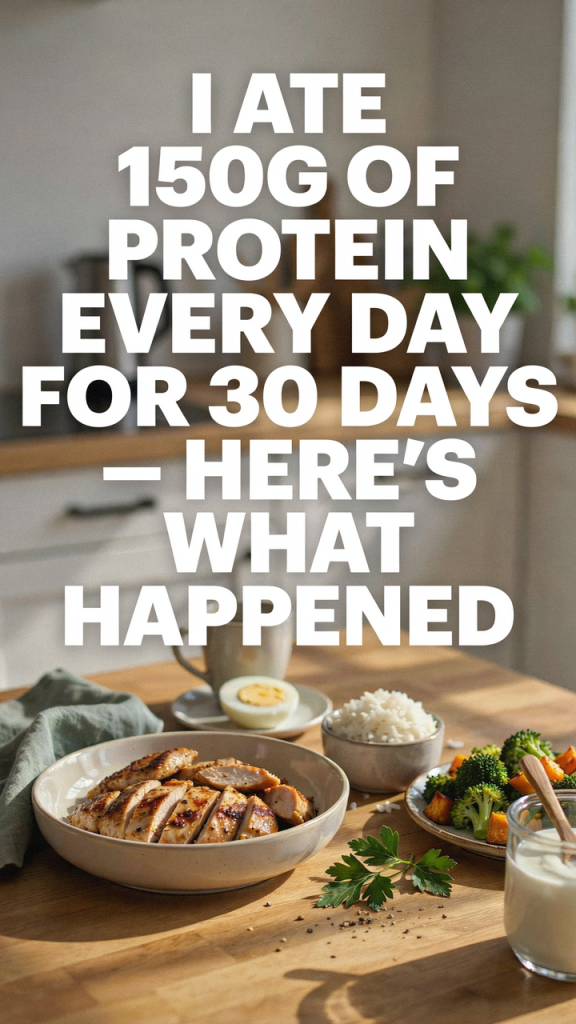
I Ate 150g of Protein Every Day for 30 Days—Here’s What Happened
Introduction
I decided to run a real-world experiment: eat 150 grams of protein every day for 30 days and record what changed — body composition, energy, digestion, sleep, mood, workouts, and appetite. As someone who writes about health and nutrition, I wanted to experience the practical challenges and benefits of consistently high protein intake and share an actionable guide for anyone curious about trying the same thing.
This article covers:
– Why 150g of protein? (and who it suits)
– How I tracked protein and planned meals
– Exact recipes and meal ideas I used (with ingredients and step-by-step instructions)
– What happened physically and mentally over 30 days
– Side effects, common pitfalls, and safety notes
– Practical tips to hit 150g daily sustainably
If you’re considering a high-protein phase for fat loss, muscle build, or better appetite control, this full account should help you decide and build your own plan.
Why 150g of protein? (Who is this for?)
Why I chose 150 grams
- It’s a round, easy-to-track target that’s higher than the standard RDA (0.8 g/kg).
- For many active adults (especially those who lift weights), 150g falls into a range that supports muscle protein synthesis, satiety, and recovery.
- It’s realistic to reach daily with a few protein-focused meals and snacks, yet high enough to test effects.
Who this roughly fits
– Someone who weighs about 75–95 kg (165–210 lb) and is moderately to highly active: 1.2–2.0 g/kg is a common recommendation for athletes and resistance-trained individuals.
– If you’re much lighter, pregnant, nursing, or have kidney issues, talk to a clinician before trying a high-protein plan.
How I tracked protein and calories
Tools and tracking
- I used a simple food tracking app and a kitchen scale. Accuracy matters when you’re experimenting.
- I logged protein grams, total calories, carbs, and fats to avoid accidentally overeating or under-eating.
- I aimed for roughly the same calorie range each day, so protein changes were the main variable.
Timing and distribution
- I spread protein roughly across 4–5 eating occasions: breakfast, lunch, dinner, and 1–2 snacks or shakes.
- Hitting 25–40g per meal plus a 20–40g shake or snack made 150g comfortable and consistent.
Sample day: what I ate that added to 150g
A realistic full day (approx. 150–160g protein)
- Breakfast: High-Protein Breakfast Scramble — 40g
- Mid-morning: Greek Yogurt Protein Smoothie — 40g
- Lunch: Chicken, Quinoa & Veg Bowl — 45g
- Snack: Tuna Avocado Salad — 25g
- (Optional small dessert or extra snack if needed)
I’ve included the full recipes for each of these so you can reproduce the day exactly. Each recipe lists ingredients and numbered instructions.
Recipes and meal ideas (all explicitly listed)
High-Protein Breakfast Scramble (approx. 40g protein)
Ingredients
– 3 whole eggs
– 4 egg whites (or 1/2 cup liquid egg whites)
– 1/2 cup low-fat cottage cheese
– 2 turkey breakfast sausages or 75g cooked turkey breast, chopped
– 1 cup fresh spinach (or 1/2 cup frozen)
– 1/4 cup diced bell pepper
– 1 tsp olive oil or cooking spray
– Salt and pepper to taste
Instructions
1. Heat the oil in a nonstick skillet over medium heat and sauté bell pepper for 2–3 minutes until softened.
2. Add turkey sausage (or turkey breast) and heat through for 1–2 minutes.
3. Add spinach and cook until wilted.
4. Whisk whole eggs and egg whites in a bowl; pour into the skillet.
5. Gently scramble until eggs are nearly set, then stir in cottage cheese and cook for another 30–60 seconds so it warms but doesn’t completely melt.
6. Season with salt and pepper and serve immediately.
Notes
– Protein estimate: ~40g depending on egg size and turkey amount.
– Cottage cheese adds creaminess and additional slow-digesting casein protein.
Greek Yogurt Protein Smoothie (approx. 40g protein)
Ingredients
– 1 scoop whey protein powder (about 25g protein per scoop)
– 3/4 cup plain Greek yogurt (nonfat or low-fat — ~15g protein)
– 1 small banana or 1/2 cup berries
– 1/2 cup milk (cow, soy, or fortified plant milk)
– 1 tbsp rolled oats (optional)
– Ice as desired
Instructions
1. Add milk, Greek yogurt, banana/berries, oats, and protein powder to a blender.
2. Blend on high until smooth; add ice to reach desired thickness.
3. Taste and adjust sweetness or thickness. Pour into a large glass and enjoy.
Notes
– Protein estimate depends on the protein powder; adjust to reach your target.
– Smoothies are convenient when you’re busy and help quickly add 30–40g protein.
Chicken, Quinoa & Veg Bowl (approx. 45g protein)
Ingredients
– 6 oz (170g) cooked chicken breast, chopped or sliced
– 3/4 cup cooked quinoa (about 6–8g protein)
– 1 cup roasted or steamed mixed vegetables (broccoli, carrots, bell pepper)
– 1 tbsp olive oil
– 1 tbsp lemon juice or vinaigrette
– Salt, pepper, and optional herbs (parsley, oregano)
Instructions
1. Cook quinoa according to package instructions or use pre-cooked quinoa.
2. Season and grill or pan-sear chicken until internal temperature reaches 165°F (74°C). Slice thinly.
3. Toss cooked quinoa with vegetables, olive oil, lemon juice, and herbs.
4. Top with sliced chicken and season to taste. Serve warm.
Notes
– Use Greek yogurt or cottage cheese as a side for extra protein if needed.
– Protein estimate assumes 6 oz chicken ≈ 40–45g protein.
Tuna Avocado Salad (easy snack — approx. 25–30g protein)
Ingredients
– 1 can (5–6 oz) tuna in water, drained (30–35g protein)
– 1/2 avocado, diced
– 2 tbsp plain Greek yogurt or light mayo
– 1 tbsp lemon juice
– 1/4 cup chopped cucumber or celery
– Salt, pepper, and dill to taste
– Optional: whole-grain crackers or lettuce leaves for serving
Instructions
1. In a bowl, combine drained tuna, Greek yogurt or mayo, and lemon juice.
2. Stir in avocado and chopped cucumber or celery.
3. Season with salt, pepper, and dill.
4. Serve on whole-grain crackers, as a lettuce wrap, or straight from the bowl.
Lentil & Tempeh Chili (vegetarian dinner — approx. 30–35g protein per serving)
Ingredients
– 1 cup dry lentils (or 2 cups cooked lentils)
– 150g tempeh, crumbled
– 1 can (14 oz) diced tomatoes
– 1/2 onion, chopped
– 1 bell pepper, chopped
– 2 cloves garlic, minced
– 1 tbsp chili powder
– 1 tsp cumin
– 1 tbsp olive oil
– 2 cups vegetable broth
– Salt and pepper to taste
Instructions
1. Heat oil in a pot over medium heat. Sauté onion, bell pepper, and garlic until soft (3–4 minutes).
2. Add crumbled tempeh and cook 3–4 minutes to brown slightly.
3. Stir in lentils (rinsed), diced tomatoes, broth, chili powder, and cumin.
4. Bring to a boil, then reduce heat and simmer for 20–25 minutes until lentils are tender and chili thickens.
5. Season with salt and pepper, and serve hot.
Notes
– Great plant-based option to hit protein goals; pair with Greek yogurt or a sprinkle of cheese for more protein.
Chocolate Protein Mug Cake (dessert — approx. 20–25g protein)
Ingredients
– 1 scoop chocolate whey protein powder (20–25g protein)
– 1 tbsp cocoa powder
– 1 egg or 2 egg whites (for extra protein)
– 2 tbsp milk (or water)
– 1/4 tsp baking powder
– Optional: 1 tbsp nut butter or a few dark chocolate chips
Instructions
1. In a microwave-safe mug, mix protein powder, cocoa powder, and baking powder.
2. Whisk in egg(s) and milk until smooth.
3. Stir in nut butter or chocolate chips if using.
4. Microwave on high for 60–90 seconds until set. Allow to cool for 1 minute and enjoy.
Notes
– Quick dessert to satisfy cravings and add a protein bump.
What changed during 30 days
Body composition and weight
- I lost a small amount of body fat (~1–3 pounds depending on day-to-day fluctuations) while maintaining or slightly increasing lean mass, measured with a scale and weekly photos. Because I maintained my usual resistance training routine, the extra protein helped with recovery and muscle fullness.
- Important: changes were modest. Protein alone is not a magic bullet — total calories and training still matter.
Strength and workouts
- Recovery felt noticeably better. Soreness after hard workouts decreased faster during week 2 onward.
- Strength slowly improved, particularly in compound lifts. I had steadier energy in the hours after meals.
Appetite, satiety, and cravings
- Protein significantly reduced mid-afternoon snacking and late-night cravings. I felt full longer after meals.
- Snacks became smaller and less frequent — notable if you’re trying to reduce calorie intake without feeling deprived.
Energy, mood, and sleep
- Energy during the day was stable. I didn’t notice jitters or crashes I sometimes get from high-carb meals.
- Sleep quality was generally the same; higher protein at dinner did not negatively affect my sleep.
Digestion and side effects
- During the first week I experienced slightly firmer stools and occasional bloating when increasing beans/legumes. That resolved as my gut adapted.
- Hydration helped: I drank more water consistently (protein increases urea production and water needs).
- No adverse kidney symptoms, but if you have kidney disease or other medical issues, you should consult a physician.
Sustainability and habit changes
- Meal prepping and keeping protein-rich snacks like Greek yogurt, cottage cheese, canned tuna, and protein powder on hand were key.
- I grew used to planning meals in advance and enjoyed the variety of new recipes.
Safety notes and who should be cautious
Important safety considerations
- If you have chronic kidney disease, uncontrolled diabetes, or other serious health issues, do not start a high-protein diet without medical clearance.
- For most healthy adults, a month at 150g/day is safe, but monitor hydration and bowel habits.
- Balance protein with veg, fiber, and healthy fats to avoid micronutrient gaps.
Practical tips to hit 150g daily (how you can do it too)
Simple strategies
- Use a high-quality protein powder for one shake per day (20–30g).
- Include a protein-rich food at each meal: eggs, dairy, poultry, fish, lean beef, tofu, tempeh, lentils, or legumes.
- Snack on high-protein options: Greek yogurt, cottage cheese, jerky, tuna packets, or protein bars (check ingredient quality).
- Batch-cook lean proteins and pre-portion them into meals for grab-and-go convenience.
Quick protein swap ideas
– Replace one regular yogurt with Greek yogurt (+10–12g).
– Add a scoop of protein powder to oatmeal or a smoothie (+20–25g).
– Increase a chicken breast from 4 oz to 6 oz (+10–15g).
Final checklist before you try it
Before you try 150g/day
– Weigh yourself and take photos to track progress beyond the scale.
– Plan meals and buy protein staples.
– Keep a simple track of protein grams and hydration.
– Listen to your body: adjust if you feel unwell.
Conclusion
My verdict: worth trying if your goals align
After 30 days of consistently eating 150 grams of protein per day, I experienced improved recovery, better satiety, slightly improved body composition, and more consistent workout performance. It required sensible planning, a few new recipes, and attention to hydration, but it was sustainable and instructive.
If your goal is to preserve or build lean mass, reduce cravings, or improve workout recovery, a month-long trial of higher protein is a practical experiment. Keep your total calories and training in mind, personalize the approach, and consult a healthcare professional if you have health concerns.
Encouragement: You don’t have to do it perfectly. Start by adding one protein-focused meal or a daily shake, then scale to your target. Small, consistent changes are how big results are built.
If you want, I can:
– Create a 7-day meal plan that reliably hits ~150g/day with grocery lists and prep timelines.
– Convert these recipes to vegetarian-only options while keeping protein high.
– Create a printable checklist for meal prep and protein tracking.
Which would you like next?