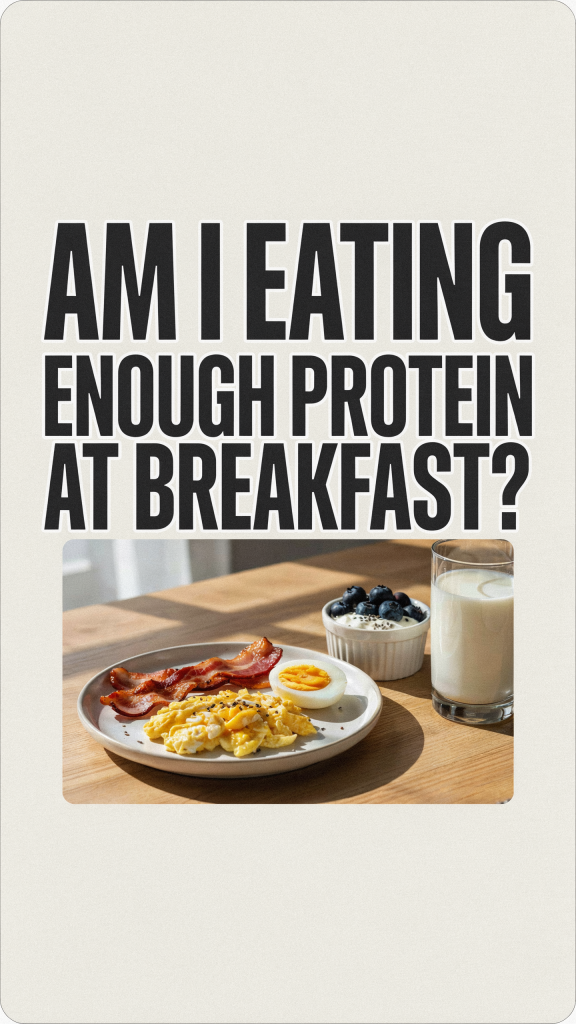
Am I Eating Enough Protein at Breakfast? A Practical Guide To Fueling Your Morning For Energy, Muscle, And Appetite Control
We’ve all heard the advice: “Breakfast is the most important meal.” But for anyone focused on energy, muscle maintenance, or appetite control, the real question is: am I eating enough protein at breakfast? Protein at the start of the day does more than check a box, it influences how we feel, how we perform, and how our bodies manage hunger and muscle. In this guide we’ll cut through vague recommendations and give practical, evidence-backed targets, quick ways to estimate your current intake, signs that it’s too low, and meal ideas you can use on busy mornings. Our aim is simple: help you walk away knowing whether your morning protein supports your goals, and how to fix it if it doesn’t.
Why Breakfast Protein Matters: Benefits Backed By Science
Protein at breakfast matters for several clear reasons. First, it’s highly satiating: compared with carbohydrates or fats, protein triggers stronger feelings of fullness and reduces hunger later in the morning. That effect is backed by studies showing higher-protein breakfasts lower subsequent calorie intake and reduce mid-morning snacking. For people trying to manage weight, that one change can be powerful.
Second, protein stimulates muscle protein synthesis. While most research focuses on total daily protein, the timing and distribution of protein across meals influences muscle retention and growth. Eating adequate protein early helps provide amino acids when our bodies switch from the overnight fast to activity, which is especially important for older adults and those doing resistance training.
Third, breakfast protein supports steady energy and cognitive performance. Protein slows carbohydrate absorption when meals are mixed, producing a steadier blood sugar response and fewer energy spikes and crashes. For students, office workers, and anyone needing morning focus, that translates into better concentration and fewer mid-morning energy slumps.
Finally, high-quality protein contributes essential nutrients beyond amino acids. Dairy, eggs, fish, and fortified plant alternatives bring calcium, vitamin B12, iron, and other micronutrients often under-consumed. In short: breakfast protein helps hunger control, muscle health, steady energy, and nutrient intake, all backed by a robust body of nutritional and clinical research.
How Much Protein Do You Need In The Morning? Simple Targets By Goal And Body Size
There’s no single magic number that fits everyone, but useful targets make planning breakfast easier. We prefer goal-based ranges rather than rigid prescriptions.
- General health and appetite control: Aim for 20–30 grams of protein at breakfast. Multiple studies show this amount gives a reliable satiety boost and supports daily protein distribution.
- Muscle maintenance (sedentary to moderately active adults): 25–35 grams. As we age, anabolic resistance increases, older adults often need the higher end to stimulate muscle protein synthesis.
- Muscle building and athletes: 30–40+ grams. For those pushing heavy resistance training or aiming for hypertrophy, a larger morning dose helps meet higher daily totals and supplies amino acids early for recovery.
- Weight loss with muscle preservation: 30–40 grams. When calories drop, prioritize protein to protect lean mass: a robust breakfast contributes meaningfully to daily protein goals.
To tailor by body size, another practical method is 0.3–0.4 grams of protein per kilogram of body weight at breakfast. For example, someone who weighs 70 kg would target roughly 21–28 grams (70 × 0.3–0.4). Combine the percentage method with the goal-based ranges above to fine-tune.
Consider total daily protein needs too: if your daily target is 1.6–2.2 g/kg for performance or muscle gain, distributing protein evenly across 3–4 meals (including breakfast) helps reach that total and maximizes the muscle-building response.
Quick Ways To Estimate Your Current Breakfast Protein Intake
We don’t need a lab to estimate breakfast protein, a few quick checks will tell us where we stand.
- Scan common portions: Learn simple benchmarks. One large egg ≈ 6–7 g, 3/4 cup (170 g) Greek yogurt ≈ 15–18 g, 2 tablespoons peanut butter ≈ 7–8 g, 3 oz (85 g) cooked chicken ≈ 25 g, 1 scoop whey ≈ 20–25 g. Having a handful of these reference points in mind makes on-the-fly math fast.
- Tally your plate: Mentally add up components. Example: two eggs (12 g) + 1 slice whole-grain toast (3 g) + 1/2 cup cottage cheese (12 g) = ~27 g. If the total is under 20 g and you’re aiming for satiety or muscle maintenance, consider adding a small protein boost.
- Use packaged labels: For smoothies or pre-made breakfasts, read the Nutrition Facts. Look for “Protein” per serving. If you’re consuming a bar or shake, verify serving size matches what you actually eat, many bars contain only 10–12 g.
- Track for a few days: Use a brief tracking app or a paper log for 3–4 mornings. Tracking sharpens awareness and reveals patterns, maybe your weekday breakfast is 8–10 g while weekend brunch hits 30 g. That variability is common and actionable.
- Watch meals that tend to be low: Many traditional breakfasts, a bagel with jam, a bowl of cereal, or just toast, often fall below 10–12 grams unless paired with protein-rich additions. Spot these common gaps and plan swaps (e.g., swap plain yogurt for granola).
Signs You’re Not Getting Enough Protein At Breakfast (And What To Watch For)
Missing protein at breakfast shows up in ways we can observe throughout the day.
- Mid-morning hunger and snack cravings: If we’re reaching for sugary snacks or grazing within 1–2 hours after breakfast, that’s a red flag. Protein dampens hunger hormones: without it, appetite returns fast.
- Energy crashes or brain fog: Dropping energy mid-morning or struggling to concentrate can indicate a meal too heavy in simple carbs and low in protein and fats.
- Difficulty preserving muscle: Over weeks or months, low daily protein, often reflected by weak breakfasts, makes it harder to maintain muscle, especially during weight loss or aging.
- Frequent overeating later: Low-protein breakfasts can lead to compensatory overeating at lunch or dinner, making weight control harder.
- Low workout performance: If morning workouts feel unusually draining and recovery is slow, inadequate pre- or post-exercise protein may be a factor.
What to watch for in ourselves: how long we feel satisfied after breakfast, our mid-morning energy levels, and whether we’re relying on quick snacks. If those patterns repeat, it’s time to boost breakfast protein by 10–20 grams and observe changes over 1–2 weeks. Small adjustments often yield clear improvements.
High-Protein Breakfast Options For Different Diets
We’ll cover crowd-pleasing, high-protein breakfasts tailored to omnivores, vegetarians, vegans, and those avoiding dairy or gluten. Each option lists protein-rich components so you can mix and match.
Omnivore options
- Classic: 2–3 eggs (12–21 g) + 2 slices turkey bacon or 3 oz smoked salmon (10–18 g) + whole-grain toast = 25–40 g.
- Savory bowl: 3 oz grilled chicken or lean pork + roasted veggies + 1/2 cup quinoa = 25–35 g.
Vegetarian options
- Greek yogurt parfait: 1 cup Greek yogurt (20 g) + 1/4 cup granola + berries = 20–25 g.
- Cottage cheese bowl: 1 cup cottage cheese (25–28 g) with fruit and seeds = 25–30 g.
Vegan options
- Tofu scramble: 150–200 g firm tofu pan-scrambled (18–24 g) with nutritional yeast and veggies.
- Overnight oats with protein powder: 1/2 cup oats + 1 scoop pea/rice protein (20–25 g) + soy or pea milk = 20–30 g.
Dairy-free / allergen-conscious options
- Smoothie: 1 scoop hypoallergenic protein powder + 1 cup fortified soy milk (8–10 g) + nut butter (7–8 g) = ~25+ g.
- Breakfast bowl: 3 oz salmon or canned tuna on avocado toast = 25–30 g.
Low-carb/keto-friendly options
- Omelet with cheese and sausage: 3 eggs + 1 oz cheese + 2 oz sausage = 30–35 g (adjust for carb limits).
- Smoked salmon and cream cheese roll-ups: high protein, very low carbs.
These examples show how to reach the 20–40 g range across dietary preferences. Mixing whole-food proteins (eggs, dairy, fish, poultry, tofu) with concentrated sources (protein powder, Greek yogurt, cottage cheese, legumes) helps hit targets quickly.
Meal Templates And Easy Recipes To Hit Your Morning Protein Target
Templates make execution simple, choose a template, swap ingredients, and you’re set.
Template A: “Egg + Whole Food” (25–35 g)
- Base: 2–3 whole eggs (12–21 g)
- Add-on: 2 oz smoked salmon or 1/2 cup cottage cheese (12–14 g)
- Veg/fiber: spinach, tomato, whole-grain toast
- Quick example: 2-egg omelet with 2 oz smoked salmon and a side of sautéed spinach ≈ 28 g.
Template B: “Yogurt/Smoothie + Protein Boost” (20–30 g)
- Base: 1 cup Greek yogurt or 1 cup soy milk
- Add-on: 1 scoop protein powder or 1/2 cup cottage cheese
- Extras: berries, oats, nut butter
- Quick example: Greek yogurt (20 g) + 1 tbsp almond butter (3 g) + chia seeds ≈ 23 g.
Template C: “Plant Protein Stack” (20–35 g)
- Base: 150–200 g firm tofu scramble (18–24 g) or 1 cup cooked lentils (18 g)
- Add-on: 2 tbsp hemp seeds or 2 tbsp peanut butter (6–8 g)
- Carb: whole-grain toast or oats
- Quick example: Tofu scramble (20 g) + 2 tbsp hemp seeds (6 g) + veggies ≈ 26 g.
Template D: “Grab-and-Go” (20–35 g)
- Portable options: protein shake (20–25 g) + hard-boiled egg (6 g) or a high-protein bar (20 g) + piece of fruit.
- Quick example: Whey shake (25 g) + banana ≈ 25 g.
Easy recipe: Savory Cottage Cheese Bowl (5 minutes)
- 1 cup cottage cheese (25 g), diced cucumber, cherry tomatoes, 1 tbsp olive oil, salt, pepper, and a sprinkle of smoked paprika. Add 1 oz turkey slices for +8–10 g. Ready in minutes and portable.
Easy recipe: Peanut Butter Banana Oat Smoothie (2 minutes)
- 1 scoop protein powder (20 g), 1 cup soy milk (7 g), 1 tbsp peanut butter (4 g), 1/2 cup oats (5 g), frozen banana. Blend, yields ~36 g depending on protein powder.
Using templates prevents decision fatigue and ensures we consistently hit our morning protein target without elaborate cooking.
Timing, Protein Quality, And Combining Nutrients For Better Results
Timing, quality, and meal composition influence how effective breakfast protein is.
Timing: While total daily protein is crucial, providing protein early helps blunt muscle breakdown after an overnight fast and supplies amino acids for morning activity. We don’t need to obsess over minutes, aim to eat within 60–120 minutes of waking if you train in the morning. Post-workout, prioritize 20–40 g of protein within a couple hours to support recovery.
Protein quality: Not all proteins are equal for muscle synthesis. Animal proteins (eggs, dairy, meat, fish) and certain isolated plant proteins (soy, pea isolates, rice-pea blends) are higher in essential amino acids, especially leucine, a key trigger for muscle protein synthesis. If we follow a plant-based diet, combining complementary proteins or using a high-quality plant protein powder helps match the muscle-building effect of animal proteins.
Combining nutrients: Pairing protein with fiber and a modest amount of fat produces the best satiety and steady energy. Fiber from vegetables, fruit, or oats slows digestion, while healthy fats (avocado, olive oil, nuts) prolong fullness. Avoid loading breakfast with large amounts of refined carbs alone: those meals spike blood sugar and reduce the long-lasting benefits of protein.
Practical nuance: For older adults and people seeking maximal muscle gain, focus on a per-meal protein dose (25–40 g) and include a leucine-rich source (e.g., whey, eggs, or a leucine-containing supplement). For general wellness, a balanced plate with 20–30 g of protein plus fiber and healthy fats is sufficient most days.
Practical Tips For Busy Mornings: Prep, Portable Choices, And Smart Swaps
Busy mornings are the usual excuse, we can beat them with small systems.
Prep the night before
- Make overnight oats with protein powder or Greek yogurt. Portion into jars so you can grab-and-go.
- Hard-boil a batch of eggs once a week: they last a week in the fridge and deliver 6–7 g each.
- Pre-portion cottage cheese or yogurt into single-serve containers with toppings.
Portable, high-protein options
- Protein shakes: Blend whey or plant protein with milk: carry in an insulated bottle.
- High-protein bars: Keep a few trusted bars at home and at work. Check labels, many contain only 10–12 g: seek 20+ g if you rely on them as a meal.
- Jerky or canned tuna/salmon: Shelf-stable and high in protein (20–25 g per 3–4 oz).
Smart swaps to increase protein without extra cooking
- Swap cereal for Greek yogurt or cottage cheese topped with fruit.
- Replace plain toast with toast topped with ricotta or cottage cheese and tomato.
- Blend protein powder into pancake batter or oatmeal.
Budget and time-friendly tips
- Buy bulk frozen eggs or egg bites premade if available, they freeze and reheat well.
- Use shelf-stable UHT milk (soy or dairy) and protein powder for long-lasting smoothie ingredients.
- Keep simple flavor enhancers like hot sauce, pesto, or herbs to make repeated meals palatable.
Behavioral hacks
- Pack breakfast the night before: lay out the cup, spoon, bottle, and snacks so mornings are frictionless.
- Use a habit cue: pair breakfast prep with an existing routine (e.g., put the kettle on as soon as the alarm goes off) to automate the behavior.
Small changes stacked over time, adding a scoop of protein here, a hard-boiled egg there, quickly shift morning protein from mediocre to robust without major lifestyle upheaval.
Conclusion
As we’ve seen, breakfast protein matters for appetite control, energy, and muscle health. A practical goal for most people is 20–40 grams depending on age, activity level, and objectives, and simple templates make that achievable every morning. Start by estimating your current intake, watch for telltale signs of low protein, and experiment with a few high-protein swaps or prepared options. Small, consistent changes, a scoop of protein powder, an extra egg, or a cup of Greek yogurt, produce outsized benefits for our day. Let’s treat breakfast as a strategic meal, not a rushed afterthought, and we’ll notice the difference in how we feel, perform, and control appetite throughout the day.