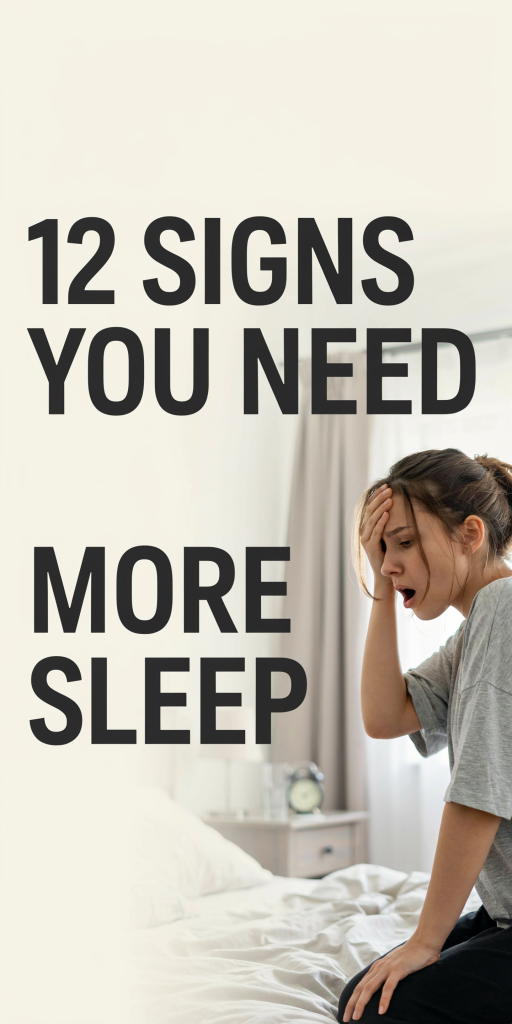
12 Signs You Need More Sleep (And What To Do About It) — A Practical 2026 Guide
We all know sleep is important, but most of us underestimate how much chronic shortfall, sleep debt, chips away at our health, mood, and productivity. In this guide we’ll walk through 12 signs you need more sleep, explain why they matter, and give practical steps we can start using tonight and this week to repay that debt. This isn’t theory: it’s an actionable checklist to help us spot when our bodies and brains are asking for more restorative sleep, and what to do when they are. Whether you’re juggling work, family, or study, recognize these signals early and you’ll avoid the costly consequences of prolonged sleep loss.
Why Sleep Debt Matters For Your Health, Mood, And Productivity
We’ve all pulled an all-nighter or stayed up late finishing a project. But when short nights become routine, we accumulate sleep debt, the difference between the sleep we need and the sleep we get. Research from the CDC and sleep scientists shows that roughly one-third of adults regularly get less than the recommended seven hours a night. That gap adds up: a week of 6-hour nights creates measurable declines in attention, reaction time, and metabolic regulation.
Why should we care? First, health. Chronic sleep deficit increases risk for high blood pressure, type 2 diabetes, and cardiovascular disease: it also weakens immune function, making colds and infections more frequent and recovery slower. Second, mood and mental health. Sleep loss worsens irritability, amplifies negative emotions, and raises risk for anxiety and depressive symptoms. Third, productivity and safety. When we’re short on sleep, our executive function, planning, decision-making, impulse control, declines, and microsleeps (brief involuntary lapses of attention) can put us or others in danger, especially while driving or operating machinery.
Sleep debt isn’t just a nightly problem: it accumulates and compounds. We might feel “used to it,” but our bodies and brains keep tally. The good news is that many negative effects are reversible with improved sleep habits and, when appropriate, clinical evaluation. Below, we’ll identify 12 concrete signs to watch for and the steps that reliably help us recover better sleep and better days.
Six Common Physical Signs You’re Not Getting Enough Sleep
When our bodies don’t get enough restorative sleep, physiological signs usually show up first. Here are six physical red flags to watch for.
- Persistent daytime fatigue and low energy. It’s one thing to be tired after a long day: it’s another to be dragging through routine tasks, needing multiple naps or copious caffeine to function. Chronic low energy is a classic sign we’re short on sleep.
- Frequent infections or slow recovery. Sleep is when our immune system rebuilds. If we’re catching colds more often or bruises and cuts linger, insufficient sleep may be the culprit.
- Weight changes and cravings. Sleep deprivation alters hunger hormones (like ghrelin and leptin) and increases preference for calorie-dense foods. We often see weight gain or difficulty losing weight tied to poor sleep patterns.
- Headaches and muscle aches. Tension headaches, neck stiffness, and generalized aches are common when sleep is fragmented or too short. Lack of restorative deep sleep reduces our body’s ability to repair tissues and regulate pain.
- Dark circles and puffiness. While genetics and allergies play a role, persistent under-eye circles and facial puffiness can reflect chronic short sleep and fluid retention from disrupted circadian regulation.
- Coordination problems and slowed reaction times. We’ve all noticed clumsiness after a poor night’s sleep, more frequent stubbing toes, dropping things, or slower reflexes. These physical manifestations matter: they increase fall risk and make tasks like driving or using tools dangerous.
Not every symptom is specific to sleep loss, but when several of these signs appear together, they strongly point to a need for more and better-quality sleep.
Four Cognitive And Emotional Signs That Point To Sleep Loss
The brain is exquisitely sensitive to sleep. Here are four cognitive and emotional signals that tell us our sleep bank is running low.
- Memory lapses and poor learning. Sleep, especially slow-wave and REM sleep, consolidates memories and learning. If we’re forgetting appointments, losing track of conversations, or struggling to learn new material, inadequate sleep is often part of the problem.
- Difficulty concentrating and decision fatigue. When we’re sleep-deprived, even simple tasks feel effortful. We lose focus, make careless mistakes, and procrastination increases because cognitive control is weakened.
- Heightened emotional reactivity. Sleep-deprived brains amplify negative emotional responses and reduce our ability to regulate mood. We may find ourselves snapping at colleagues, feeling overwhelmed by small setbacks, or replaying worries more than usual.
- Blunted positive affect and motivation. Beyond irritability, insufficient sleep can dampen pleasure and motivation, hobbies feel less rewarding, and it’s harder to summon enthusiasm for things we normally enjoy.
These cognitive-emotional signs are often the first to disrupt daily functioning. Importantly, they create a feedback loop: poor sleep causes mood and cognitive problems, which in turn can make it harder to stick to good sleep habits. Breaking that loop requires both awareness and deliberate changes, which we’ll cover in the “How To Fix Your Sleep” section.
Behavioral And Performance Signs At Work, School, Or Behind The Wheel
Sleep loss doesn’t stay private, it shows up in how we perform and behave. Watch for these practical signs across daily life.
- Increased errors and declining productivity. If we’re missing deadlines, turning in lower-quality work, or needing more time to complete routine tasks, chances are sleep is undermining our cognitive stamina.
- Trouble with interpersonal interactions. Colleagues or classmates may note we’re more irritable, less patient, or withdrawn. Chronic sleep loss erodes empathy and communication skills, which strains relationships and teamwork.
- Excessive reliance on stimulants. Reaching for multiple coffees, energy drinks, or high-sugar snacks daily to stay alert is a behavioral red flag. These quick fixes mask sleep debt and create cycles of poor sleep by disrupting nighttime sleep architecture.
- Increased near-misses or drowsy driving. Falling asleep at the wheel, nodding off in meetings, or experiencing microsleeps are serious warning signs. Drowsy driving is responsible for a large share of accidents: if we’re catching ourselves fighting sleep behind the wheel, we must act immediately.
These behavioral indicators are useful because they’re observable by others. If coworkers, teachers, or family members comment on our performance or mood, we should take it seriously, they’re often seeing what we don’t. Addressing sleep will typically improve not just how we feel, but how we function in our roles.
When Daytime Sleepiness Warrants Medical Attention
Some sleep problems are best addressed with medical evaluation. We shouldn’t assume every case of tiredness is just “lack of willpower.” Here’s how to tell when we need professional help.
Persistent, excessive daytime sleepiness that doesn’t improve after opportunity for adequate rest signals a possible sleep disorder. Common conditions include obstructive sleep apnea (OSA), narcolepsy, restless legs syndrome (RLS), and circadian rhythm disorders. Left untreated, these conditions increase health risks and impair quality of life.
Consider medical evaluation when: frequent loud snoring is paired with daytime sleepiness: partners report witnessed breathing pauses or gasping during sleep: we fall asleep very quickly in the day (sleep-onset latency under five minutes) or experience sudden loss of muscle tone with emotions (possible cataplexy): we have intense, uncontrollable urges to move our legs at night with creeping sensations: or we experience complex nighttime behaviors (sleepwalking, aggressive or unsafe actions). Chronic insomnia that lasts months and affects daytime functioning also merits clinical attention, especially when linked to mood disorders.
Getting evaluated can be straightforward. Primary care providers can screen for common issues and refer us for diagnostic tests, including home sleep apnea testing or in-lab polysomnography. Treatments vary, continuous positive airway pressure (CPAP) for OSA, stimulant or wake-promoting medications for narcolepsy, iron or dopamine-related therapies for RLS, and cognitive behavioral therapy for insomnia (CBT-I). Early diagnosis improves outcomes, so we should seek care rather than ignore persistent symptoms.
Red Flags That Require A Doctor Or Sleep Study
- Loud, chronic snoring with witnessed apneas or gasping breaths
- Falling asleep unintentionally during important activities (driving, meetings)
- Sudden daytime sleep attacks or cataplexy (muscle weakness triggered by strong emotions)
- Severe, persistent insomnia that impairs daily life
- Hallucinations at sleep onset or upon awakening, or complex sleep behaviors
- Uncontrolled movement or sensations in the legs disrupting sleep
If we notice any of the above, we should contact our clinician. A timely sleep study or specialist referral can identify treatable conditions and prevent long-term consequences.
How To Fix Your Sleep: Practical Nightly And Weekly Strategies
Most sleep problems respond well to consistent, evidence-based habits. We’ll break these into nightly routines and weekly practices so we can start small and build momentum.
Nightly strategies (what we do each evening)
- Keep a consistent sleep-wake schedule: Go to bed and wake up at the same times every day, including weekends. Regularity strengthens our circadian rhythm and improves sleep quality.
- Build a 30–60 minute wind-down: Turn down bright lights, switch off screens, and engage in calming activities, reading, light stretching, or mindfulness. Blue light from phones and laptops suppresses melatonin and delays sleep onset.
- Optimize the sleep environment: Cool (about 60–67°F / 15–19°C), dark, and quiet rooms promote deeper sleep. Blackout curtains, a white-noise machine, and a comfortable mattress/pillows help.
- Watch caffeine and alcohol timing: Avoid caffeine at least 6–8 hours before bedtime. Limit alcohol, it may help us fall asleep but fragments sleep later in the night.
- Use naps smartly: If we need a nap, keep it to 20–30 minutes and avoid late afternoon naps that impair nighttime sleep.
- Practice stimulus control: Use the bed only for sleep and sex. If we can’t fall asleep within 20 minutes, get up, leave the bedroom, and return when sleepy to avoid negative associations with the bed.
Weekly strategies (what we do across days)
- Prioritize consistent exercise: Regular aerobic activity improves sleep quality, but finish vigorous workouts at least a few hours before bedtime to avoid stimulation.
- Limit irregular schedules: When possible, avoid large shifts in sleep timing (e.g., from weekday to weekend) and keep wake times within 1 hour of your weekday schedule.
- Track sleep patterns: Use a sleep diary or tracker for two weeks to identify patterns and triggers. Data helps us and clinicians distinguish poor habits from medical sleep disorders.
- Address mental health and stress: Practice cognitive strategies (journaling, brief evening worry time) or seek therapy when anxiety and rumination interfere with sleep.
- Consider evidence-based short-term aids cautiously: Melatonin can help reset circadian timing for shift work or jet lag in low doses (0.5–3 mg), but it’s not a long-term crutch for chronic insomnia. Avoid over-the-counter sedative-hypnotics without medical supervision.
- Try CBT-I for persistent insomnia: Cognitive behavioral therapy for insomnia is the first-line, durable treatment recommended by sleep experts and covered increasingly by insurers. It addresses the behaviors and thoughts that maintain poor sleep.
Small, consistent changes often produce the biggest returns. We don’t need to overhaul everything at once. Pick two nightly habits (regular wake time and a wind-down) and one weekly habit (regular exercise or sleep tracking), and build from there.
Conclusion
Recognizing the 12 signs you need more sleep is the first step toward reclaiming energy, mood, and performance. Sleep debt is fixable: by tuning into the physical, cognitive, and behavioral signals we’ve outlined and applying simple nightly and weekly strategies, we can repay sleep debt and prevent it from coming back. If symptoms are severe, persistent, or include the red flags above, we should seek medical evaluation, many sleep disorders are treatable and vastly improve quality of life. Tonight, let’s commit to one small change and see how much better tomorrow can feel.