This 6,000-Year-Old Fruit Is Winning The Snack Wars
Processed snack companies spent decades engineering the perfect bite — precise ratios of salt, sugar, and fat designed to keep you reaching back into the bag. But something is shifting. Consumers are starting to reach past the crinkly packaging toward something older, simpler, and frankly better for them. Dates — the stone fruit of the date palm tree — are having a full-blown mainstream moment, and the sales numbers tell a story the snack industry should probably pay attention to.
U.S. date sales climbed 33% in 2025, according to a founding member of Joolies, an organic California-grown date brand. Projections from Fortune Business Insights put the U.S. market on track to hit $1.6 billion by 2034. Globally, the category is expected to grow at a compound annual rate of 6.1%, expanding from roughly $34.5 billion in 2026 to over $55 billion by 2034. In the U.K., medjool date sales at retailer Ocado doubled year over year.
What Actually Is a Date?
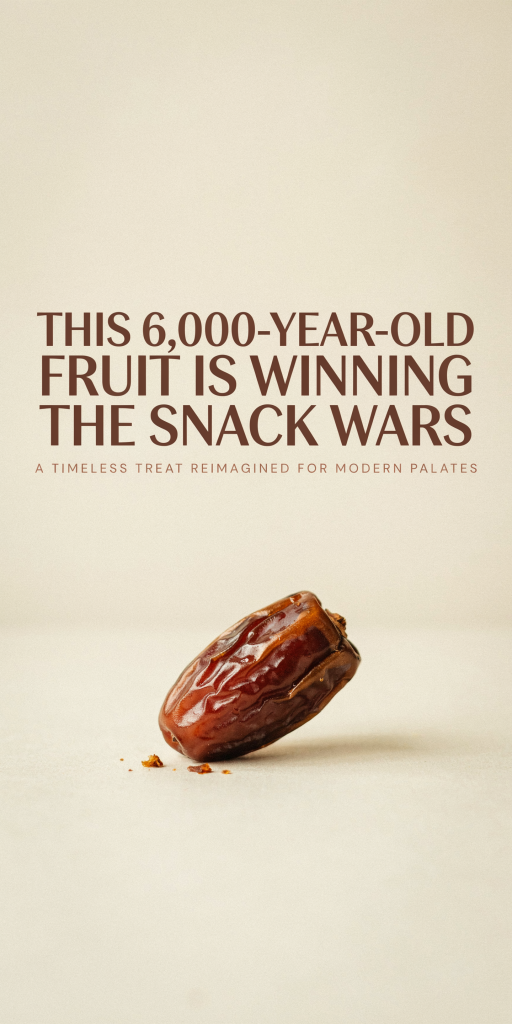
Dates are the fruit of the date palm tree — a stone fruit, like plums and peaches — with a sweet, caramel-like flavor and chewy texture. Date palm trees likely originated in what is now Iraq and now grow throughout the Middle East, North Africa, North America, and South Asia. More than 600 varieties are grown worldwide, including well-known types like Medjool, Deglet Noor, Ajwa, Barhi, and Halawi, each with distinct texture, sweetness, and flavor profiles.
Dates fall into three broad categories based on moisture content: soft, semi-dry, and dry. Soft varieties like medjool are prized for snacking — rich, plump, and caramel-forward. Semi-dry types like Deglet Noor hold their shape better and work well in cooking. Dry varieties are more shelf-stable and commonly used in baking and processing.
Almost all dates sold in Western countries are dried. You can identify them by their wrinkled skin — smooth skin indicates a fresh date, which are fairly small and range in color from bright red to bright yellow depending on the variety.
The Nutrition Case
Dates punch well above their weight nutritionally. A small serving of just three dates delivers nearly 25% of the recommended daily fiber intake, and dates contain 50% more potassium than bananas by weight. They’re also free of cholesterol, fat, and sodium. They’re also a solid source of calcium, magnesium, and polyphenols — plant compounds with measurable beneficial effects on health.
Compared to most other fruits, dates rank among the richest sources of dietary minerals, which support biochemical and cellular function and help maintain healthy blood pressure. Their antioxidant content is also notably high, with emerging evidence suggesting their polyphenols and fiber may offer protective effects against certain types of cancer.
A 2025 meta-analysis of randomized controlled trials found that eating dates significantly reduced total cholesterol in patients with type 2 diabetes. The Cleveland Clinic also lists improved gut health, better brain function, and healthier skin among the documented benefits.
Registered dietitian Lisa Moskovitz, founder of the NY Nutrition Group, says the professional nutrition world has known this for years. “Dates have been the go-to ingredient among dietitians to sweeten smoothies and lower-sugar dessert foods for years,” she said. “Not only are they super tasty and versatile, but they provide fiber, antioxidants and other essential nutrients like magnesium and potassium.”
One important caveat: the sugar content is real. A single date carries roughly 15 grams of natural sugar. Moskovitz recommends pairing them with nuts or seeds to help balance blood glucose response — a simple habit that lets you get the benefits without the spike.
Why Now?
The timing of dates going mainstream isn’t random. The clean-label movement, the scrutiny around ultra-processed foods, and a wave of social media content showing people trying dates for the first time or building “healthy desserts” around them have converged into a genuine cultural shift. Consumers increasingly want ingredients they can recognize, and dates — literally one ingredient — clear that bar easily.
Dietitians didn’t need the viral moment to know this. But for the rest of the population finally discovering that the snack aisle has had a worthy competitor sitting in the produce section this whole time, welcome to the party.
A Brief History Worth Knowing
Dates have been cultivated for more than 4,000 years, primarily across the Middle East and North Africa, and have long held cultural, nutritional, religious, and social significance in those regions. The Middle East and Africa still account for over 85% of global date market share. Muslims traditionally break the Ramadan fast with dates — a practice rooted in centuries of tradition. In many parts of the Middle East, dates are among the first foods introduced to infants.
The West is late to this one. But based on the numbers, it’s catching up fast.
Want me to adjust tone, add a recipe section, or format this for a specific publication style?