Summer Mocktail Recipes That Look Expensive: 7 Elegant Drinks To Impress Your Guests in 2026
We’ve all been to gatherings where a simple drink looks like it belongs in a five‑star bar, and we’ve also been the hosts scrambling to recreate that effect. The good news: you don’t need rare spirits or a professional bartender to serve mocktails that read expensive. With thoughtful ingredients, smart presentation, and a few easy techniques, your nonalcoholic lineup can feel polished, seasonal, and memorable. In this guide we’ll explain why minimal cocktails can feel luxurious, list the tools and pantry items that lift every drink, show presentation tricks that sell the illusion, and give seven refined mocktail recipes (with make‑ahead and scaling tips) that look like you spent hours crafting them. Let’s make summer parties taste, and look, elevated.
Why Simple Mocktails Can Feel Luxurious
There’s a subtle psychology behind luxury drinks: restraint, balance, and detail. When we design mocktails with fewer moving parts, each element becomes more intentional, the citrus peel curl, the quality of the sparkling water, the fresh herb sprig. Those details create the sense that someone curated this drink carefully. Luxury also lives in contrast: pairing a bright acid (lemon, lime, or vinegar) with rounded sweetness (elderflower, honey, or shrub) creates complexity without many ingredients. Texture matters: effervescence, a silky syrup, or a velvety puree feels more sophisticated than a flat, sugary juice. We lean on fresh ingredients, clarified juices or light syrups, and restrained sweetness to achieve depth.
Another reason simple mocktails read expensive is familiarity plus refinement. Guests recognize components, cucumber, basil, berries, but when those familiar items are prepared with care (herb-infused syrups, cold‑pressed juices, artisanal tonic) they feel upgraded. A clear, clean flavor profile with a single bold accent (a vinegar note, a floral liqueur substitute, or a flamed citrus twist) signals craftsmanship.
Finally, pacing and service amplify perception. Serving a drink in a chilled, well‑chosen glass with a single, thoughtful garnish makes the whole experience feel intentional and high-end. In short: fewer elements, executed well, deliver elegance.
Essential Tools, Glassware, And Pantry Ingredients For A High-End Look
We find investing in a handful of tools and pantry staples pays off repeatedly. You don’t need a full bar cart, just the right items.
Must-have tools
- Cocktail shaker with a built-in strainer: useful for chilling and integrating syrups.
- Fine mesh strainer: for double-straining juices and removing solids for a clearer presentation.
- Bar spoon and muddler: quick stirring and gentle herb or fruit muddling.
- Small digital scale or jigger: precision matters: consistent ratios create balanced drinks.
- Citrus zester/peeler: for clean twists and expressive garnishes.
Glassware choices that elevate
- Coupe glasses: instantly make nonalcoholic fizz feel celebratory.
- Collins or highball glasses: for tall, ice‑forward coolers.
- Stemless wine or rocks glasses: work for more casual, modern pours.
- Lowball with large ice sphere: communicates craft and slows dilution.
Pantry ingredients to keep on hand
- Quality sparkling water and soda: artisanal seltzers or mineral waters add minerality.
- Elderflower cordial or nonalcoholic floral syrups: floral notes come across as refined.
- White balsamic or apple cider vinegar for shrubs: adds acidity and balance.
- Good honey, agave, or simple syrup: use sparingly to avoid cloying sweetness.
- Fresh citrus (lemons, limes, grapefruit) and pantry citrus peels: aroma is half the experience.
- Fresh herbs (basil, mint, thyme), cucumber, and seasonal berries: they read as fresh and upscale.
Small investments in these items allow us to create complex-feeling drinks quickly. When we combine precision tools with selective, high‑quality pantry staples, even a three-ingredient mocktail can look and taste like a crafted cocktail.
Presentation Tricks That Make Drinks Look Pricey
Presentation is the final, decisive layer. We can make any drink read expensive with a few sensory cues.
Focus on garnishes with purpose
A garnish should do one of three things: add aroma, texture, or visual contrast. A flamed citrus peel releases essential oils and creates a signature scent. A large herb bouquet (clipped, not crushed) signals freshness. Edible flowers and microherbs look upscale, but use them sparingly so they don’t seem gimmicky.
Mind the glass and temperature
Glassware should match the drink. Fizzes and spritzes feel more celebratory in a coupe or flute. Serve chilled glasses for spritzes and icy glasses for tall coolers: temperature cues suggest a bartender’s attention. Clear ice, or a single large cube, reads higher end than crushed ice. If you don’t have a clear ice mold, freeze slowly in a cooler within your freezer to get clearer blocks.
Layering and color contrast
We love subtle layering: a spoon pour of syrup creates a gradient, and a float of sparkling water keeps the effervescence on top. Stretch color palettes to two or three tones, a pale green mocktail with a bright red berry garnish pops visually. When you add a shimmer or foam, make sure it’s light and not overpowering: texture should invite a sip, not distract.
Service rituals
How you present a drink matters. Place drinks on small coasters, wipe rims clean before serving, and announce the garnish or main flavor (“Here’s our cucumber basil cooler with a basil‑lemon twist”). Small rituals make guests feel attended to and reinforce the elevated impression.
Citrus Elderflower Fizz (Bright, Floral, And Effortless)
Why it looks expensive: The combination of bright citrus and delicate elderflower reads floral and refined. The drink’s clarity and gentle effervescence make it feel like a boutique spritz.
Ingredients (serves 1)
- 1.5 oz fresh grapefruit and/or orange juice (about 1 small grapefruit or half an orange)
- 0.5 oz lemon juice
- 0.5 oz elderflower cordial
- 2–3 oz chilled sparkling water or prosecco‑style nonalcoholic sparkling wine
- Ice (preferably a single large cube)
Method
- In a shaker, add grapefruit/orange juice, lemon juice, and elderflower cordial with ice. Shake briefly to chill and integrate.
- Double strain into a chilled coupe or flute over a single cube or no ice for a coupe.
- Top with sparkling water, pouring slowly to preserve fizz.
- Express a thin strip of grapefruit peel over the drink, rim it, and discard. Garnish with a small edible flower or a fine citrus twist.
Why the ratio works: The citrus provides brightness and body, the elderflower adds aromatic sweetness without heaviness, and the sparkling top gives lift. We keep sweetness low so the floral element feels delicate, not cloying.
Garnish, Glassware, And Make-Ahead Tips For The Citrus Elderflower Fizz
Garnish and glassware
- Glass: Coupe or flute, coupes are elegant and allow the aroma to collect: flutes keep bubbles lively.
- Garnish: A thin citrus twist (grapefruit preferred) and a single edible flower or micro‑herb. Avoid overloading with herbs that mask floral notes.
Make-ahead tips
- Juice ahead: Press citrus the morning of the event and keep refrigerated up to 48 hours in an airtight container.
- Eldeflower syrup: Keep a jar of elderflower cordial on hand, it lasts weeks in the fridge.
- Pre-chill glassware and sparkling water: This is the simplest way to preserve effervescence at service time.
Assembly at service
Mix the juice and cordial in a pitcher (multiply quantities for the number of guests), keep chilled, and top with sparkling water just before serving. For a more showy moment, we pour the sparkling water tableside to maintain fizz and theater.
Cucumber Basil Cooler (Clean, Green, And Refreshing)
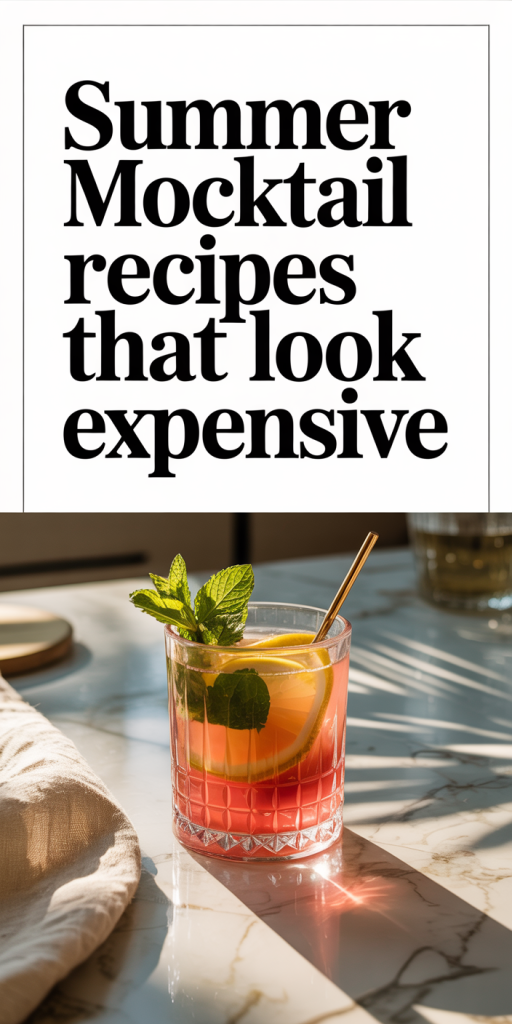
Why it looks expensive: Clean, green drinks feel modern and wellness-forward. Cucumber paired with basil creates a refined, garden-fresh profile. The visual of pale green liquid with a vertical cucumber ribbon or basil bouquet reads like a high‑end spa beverage.
Ingredients (serves 1)
- 2–3 slices peeled cucumber + 1 thin ribbon for garnish
- 6–8 fresh basil leaves (plus a small bouquet for garnish)
- 0.5 oz lime juice
- 0.5 oz simple syrup (or honey syrup)
- 3 oz chilled sparkling water
- Ice
Method
- In a shaker, muddle cucumber slices and basil gently with lime juice and syrup, don’t pulverize the basil: we want aroma, not bitterness.
- Add ice, shake briefly, and double strain into a highball with fresh ice.
- Top with sparkling water and stir once to integrate.
- Garnish with the cucumber ribbon placed vertically against the glass and a small basil bouquet.
Tip: For a clearer presentation, pass the muddled mix through a fine mesh strainer and discard solids. That produces a pale, translucent green color that reads more sophisticated than a cloudy puree.
Variations And How To Turn The Cucumber Basil Cooler Into A Signature Mocktail
Variations to make it unique
- Ginger lift: Add 0.25–0.5 oz ginger syrup or a splash of ginger beer for warmth and a spicy edge.
- Citrus shift: Swap lime for yuzu or add a dash of grapefruit for floral bitterness.
- Herbal swap: Replace half the basil with Thai basil or mint for a different aromatic profile.
Signature touches
- Infused syrup: Create a basil‑cucumber syrup by simmering sugar and water with basil stems and cucumber peels: cool and strain for a subtle, integrated flavor.
- Smoked basil: Lightly char basil leaves and clap them between your hands before garnishing to release smoky, savory notes, an unexpected nuance that reads upscale.
- Personal branding: Serve in a custom-etched glass or add a small tag to the straw with your event name: small branded details heighten perceived value.
These adjustments let us tailor the cooler to specific menus or guest preferences while retaining the clean, modern look that makes it feel expensive.
Sparkling Berry Shrub (Balanced Sweet-Tart Flavor With Sparkle)
Why it looks expensive: Shrubs (drinking vinegars) add an acid layer similar to barrel-aged complexity without alcohol. Paired with fresh berries and sparkling water, they deliver a jewel-toned, layered drink that feels thoughtful and artisanal.
Ingredients (serves 1)
- 1 oz berry shrub (see quick shrub method below)
- 0.5 oz lemon juice
- 0.5 oz simple syrup (adjust depending on shrub sweetness)
- 3 oz chilled sparkling water
- Fresh berries for garnish
- Ice
Quick berry shrub method (makes ~1 cup)
- Combine 1 cup crushed berries (raspberries, blackberries, or blueberries) with 1 cup sugar in a jar. Muddle lightly and let macerate 2–4 hours.
- Add 1 cup apple cider vinegar or white balsamic, stir, and refrigerate for 24–48 hours.
- Strain through a fine mesh, bottle, and refrigerate. Shrub keeps 2–3 months.
Assembly
- Shake shrub, lemon juice, and simple syrup with ice.
- Double strain into a chilled flute or coupe.
- Top with sparkling water and garnish with a single skewered berry or a thin wheel of lemon.
Serving notes
Shrubs bring acid and depth: we keep added simple syrup minimal. The jewel color of the shrub makes the drink visually striking, while the vinegar backbone gives it a seriousness akin to a barrel‑aged cocktail without any alcohol.
Pairing, Serving Timing, And Scaling For Parties
Pairing mocktails with food elevates both. We match intensity and texture: light, citrusy spritzes pair well with seafood, salads, and soft cheeses: vegetal coolers complement spicy dishes and grilled vegetables: shrubs and berry drinks hold up to smoked or charred flavors.
Serving timing and flow
- Welcome drink: Start guests off with a light, effervescent mocktail (Citrus Elderflower Fizz) to set a celebratory tone.
- During appetizers: Offer the cucumber basil cooler, it cleanses the palate and pairs with finger foods.
- With main courses: Serve weightier shrub‑based drinks that can stand up to richer flavors.
- Digestif alternative: Finish with a small pour of a concentrated syrup or a chamomile‑lavender cooler to signal the evening’s end.
Scaling for crowds
- Batch smartly: Pre‑mix base components (juices, syrups, shrub) in a pitcher and refrigerate. Keep sparkling elements separate: add them at service to preserve fizz.
- Ratios for batches: Multiply single‑serve ratios by your guest count, then reduce total simple syrup by ~10%, large-volume drinks often taste sweeter.
- Glass and ice logistics: Pre‑chill glassware and keep large blocks of ice in an insulated cooler for outdoor events. Use dispensers or beverage towers for self‑service, with small printed recipe cards to keep the experience curated.
Service staff or DIY helper
If we’re hosting larger gatherings, assigning one person to mix and top drinks keeps quality consistent. For self‑service, label pitchers clearly and provide a small station with garnishes and spoons so guests can finalize their own drinks. These simple systems preserve the elevated feel even when serving many people.
Conclusion
Making mocktails that look expensive is less about extravagant ingredients and more about intentional choices: clean flavors, balanced acidity, precise proportions, and thoughtful presentation. By stocking a few quality tools, mastering simple syrups and shrubs, and focusing on service details, glassware, garnish, and temperature, we can serve drinks that feel luxurious and memorable. Try the Citrus Elderflower Fizz, Cucumber Basil Cooler, and Sparkling Berry Shrub at your next summer gathering, and notice how small refinements transform simple recipes into signature experiences. Cheers to hosting with style, without the complicated bar tab.