
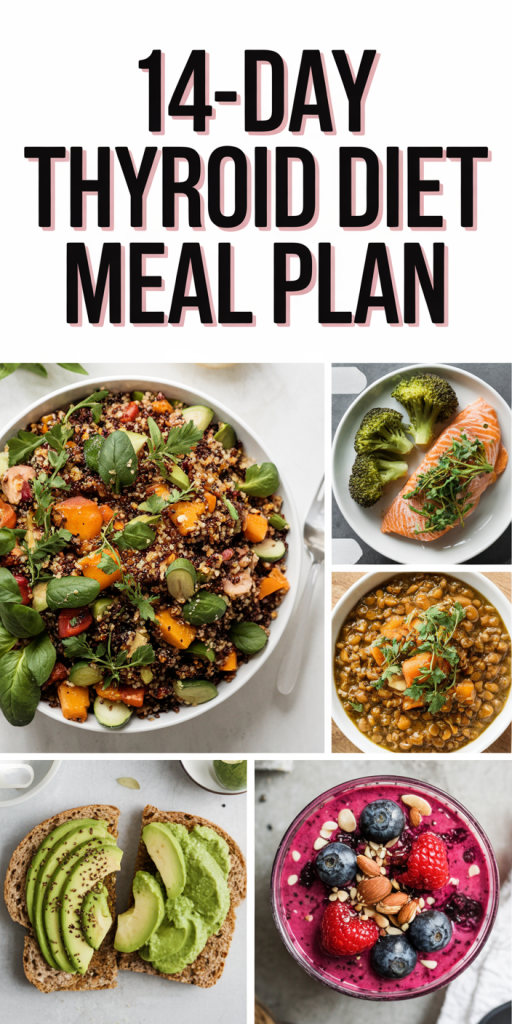
14-Day Thyroid Diet Meal Plan
A Complete Guide with 30 Full Recipe
The thyroid gland is a small, butterfly-shaped organ at the base of the neck that serves as the body’s master metabolic regulator. It produces two primary hormones — triiodothyronine (T3) and thyroxine (T4) — that govern energy production, body temperature, heart rate, digestion, mood, and cognitive function. When thyroid function is compromised, as in hypothyroidism or Hashimoto’s thyroiditis, virtually every system in the body is affected. [1]
While medication is often the cornerstone of thyroid treatment, the role of nutrition is increasingly recognized as a powerful complementary strategy. A thyroid-supportive diet focuses on delivering key minerals and vitamins — particularly iodine, selenium, zinc, magnesium, iron, and vitamins A, D, and B12 — that the thyroid requires to produce, convert, and utilize its hormones effectively. Equally important is the elimination of foods that drive inflammation, disrupt gut health, or interfere with hormone absorption, including gluten, dairy, refined sugars, and processed foods. [2]
This 14-day meal plan is designed to make thyroid-supportive eating simple, delicious, and sustainable. It draws on 30 complete recipes — 10 breakfasts, 10 lunches, and 10 dinners — all of which are gluten-free, dairy-free, and free of refined sugars. The plan is structured to provide variety, minimize food waste through strategic batch cooking, and ensure that every meal delivers a meaningful dose of the nutrients your thyroid needs most.
Key Thyroid Nutrients at a Glance
Understanding why certain foods are prioritized in this plan helps to make the dietary approach feel purposeful rather than restrictive. The table below summarizes the most important thyroid-supportive nutrients, their functions, and the best food sources featured in this meal plan.
| Nutrient | Role in Thyroid Health | Best Food Sources in This Plan |
|---|---|---|
| Iodine | Essential building block of T3 and T4 hormones | Seaweed, shrimp, cod, tuna, eggs |
| Selenium | Protects thyroid from oxidative damage; converts T4 to active T3 | Brazil nuts, salmon, tuna, eggs, mushrooms, chicken |
| Zinc | Required for T3/T4 synthesis and conversion | Ground beef, shrimp, chickpeas, quinoa, pumpkin seeds |
| Magnesium | Supports thyroid hormone production and reduces inflammation | Quinoa, leafy greens, avocado, nuts, sweet potato |
| Vitamin A | Supports thyroid hormone synthesis and receptor function | Sweet potato, carrots, kale, rainbow chard, pumpkin |
| Vitamin D | Modulates immune response; deficiency linked to Hashimoto’s | Salmon, eggs, mushrooms |
| Omega-3 Fatty Acids | Reduces systemic inflammation; supports hormone signaling | Salmon, tuna, smoked salmon, walnuts |
| Iron | Required for thyroid peroxidase enzyme activity | Ground beef, chicken, kale, sweet potato, green beans |
| Curcumin | Potent anti-inflammatory; may protect thyroid tissue | Turmeric (in smoothies and stews) |
How to Use This Meal Plan
This plan is a flexible template, not a rigid prescription. Several strategies will help you get the most out of it.
Batch cooking is your greatest ally. Soups, stews, and baked dishes like the Moroccan Chicken Stew and Shepherd’s Pie with Sweet Potato Topping yield generous portions that can be refrigerated for up to four days or frozen for up to three months. On Days 2, 4, 7, 9, 12, and 14, the plan intentionally schedules leftovers to reduce cooking time and minimize food waste.
Smoothies and no-cook breakfasts on Days 2, 5, 10, and 12 require minimal preparation and are ideal for busy mornings. Smoothie ingredients can be pre-portioned and frozen in zip-lock bags for even faster assembly.
Protein flexibility is built into the plan. If you prefer chicken over pork, or shrimp over cod, most recipes can be adapted with minimal adjustment to the cooking method or timing.
Snacking is not included in this plan, but if needed, thyroid-friendly snack options include a small handful of Brazil nuts, a hard-boiled egg, sliced avocado with sea salt, or a small portion of leftover soup.
Finally, always consult with a qualified healthcare provider before making significant dietary changes, particularly if you are managing a thyroid condition with medication. Certain foods — notably those high in goitrogens, such as raw cruciferous vegetables — may need to be moderated or cooked before consumption depending on your individual health status. [2]
The 14-Day Meal Plan
| Day | Breakfast | Lunch | Dinner |
|---|---|---|---|
| Day 1 | Eggs with Sautéed Shallots & Greens | Creamy Artichoke Chicken Soup | Moroccan Chicken Stew (batch cook) |
| Day 2 | Low-Inflammatory Berry Spinach Smoothie | Leftover Moroccan Chicken Stew | Creamy Shrimp Vegetable Skillet |
| Day 3 | Coconut Cream Bowl with Fresh Berries | Gluten-Free Salmon Cakes with Side Salad | Thai Basil Cauliflower Fried Rice with Chicken (batch cook) |
| Day 4 | Coconut Flour Pancakes | Leftover Thai Basil Cauliflower Fried Rice | Korean Glass Noodle Recipe with Ground Beef |
| Day 5 | Anti-Inflammatory Turmeric Smoothie | Shrimp & Avocado Salad | Simple Chicken Bacon Pasta Salad |
| Day 6 | Smoked Salmon and Avocado Toast | Creamy Vegan Mushroom Soup | AIP Bierocks (German Stuffed Beef Rolls) (batch cook) |
| Day 7 | Quinoa Breakfast Bowl with Berries and Nuts | Leftover AIP Bierocks | Chicken Kelaguen |
| Day 8 | Seaweed and Egg Drop Soup | Thyroid-Happy Buddha Bowl | Shepherd’s Pie with Sweet Potato Topping (batch cook) |
| Day 9 | Sweet Potato and Kale Breakfast Hash | Leftover Shepherd’s Pie | Rainbow Chard with Sweet Potatoes and Mushrooms |
| Day 10 | Berry and Spinach Smoothie with Brazil Nuts | Tropical Chicken Salad | Lemon Butter Baked Cod |
| Day 11 | Eggs with Sautéed Shallots & Greens | Egg Roll in a Bowl | Moroccan Chicken Stew (batch cook) |
| Day 12 | Low-Inflammatory Berry Spinach Smoothie | Leftover Moroccan Chicken Stew | Creamy Shrimp Vegetable Skillet |
| Day 13 | Coconut Cream Bowl with Fresh Berries | Crunchy Tuna Wraps | Thai Basil Cauliflower Fried Rice with Chicken |
| Day 14 | Coconut Flour Pancakes | Vietnamese Chicken Salad | Shepherd’s Pie with Sweet Potato Topping (batch cook) |
Weekly Shopping Guide
To help with planning, the following tables outline the key ingredients to stock for each week.
Week 1 (Days 1–7) — Key Proteins
| Protein | Used In |
|---|---|
| Boneless, skinless chicken thighs (3 lbs) | Moroccan Chicken Stew, Chicken Kelaguen |
| Boneless, skinless chicken breast (2 lbs) | Creamy Artichoke Chicken Soup, Thai Basil Cauliflower Fried Rice |
| Large shrimp, peeled & deveined (1.5 lbs) | Creamy Shrimp Vegetable Skillet |
| Wild-caught salmon, canned (2 × 15 oz) | Gluten-Free Salmon Cakes |
| Ground beef (1 lb) | Korean Glass Noodle Recipe, AIP Bierocks |
| Bacon, nitrate-free (4 slices) | Simple Chicken Bacon Pasta Salad |
| Eggs, pasture-raised (1 dozen) | Eggs with Sautéed Shallots & Greens, Salmon Cakes |
| Smoked wild-caught salmon (4 oz) | Smoked Salmon and Avocado Toast |
Week 2 (Days 8–14) — Key Proteins
| Protein | Used In |
|---|---|
| Boneless, skinless chicken breast (3 lbs) | Shepherd’s Pie, Tropical Chicken Salad, Vietnamese Chicken Salad |
| Boneless, skinless chicken thighs (1.5 lbs) | Moroccan Chicken Stew (repeat) |
| Large shrimp, peeled & deveined (1.5 lbs) | Shrimp & Avocado Salad |
| Ground beef (1.5 lbs) | Shepherd’s Pie |
| Wild-caught tuna, canned (1 × 5 oz) | Crunchy Tuna Wraps |
| Cod fillets (4 × 6 oz) | Lemon Butter Baked Cod |
| Eggs, pasture-raised (1 dozen) | Seaweed and Egg Drop Soup, Sweet Potato Hash |
| Ground pork or chicken (1 lb) | Egg Roll in a Bowl |
Daily Nutritional Focus
Each day of the plan is designed to emphasize a particular thyroid-supportive nutrient or theme, ensuring broad nutritional coverage over the full two weeks.
| Day | Nutritional Focus | Why It Matters |
|---|---|---|
| Day 1 | Selenium & Iodine | Foundation nutrients for thyroid hormone production |
| Day 2 | Anti-Inflammatory Antioxidants | Reduces oxidative stress on thyroid tissue |
| Day 3 | Omega-3 Fatty Acids & Vitamin D | Immune modulation and hormone signaling |
| Day 4 | Gut Health & Fiber | Healthy gut microbiome supports T4-to-T3 conversion |
| Day 5 | Zinc & Curcumin | Hormone conversion and anti-inflammatory protection |
| Day 6 | Vitamin D & Selenium | Immune regulation and thyroid cell protection |
| Day 7 | Magnesium & Complete Protein | Hormone synthesis and muscle recovery |
| Day 8 | Iodine & Selenium | Replenish core thyroid minerals |
| Day 9 | Vitamin A & Iron | Thyroid receptor function and enzyme activity |
| Day 10 | Selenium (Brazil Nuts) & Omega-3 | Peak selenium day; anti-inflammatory boost |
| Day 11 | Selenium & Curcumin | Oxidative protection and inflammation control |
| Day 12 | Antioxidants & Healthy Fats | Cellular protection and hormone transport |
| Day 13 | Iodine & Omega-3 | Thyroid hormone building blocks |
| Day 14 | Vitamin A & Iron | Closing the plan with a nutrient-dense, satisfying finish |
Part 1: Breakfast Recipes
A well-balanced breakfast is one of the most important steps you can take to support your thyroid health. Starting the day with a meal rich in protein, healthy fats, and complex carbohydrates helps to stabilize blood sugar, which is essential for proper thyroid function. Skipping breakfast or eating a meal high in refined carbohydrates can cause blood sugar imbalances that place additional stress on the thyroid and adrenal glands. [1]
Recipe 1: Eggs with Sautéed Shallots & Greens
This simple yet elegant breakfast is packed with thyroid-supporting nutrients. Eggs are one of the most complete thyroid foods available, providing a meaningful amount of both iodine and selenium in a single serving. The egg yolk in particular is rich in vitamin D, a nutrient whose deficiency is closely linked to autoimmune thyroid conditions. Leafy greens such as spinach or collard greens contribute iron, magnesium, and folate, while shallots add a delicious, savory depth of flavor and a dose of quercetin, a natural anti-inflammatory compound.
Prep time: 5 minutes | Cook time: 10 minutes | Servings: 1
Ingredients:
- 1 whole organic pasture-raised egg
- 1 organic pasture-raised egg yolk
- 1 cup collard greens or spinach, roughly chopped
- 1 shallot, thinly sliced
- 1 tbsp coconut oil, divided
- Pinch of pink Himalayan sea salt
- Freshly ground black pepper to taste
Instructions:
- Heat half the coconut oil in a large non-stick skillet over medium heat.
- Add the egg and egg yolk and cook to your preference — over-easy, scrambled, or as a folded omelet.
- Transfer the cooked eggs to a plate and set aside.
- Add the remaining coconut oil to the same skillet. Add the sliced shallot and cook for 2–3 minutes, stirring occasionally, until softened and lightly golden.
- Add the chopped greens and sauté for a further 3–4 minutes until fully wilted.
- Plate the sautéed greens and shallots alongside the eggs. Season with pink Himalayan sea salt and black pepper. Serve warm.
Recipe 2: Low-Inflammatory Berry Spinach Smoothie
Smoothies are one of the most efficient ways to deliver concentrated nutrition in the morning, particularly for those who struggle with appetite early in the day. This recipe combines the antioxidant richness of frozen blueberries with the mineral content of fresh spinach and the sustained energy of a plantain. Blueberries are especially notable for their high anthocyanin content, which has been shown to reduce oxidative stress — a key driver of thyroid inflammation. A quality protein powder rounds out the macronutrient profile, making this smoothie a complete and satisfying meal.
Prep time: 5 minutes | Cook time: None | Servings: 1
Ingredients:
- 1 cup full-fat unsweetened coconut milk or almond milk
- 1 cup frozen blueberries
- ½ ripe plantain, peeled and sliced
- 1 large handful of fresh spinach
- 1 serving of vanilla paleo or plant-based protein powder
- 4–5 ice cubes (optional)
Instructions:
- Add the coconut milk (or almond milk) to a high-speed blender first, followed by the frozen blueberries, plantain, spinach, and protein powder.
- Blend on high for 45–60 seconds, until completely smooth and creamy.
- If a thicker consistency is desired, add a few ice cubes and blend again briefly.
- Pour into a tall glass and enjoy immediately for the best flavor and nutritional value.
Recipe 3: Coconut Cream Bowl with Fresh Berries
This no-cook breakfast bowl is a beautiful dairy-free alternative to yogurt parfaits. Full-fat coconut cream provides a rich base of medium-chain triglycerides (MCTs), a type of healthy fat that is easily absorbed and converted to energy — particularly beneficial for those with sluggish thyroid metabolism. Fresh berries supply a vibrant array of antioxidants, while chia seeds contribute omega-3 fatty acids, fiber, and a small but meaningful amount of calcium and magnesium. Slivered almonds add a satisfying crunch along with vitamin E and additional magnesium.
Prep time: 5 minutes | Cook time: None | Servings: 1
Ingredients:
- ½ cup full-fat unsweetened coconut cream (or the solid portion from the top of a chilled can of full-fat coconut milk)
- ½ cup fresh mixed berries (blueberries, raspberries, and strawberries)
- 1 tbsp chia seeds
- 1 tbsp slivered almonds
- 1 tsp raw honey or pure maple syrup (optional)
Instructions:
- Spoon the coconut cream into a wide serving bowl and smooth it out with the back of a spoon.
- Arrange the fresh berries over the coconut cream.
- Sprinkle the chia seeds and slivered almonds evenly over the top.
- Drizzle with a small amount of raw honey or maple syrup if additional sweetness is desired.
- Serve immediately, or cover and refrigerate for up to one hour if preparing ahead.
Recipe 4: Coconut Flour Pancakes
These grain-free pancakes are a delicious and satisfying way to start your day without the blood sugar spike that comes from conventional flour-based pancakes. Coconut flour is high in fiber and low on the glycemic index, while the ripe banana provides natural sweetness and potassium. The eggs bind the batter and contribute protein, selenium, and iodine, making these pancakes genuinely supportive of thyroid function rather than merely a comfort food substitute.
Prep time: 5 minutes | Cook time: 15 minutes | Servings: 2 (approximately 6 small pancakes)
Ingredients:
- 1 ripe banana
- 3 organic pasture-raised eggs
- 2 heaping tablespoons coconut flour
- ½ tsp ground cinnamon
- ¼ tsp pure vanilla extract
- Coconut oil for cooking
- Fresh berries or sliced banana for serving (optional)
Instructions:
- In a medium mixing bowl, mash the ripe banana thoroughly until no large lumps remain.
- Add the eggs, coconut flour, cinnamon, and vanilla extract to the bowl and whisk until a smooth, uniform batter forms. Allow the batter to rest for 2 minutes so the coconut flour can absorb the liquid.
- Heat a large non-stick skillet or griddle over medium-low heat and melt a small amount of coconut oil, tilting the pan to coat evenly.
- Pour approximately ¼ cup of batter per pancake onto the skillet. Cook for 2–3 minutes until the edges look set and small bubbles form on the surface.
- Carefully flip each pancake and cook for a further 2 minutes until golden brown.
- Serve warm with fresh berries, sliced banana, or a light drizzle of pure maple syrup.
Recipe 5: Anti-Inflammatory Turmeric Smoothie
Chronic inflammation is a hallmark of autoimmune thyroid conditions, and turmeric — with its active compound curcumin — is one of the most well-researched natural anti-inflammatory agents available. This golden smoothie pairs turmeric with warming spices like cinnamon and ginger, both of which also carry anti-inflammatory and blood sugar-stabilizing properties. Pumpkin puree is an excellent source of beta-carotene (a precursor to vitamin A), which is essential for the conversion of thyroid hormones and the health of thyroid tissue. [2]
Prep time: 5 minutes | Cook time: None | Servings: 1
Ingredients:
- 1 cup full-fat unsweetened coconut milk
- ½ frozen banana
- ½ cup pure pumpkin puree (not pumpkin pie filling)
- 1 tsp ground turmeric
- ½ tsp ground cinnamon
- ⅛ tsp ground ginger
- A pinch of black pepper (enhances curcumin absorption)
- 1 serving of vanilla protein powder (optional)
Instructions:
- Add all ingredients to a high-speed blender.
- Blend on high for 45–60 seconds until completely smooth and creamy.
- Taste and adjust spices as needed.
- Pour into a glass and serve immediately. Garnish with an extra sprinkle of cinnamon if desired.
Recipe 6: Smoked Salmon and Avocado Toast
This recipe is a nutritional powerhouse disguised as a simple, elegant breakfast. Smoked salmon is an outstanding source of selenium and omega-3 fatty acids, both of which are critical for thyroid health. Omega-3s help to modulate the immune response, which is particularly important for those with autoimmune thyroid disease. Avocado contributes heart-healthy monounsaturated fats, potassium, and fiber, while the gluten-free bread base ensures the meal remains appropriate for those with gluten sensitivity — a common co-occurrence with Hashimoto’s thyroiditis. [2]
Prep time: 5 minutes | Cook time: 2 minutes (toasting) | Servings: 1
Ingredients:
- 2 slices of gluten-free bread, toasted
- 1 ripe avocado
- 4 oz (115 g) smoked wild-caught salmon
- 1 tbsp fresh dill, finely chopped
- 1 tsp fresh lemon juice
- ¼ tsp lemon zest
- Freshly ground black pepper to taste
- Optional: thinly sliced cucumber or red onion for topping
Instructions:
- Halve the avocado, remove the pit, and scoop the flesh into a small bowl. Add the lemon juice and a pinch of black pepper, then mash to your desired consistency — chunky or smooth.
- Spread the avocado mixture generously over both slices of toasted gluten-free bread.
- Drape the smoked salmon evenly over the avocado layer.
- Sprinkle with fresh dill and lemon zest. Add sliced cucumber or red onion if desired.
- Serve immediately and enjoy this savory, satisfying breakfast.
Recipe 7: Quinoa Breakfast Bowl with Berries and Nuts
Quinoa is one of the few plant foods that qualifies as a complete protein, containing all nine essential amino acids. It is also an excellent source of magnesium, which plays a role in thyroid hormone synthesis, and zinc, which is required for the conversion of the inactive thyroid hormone T4 into the active form T3. [2] This breakfast bowl is warm, comforting, and endlessly customizable, making it a reliable staple for anyone following a thyroid-supportive diet.
Prep time: 5 minutes | Cook time: 15 minutes (or use pre-cooked quinoa) | Servings: 1
Ingredients:
- 1 cup cooked quinoa (prepared according to package instructions with water or unsweetened almond milk for a creamier result)
- ½ cup mixed fresh or frozen berries (blueberries, raspberries, or blackberries)
- ¼ cup chopped mixed nuts (walnuts, almonds, or pecans)
- 1 tbsp pure maple syrup or raw honey (optional)
- A splash of unsweetened almond milk or coconut milk
- ½ tsp ground cinnamon
Instructions:
- If using freshly cooked quinoa, allow it to cool slightly before assembling the bowl.
- Transfer the quinoa to a serving bowl and stir in the cinnamon and a splash of almond or coconut milk to achieve a porridge-like consistency.
- Top with the mixed berries and chopped nuts.
- Drizzle with maple syrup or honey if additional sweetness is desired.
- Serve warm or at room temperature. The bowl can also be prepared the night before and refrigerated for a convenient grab-and-go breakfast.
Recipe 8: Seaweed and Egg Drop Soup
While soup may not be the first thing that comes to mind for breakfast, this light and nourishing bowl is one of the most thyroid-targeted meals you can eat in the morning. Seaweed — particularly wakame and nori — is among the richest natural sources of iodine, the mineral that is literally the building block of thyroid hormones T3 and T4. [2] Paired with eggs, which provide selenium and protein, this soup delivers a concentrated dose of thyroid-essential nutrients in a warm, easily digestible format. Bone broth adds collagen, glycine, and gut-healing compounds that further support overall health.
Prep time: 5 minutes | Cook time: 10 minutes | Servings: 2
Ingredients:
- 4 cups low-sodium vegetable broth or bone broth
- ¼ cup dried wakame or nori seaweed, rehydrated in cold water for 5 minutes, then drained and roughly chopped
- 2 large eggs, lightly beaten
- 1 tsp toasted sesame oil
- 2 green onions, thinly sliced
- 1 tsp tamari (gluten-free soy sauce) or coconut aminos
- Salt and white pepper to taste
Instructions:
- Bring the broth to a gentle simmer in a medium saucepan over medium heat.
- Add the rehydrated seaweed and tamari (or coconut aminos) to the broth. Simmer for 2–3 minutes.
- Reduce the heat to medium-low. Slowly drizzle the beaten eggs into the simmering broth in a thin, steady stream while stirring gently in a circular motion to create delicate egg ribbons.
- Remove the saucepan from the heat. Stir in the toasted sesame oil.
- Ladle the soup into bowls and garnish with sliced green onions. Season with salt and white pepper to taste. Serve hot.
Recipe 9: Sweet Potato and Kale Breakfast Hash
This colorful, hearty hash is a wonderful way to incorporate vegetables into your first meal of the day. Sweet potatoes are rich in beta-carotene (vitamin A), which supports thyroid hormone synthesis and the health of the thyroid gland’s epithelial cells. Kale provides iron, vitamin C (which aids iron absorption), and a range of B vitamins. The optional addition of eggs transforms this hash into a complete, protein-rich meal that will sustain energy levels well into the afternoon.
Prep time: 10 minutes | Cook time: 20 minutes | Servings: 2
Ingredients:
- 1 large sweet potato, peeled and cut into ½-inch cubes
- 2 cups kale, stems removed and leaves roughly chopped
- 1 small yellow onion, finely diced
- 2 cloves garlic, minced
- 2 tbsp olive oil or coconut oil
- ½ tsp smoked paprika
- ¼ tsp ground cumin
- Salt and freshly ground black pepper to taste
- 2 eggs (optional, for serving)
Instructions:
- Heat the oil in a large cast-iron or non-stick skillet over medium heat.
- Add the diced sweet potato in a single layer. Cook undisturbed for 5 minutes, then stir and continue cooking for another 5–7 minutes until the cubes are tender and lightly caramelized on the outside.
- Add the diced onion and cook, stirring occasionally, for 3–4 minutes until softened and translucent.
- Add the minced garlic, smoked paprika, and cumin. Stir and cook for 1 minute until fragrant.
- Add the chopped kale to the skillet and toss to combine. Cook for 2–3 minutes until the kale is wilted and bright green.
- Season generously with salt and pepper. Divide the hash between two plates.
- If desired, fry or poach two eggs and place one on top of each serving. Serve immediately.
Recipe 10: Berry and Spinach Smoothie with Brazil Nuts
This smoothie is perhaps the most targeted thyroid-support recipe in this collection. Brazil nuts are extraordinarily rich in selenium — a single nut can contain 68–91 mcg of selenium, meaning just two to three nuts can meet or exceed the daily recommended intake of 55 mcg for adults. [2] Selenium is essential not only for thyroid hormone production but also for protecting the thyroid gland from oxidative damage, which is a key mechanism in the progression of Hashimoto’s thyroiditis. Combined with antioxidant-rich berries, iron-rich spinach, and fiber-packed chia seeds, this smoothie delivers a broad spectrum of thyroid-supporting nutrients in a single glass.
Prep time: 5 minutes | Cook time: None | Servings: 1
Ingredients:
- 1 cup unsweetened almond milk
- 1 cup mixed berries (fresh or frozen — blueberries, raspberries, or strawberries)
- 1 large handful of fresh baby spinach
- 2–3 Brazil nuts
- 1 tbsp chia seeds
- ½ ripe banana (optional, for sweetness and creaminess)
- 4–5 ice cubes (optional)
Instructions:
- Add the almond milk to a high-speed blender, followed by the berries, spinach, Brazil nuts, chia seeds, and banana (if using).
- Blend on high for 60 seconds until completely smooth. The Brazil nuts will blend fully into the smoothie, contributing a subtle creaminess.
- Add ice cubes if a colder, thicker texture is preferred, and blend for a further 20 seconds.
- Pour into a glass and serve immediately. Do not exceed 3 Brazil nuts per day, as excessive selenium intake can be harmful.
Part 2: Lunch Recipes
A satisfying and nutritious lunch is essential for maintaining stable energy levels and supporting thyroid function throughout the afternoon. For individuals managing thyroid conditions, the ideal lunch provides a balanced mix of lean protein, healthy fats, and complex carbohydrates, while also delivering key thyroid-supportive nutrients like selenium, zinc, and iodine. [1]
Recipe 11: Creamy Artichoke Chicken Soup
This comforting and nourishing soup is packed with ingredients that support thyroid health. Chicken provides a lean source of protein and selenium, while artichoke hearts offer fiber and antioxidants that support liver detoxification — an important process for converting the inactive thyroid hormone T4 into the active form T3. The creamy base is made from cauliflower and coconut milk, making it a dairy-free and gut-friendly option that is both satisfying and easy to digest.
Prep time: 15 minutes | Cook time: 35 minutes | Servings: 4
Ingredients:
- 1 lb boneless, skinless chicken breasts, cooked and shredded
- 1 large head of cauliflower, chopped into florets
- 1 (14-ounce) can artichoke hearts, drained and roughly chopped
- 4 cups chicken or bone broth
- 1 cup full-fat coconut milk
- 1 medium onion, diced
- 2 cloves garlic, minced
- 2 tbsp olive oil
- Salt and freshly ground black pepper to taste
- Fresh flat-leaf parsley, chopped, for garnish
Instructions:
- In a large pot or Dutch oven, heat the olive oil over medium heat. Add the diced onion and cook, stirring occasionally, until softened and translucent, about 5–7 minutes.
- Add the minced garlic and cook for another minute until fragrant.
- Add the chopped cauliflower florets and chicken broth to the pot. Bring to a boil, then reduce the heat to medium-low and simmer for 15–20 minutes, or until the cauliflower is completely tender.
- Carefully transfer the soup to a high-speed blender and blend until smooth and creamy. Work in batches if necessary, and be cautious with the hot liquid.
- Return the blended soup to the pot and stir in the coconut milk, shredded chicken, and chopped artichoke hearts.
- Cook over medium-low heat for another 5–10 minutes, until the soup is heated through. Season generously with salt and pepper.
- Ladle into bowls and garnish with fresh parsley before serving.
Recipe 12: Gluten-Free Salmon Cakes with Side Salad
Salmon is a thyroid superfood, rich in both selenium and vitamin D. These nutrient-dense salmon cakes are a delicious and easy way to incorporate more of this healthy fish into your diet. The almond flour binder keeps them grain-free and low-glycemic, while fresh dill and lemon add a bright, herbaceous flavor. Paired with a simple side salad, they make a light yet satisfying lunch that delivers a powerful dose of thyroid-supportive nutrients in every bite.
Prep time: 10 minutes | Cook time: 15 minutes | Servings: 2–3
Ingredients:
- 1 (15-ounce) can wild-caught salmon, drained
- 2 large eggs, lightly beaten
- ¼ cup almond flour
- 2 tbsp fresh dill, finely chopped
- 1 tbsp fresh lemon juice
- 1 green onion, thinly sliced
- Salt and freshly ground black pepper to taste
- 2 tbsp olive oil or avocado oil for cooking
- For the side salad: 2 cups mixed greens, ½ cucumber (sliced), 1 cup cherry tomatoes, and a simple lemon vinaigrette
Instructions:
- In a medium bowl, flake the salmon with a fork, removing any large bones. Add the beaten eggs, almond flour, chopped dill, lemon juice, and green onion. Mix until well combined.
- Season the mixture with salt and pepper.
- Form the mixture into 4–6 small, compact patties, pressing firmly so they hold together.
- Heat the olive oil in a large non-stick skillet over medium heat. Carefully place the salmon cakes in the skillet and cook for 4–5 minutes per side, until golden brown and heated through.
- While the salmon cakes are cooking, prepare the side salad by tossing the mixed greens, cucumber, and cherry tomatoes with a drizzle of olive oil and lemon juice.
- Serve the warm salmon cakes alongside the fresh salad for a complete and balanced meal.
Recipe 13: Shrimp & Avocado Salad
Shrimp is an exceptional source of iodine, selenium, and zinc — three minerals that are among the most critical for thyroid hormone production and conversion. This refreshing and flavorful salad combines shrimp with creamy avocado, crunchy celery, and a zesty lime dressing. It is a perfect light lunch that can be served in lettuce cups or alongside gluten-free crackers for a more substantial meal.
Prep time: 10 minutes | Cook time: None (using pre-cooked shrimp) | Servings: 2
Ingredients:
- 1 lb cooked shrimp, peeled, deveined, and roughly chopped
- 1 large ripe avocado, diced
- 2 celery stalks, finely chopped
- ¼ cup red onion, finely diced
- 2 tbsp fresh cilantro, chopped
- Juice of 1 lime
- Salt and freshly ground black pepper to taste
- Butter lettuce cups or gluten-free crackers for serving
Instructions:
- In a large bowl, combine the chopped shrimp, diced avocado, chopped celery, and diced red onion.
- In a small bowl, whisk together the lime juice, chopped cilantro, salt, and pepper.
- Pour the dressing over the shrimp and avocado mixture and gently toss to combine, being careful not to mash the avocado.
- Taste and adjust seasoning as needed.
- Serve the shrimp and avocado salad in butter lettuce cups or with your favorite gluten-free crackers for a light and refreshing lunch.
Recipe 14: Creamy Vegan Mushroom Soup
Mushrooms are a good source of selenium and one of the few plant-based sources of vitamin D, making them a valuable addition to a thyroid-friendly diet. This creamy vegan mushroom soup is rich, savory, and deeply satisfying. The creaminess comes from blended cashews, which provide a dairy-free alternative that is both delicious and nutritious. This soup is also a wonderful source of zinc, which is essential for the conversion of T4 to T3.
Prep time: 10 minutes (plus 30 minutes for soaking cashews) | Cook time: 30 minutes | Servings: 4
Ingredients:
- 1.5 lbs cremini or baby bella mushrooms, sliced
- 1 large onion, diced
- 4 cloves garlic, minced
- 6 cups low-sodium vegetable broth
- 1 cup raw cashews, soaked in hot water for at least 30 minutes, then drained
- 2 tbsp olive oil
- 1 tsp dried thyme
- Salt and freshly ground black pepper to taste
- Fresh flat-leaf parsley, chopped, for garnish
Instructions:
- Heat the olive oil in a large pot or Dutch oven over medium-high heat. Add the sliced mushrooms and cook, stirring occasionally, until they have released their liquid and started to brown, about 10–15 minutes.
- Add the diced onion and cook until softened, about 5–7 minutes.
- Stir in the minced garlic and dried thyme, and cook for another minute until fragrant.
- Pour in the vegetable broth, bring to a boil, then reduce the heat and simmer for 15 minutes.
- While the soup is simmering, add the drained cashews to a high-speed blender with 1 cup of the hot broth from the soup. Blend until completely smooth and creamy.
- Pour the cashew cream into the soup and stir to combine. Use an immersion blender to partially blend the soup, leaving some mushroom chunks for texture.
- Season with salt and pepper to taste. Serve hot, garnished with fresh parsley.
Recipe 15: Thyroid-Happy Buddha Bowl
Buddha bowls are a fantastic way to pack a wide variety of nutrients into a single, visually appealing meal. This thyroid-happy version features a base of quinoa — a complete protein and excellent source of magnesium and zinc — topped with roasted sweet potatoes, chickpeas, and a creamy tahini dressing. The combination of ingredients provides a broad spectrum of thyroid-supportive nutrients in a satisfying and balanced format.
Prep time: 10 minutes | Cook time: 25 minutes | Servings: 2
Ingredients:
- 1 cup cooked quinoa
- 1 large sweet potato, peeled and cut into ½-inch cubes
- 1 (15-ounce) can chickpeas, rinsed and drained
- 2 cups mixed greens or baby spinach
- ¼ cup chopped red onion
- 2 tbsp olive oil
- 1 tsp smoked paprika
- Salt and freshly ground black pepper to taste
- For the tahini dressing: ¼ cup tahini, 2 tbsp fresh lemon juice, 2–3 tbsp water, 1 clove garlic (minced), salt to taste
Instructions:
- Preheat the oven to 400°F (200°C). On a baking sheet, toss the diced sweet potato with olive oil, smoked paprika, salt, and pepper. Roast for 20–25 minutes, or until tender and lightly caramelized.
- While the sweet potatoes are roasting, prepare the tahini dressing. In a small bowl, whisk together the tahini, lemon juice, minced garlic, and salt. Add water, 1 tablespoon at a time, whisking until the dressing reaches a pourable, creamy consistency.
- To assemble the Buddha bowls, divide the mixed greens and cooked quinoa between two bowls.
- Top each bowl with the roasted sweet potatoes, chickpeas, and chopped red onion.
- Drizzle generously with the tahini dressing and serve immediately.
Recipe 16: Tropical Chicken Salad
This vibrant salad is anything but ordinary. The addition of tropical fruits like mango and pineapple gives it a sweet and tangy flavor that is both refreshing and satisfying. The chicken provides a lean source of protein and selenium, while the colorful bell pepper adds vitamin C, which plays a role in immune regulation and iron absorption — both important for thyroid health. The cilantro-lime vinaigrette ties everything together with a zesty, herbaceous finish.
Prep time: 15 minutes | Cook time: None (using pre-cooked chicken) | Servings: 2
Ingredients:
- 2 cups cooked and shredded chicken breast
- 1 cup diced ripe mango
- 1 cup diced fresh pineapple
- ½ cup chopped red bell pepper
- ¼ cup finely chopped red onion
- 2 tbsp chopped fresh cilantro
- For the vinaigrette: ¼ cup extra-virgin olive oil, 2 tbsp fresh lime juice, 1 tsp raw honey or maple syrup, salt and freshly ground black pepper to taste
Instructions:
- In a large bowl, combine the shredded chicken, diced mango, diced pineapple, chopped red bell pepper, and chopped red onion.
- In a small bowl, whisk together the olive oil, lime juice, honey or maple syrup, salt, and pepper until emulsified.
- Pour the vinaigrette over the chicken and fruit mixture and toss gently to combine.
- Stir in the fresh cilantro.
- Serve the tropical chicken salad on a bed of mixed greens, in a gluten-free wrap, or in lettuce cups.
Recipe 17: Egg Roll in a Bowl
This deconstructed egg roll is a quick and easy one-pan meal that is packed with flavor and nutrients. It captures all the deliciousness of a traditional egg roll, but without the gluten, soy, and inflammatory oils. The ground pork provides a good source of protein and selenium, while the cabbage and carrots add fiber, vitamins, and a satisfying crunch.
Prep time: 10 minutes | Cook time: 20 minutes | Servings: 4
Ingredients:
- 1 lb ground pork or ground chicken
- 6 cups shredded green cabbage or coleslaw mix
- 1 cup shredded carrots
- ½ cup chopped green onions
- 2 cloves garlic, minced
- 1 tbsp freshly grated ginger
- 3 tbsp coconut aminos
- 1 tbsp toasted sesame oil
- 1 tbsp rice vinegar
- Salt and freshly ground black pepper to taste
Instructions:
- In a large skillet or wok, cook the ground pork over medium-high heat, breaking it up with a wooden spoon, until browned and cooked through. Drain off any excess fat.
- Add the minced garlic and grated ginger to the skillet and cook for another minute until fragrant.
- Add the shredded cabbage and carrots to the skillet and cook, stirring frequently, for 5–7 minutes, until the cabbage is wilted and tender.
- In a small bowl, whisk together the coconut aminos, sesame oil, and rice vinegar.
- Pour the sauce over the cabbage and pork mixture and stir to combine.
- Stir in the chopped green onions and season with salt and pepper to taste. Serve hot.
Recipe 18: Crunchy Tuna Wraps
These crunchy tuna wraps are a quick and easy lunch option that is both satisfying and nutritious. Tuna is an excellent source of selenium and omega-3 fatty acids, both of which are critical for thyroid health. The wraps are made with collard green leaves, which serve as a brilliant gluten-free and grain-free alternative to traditional tortillas, adding a dose of iron, calcium, and vitamins A and C.
Prep time: 10 minutes | Cook time: None | Servings: 2
Ingredients:
- 1 (5-ounce) can of wild-caught tuna in water, drained
- ¼ cup finely diced celery
- ¼ cup finely diced red onion
- 2 tbsp mashed ripe avocado or paleo mayonnaise
- 1 tbsp fresh lemon juice
- Salt and freshly ground black pepper to taste
- 4 large, flat collard green leaves
Instructions:
- In a medium bowl, combine the drained tuna, diced celery, diced red onion, mashed avocado or paleo mayonnaise, and lemon juice. Mix until well combined.
- Season the tuna salad with salt and pepper to taste.
- Wash and thoroughly dry the collard green leaves. Using a sharp knife, carefully shave down the thick central stem of each leaf to make it more pliable without cutting through the leaf.
- To assemble the wraps, lay a collard green leaf flat on a clean surface and spoon a quarter of the tuna salad mixture into the center.
- Fold in the sides of the leaf and then roll it up tightly, like a burrito.
- Repeat with the remaining collard green leaves and tuna salad. Serve immediately or store in the refrigerator for up to one day.
Recipe 19: Vietnamese Chicken Salad
This vibrant and flavorful salad is a refreshing and light lunch option inspired by the bright, herb-forward cuisine of Vietnam. The chicken provides a lean source of protein, while the colorful vegetables and fresh herbs add a variety of vitamins, minerals, and antioxidants. The nuoc cham-inspired dressing is a perfect balance of sweet, sour, and savory flavors that makes this salad genuinely exciting to eat.
Prep time: 15 minutes | Cook time: None (using pre-cooked chicken) | Servings: 2
Ingredients:
- 2 cups cooked and shredded chicken breast
- 1 cup shredded carrots
- 1 cup thinly sliced cucumber
- ½ cup thinly sliced red onion
- ½ cup loosely packed fresh mint leaves
- ½ cup loosely packed fresh cilantro leaves
- ¼ cup chopped roasted cashews (optional)
- For the dressing: ¼ cup rice vinegar, 2 tbsp coconut aminos, 1 tbsp raw honey or maple syrup, 1 clove garlic (minced), 1 small red chili (finely chopped, optional)
Instructions:
- In a large bowl, combine the shredded chicken, shredded carrots, sliced cucumber, sliced red onion, mint leaves, and cilantro leaves.
- In a small bowl, whisk together the rice vinegar, coconut aminos, honey or maple syrup, minced garlic, and chopped chili (if using) until the honey is fully dissolved.
- Pour the dressing over the chicken and vegetable mixture and toss well to combine.
- Sprinkle with chopped roasted cashews, if desired, for added crunch and zinc.
- Serve immediately or chill in the refrigerator for up to one hour before serving.
Recipe 20: Hearty Chicken Soup
This hearty chicken soup is a timeless, comforting meal that is as nourishing as it is delicious. Bone broth forms a rich, mineral-dense base that is particularly beneficial for gut health — a key consideration for those with autoimmune thyroid conditions, as gut health and thyroid function are closely interconnected. The sweet potatoes and green beans add fiber, vitamins, and complex carbohydrates that provide sustained energy without spiking blood sugar.
Prep time: 15 minutes | Cook time: 40 minutes | Servings: 4–6
Ingredients:
- 1 lb boneless, skinless chicken breasts, cut into bite-sized pieces
- 8 cups chicken or bone broth
- 2 medium carrots, sliced into rounds
- 2 celery stalks, sliced
- 1 medium onion, diced
- 4 cloves garlic, minced
- 1 cup sweet potato, peeled and diced
- 1 cup green beans, trimmed and cut into 1-inch pieces
- 1 tsp dried thyme
- Salt and freshly ground black pepper to taste
- Fresh flat-l