How To Make Guilt-Free Dinner Recipes
Dinner is often the most nutrient-rich meal of our day, yet it can also bring a great deal of guilt when we think about indulgences. But what if we could bring flavor and satisfaction to our tables without compromising our health? In this text, we’ll explore how to make guilt-free dinner recipes that are both nutritious and delicious, proving that healthy eating doesn’t have to be bland or boring. Let’s investigate into the world of guilt-free cooking.
Understanding Guilt-Free Cooking
Guilt-free cooking is all about making choices that nourish our bodies while keeping our taste buds happy. When we talk about guilt-free meals, we refer to recipes that are lower in sugar, rich in nutrients, and made with whole, unprocessed ingredients. Instead of focusing on what we can’t have, let’s embrace what we can, creating meals that fit into our healthy lifestyle without leaving us feeling deprived. This mindset is crucial as it encourages a positive relationship with food.
The Benefits of Guilt-Free Recipes
Creating and enjoying guilt-free recipes comes with a plethora of benefits:
- Improved Health: Guilt-free meals are typically lower in calories and higher in nutrients. They help us maintain a balanced diet, which can lead to weight management and higher energy levels.
- Sustainable Eating: By incorporating whole foods and minimizing processed ingredients, we support sustainable eating habits. This not only benefits our health but also the environment.
- Culinary Creativity: When we shift our focus to guilt-free cooking, we are encouraged to experiment with flavors and ingredients that we may not have considered before. This leads to a more exciting and varied menu.
- Emotional Well-being: Eating healthy meals boosts our mood and allows us to enjoy food without the anxiety of overindulgence.
Key Ingredients for Guilt-Free Dinners
Choosing the right ingredients is fundamental for guilt-free dinners. Here are some staples we should consider:
- Lean Proteins: Chicken, turkey, fish, beans, and lentils offer us the protein we need without excess fat.
- Whole Grains: Brown rice, quinoa, and whole wheat pasta provide us with fiber and nutrients that refined grains lack.
- Fresh Vegetables: Load our plates with colorful vegetables. They’re low in calories and high in vitamins and minerals.
- Healthy Fats: Avocado, nuts, and olive oil can add richness to our dishes while providing health benefits.
- Herbs and Spices: These can elevate our meals without extra calories. They also pack a flavor punch.
Healthy Cooking Techniques
The way we prepare our meals greatly impacts their health quotient. Here are some of our favorite healthy cooking techniques:
- Grilling: This method not only imparts a delicious smoky flavor but also allows excess fats to drip away.
- Steaming: Retaining nutrients is the goal, and steaming helps to preserve the vitamins in our veggies while keeping them tender.
- Sautéing: Using a small amount of healthy oil can enhance flavors while keeping meals light and delightful.
- Baking: Instead of frying, we can bake ingredients to achieve that satisfying crunch without added fats.
- Slow Cooking: Perfect for hearty meals, slow cooking allows flavors to meld together beautifully without necessitating rich sauces.
Guilt-Free Dinner Recipes
Now that we understand the principles behind guilt-free cooking, let’s jump into some recipes that embody these concepts:
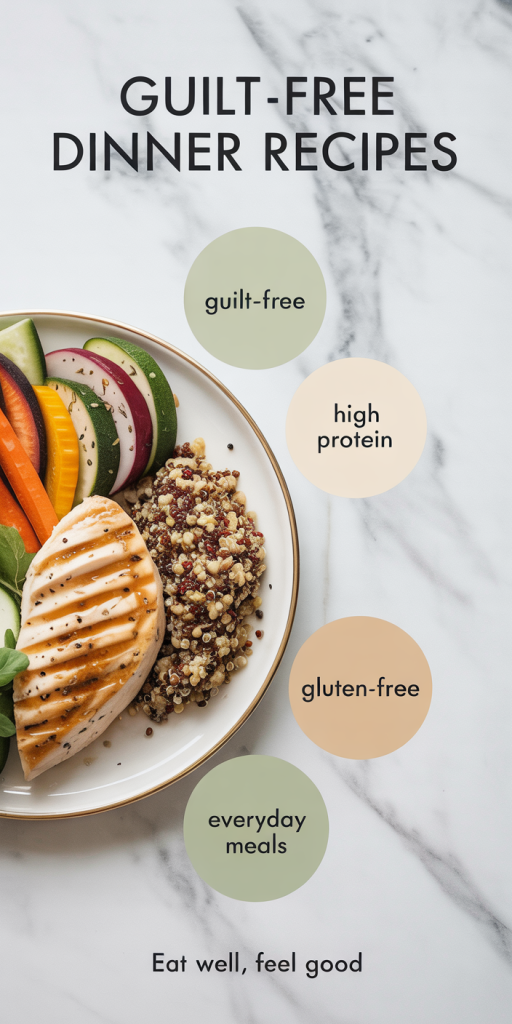
1. Grilled Chicken with Quinoa Salad
Ingredients:
- 4 chicken breasts
- 1 cup quinoa
- 2 cups spinach
- 1 bell pepper, chopped
- 1/4 cup olive oil
- Juice of one lemon
- Salt and pepper to taste
Instructions:
- Grill the chicken until fully cooked, seasoning with salt and pepper.
- Cook quinoa according to package instructions.
- In a bowl, combine spinach, bell pepper, quinoa, olive oil, and lemon juice.
- Serve the grilled chicken on top of the salad.
2. Veggie Stir-Fry with Brown Rice
Ingredients:
- 2 cups mixed vegetables (broccoli, bell peppers, carrots)
- 1 cup brown rice
- 2 tablespoons low-sodium soy sauce
- 2 teaspoons sesame oil
Instructions:
- Cook brown rice as per the instructions.
- Heat sesame oil in a pan: add vegetables and stir-fry until tender.
- Add soy sauce and stir for an additional minute.
- Serve over brown rice.
3. Baked Salmon with Asparagus
Ingredients:
- 4 salmon fillets
- 1 bunch asparagus
- 1 tablespoon lemon zest
- Salt, pepper, and garlic powder to taste
Instructions:
- Preheat oven to 400°F (200°C).
- Place salmon and asparagus on a baking sheet: drizzle with olive oil and season.
- Sprinkle lemon zest on top.
- Bake for 15-20 minutes or until salmon flakes easily.
Tips for Meal Planning and Preparation
Meal planning can transform our approach to guilt-free dinners. Here are some strategies we can carry out:
- Plan Ahead: Set aside time weekly to plan meals. This helps us avoid last-minute unhealthy choices.
- Batch Cooking: Prepare meals in bulk: this makes it easier to have healthy options available during busy weeks.
- Use Seasonal Ingredients: Fresh, in-season produce not only tastes better but is often more affordable.
- Create a Weekly Menu: A structured menu gives us clarity and encourages us to try diverse dishes.
- Prep Ingredients: Chop vegetables, marinate proteins, and keep grains ready to save time during the week.
Conclusion
Making guilt-free dinner recipes doesn’t have to be a challenging job. With the right ingredients, techniques, and planning, we can enjoy meals that satisfy our cravings while nourishing our bodies. Let’s embrace the joy of cooking together, knowing we are taking steps toward our health without compromising on flavor. Let us forge a path toward guilt-free eating that enhances our lives, one delicious dinner at a time.