How To Make Clean Eating Comfort Food
In our quest for healthier lifestyles, we often grapple with the idea of giving up the comforting dishes we love. But what if we told you that clean eating and comfort food can coexist? At its core, clean eating focuses on nourishing our bodies with whole, unprocessed foods that provide energy, satisfaction, and wellbeing. In this text, we’ll explore how to make clean eating comfort food that delights the palate and nurtures our health. So let’s rediscover the joy of eating clean without sacrificing taste.
Understanding Clean Eating
Clean eating emphasizes the importance of consuming whole, unrefined foods that are free from additives and preservatives. This means focusing on whole grains, fresh vegetables, lean proteins, nuts, and seeds while minimizing processed foods in our diets. When we choose clean eating, we’re not just opting for healthier meals: we’re making a commitment to fuel our bodies with the best ingredients possible. This lifestyle is about balance and recognizing that food can be both delicious and nutritious.
By adopting this approach, we foster a deeper connection with what we eat and how it affects our health and wellbeing. Clean eating isn’t a diet: it’s a way of life that celebrates the flavors and textures of real food.
Benefits of Clean Eating Comfort Food
The beauty of clean eating is that it allows us to enjoy comfort food in a guilt-free way. Let’s investigate into some of the key benefits we gain from making clean eating comfort food:
- Improved Health: Clean eating comfort food is typically lower in calories, sugars, and saturated fats. This shift can lead to weight management and increased energy levels.
- Greater Nutritional Value: By incorporating nutrient-dense ingredients, we boost our meals with vitamins, minerals, and antioxidants essential for overall health.
- Enhanced Mood and Satisfaction: Eating wholesome foods doesn’t mean sacrificing flavor. Clean comfort food can provide the same satisfaction as traditional dishes, often with added health benefits.
- Creative Reinterpretation: Clean eating inspires us to experiment in the kitchen, transforming our favorite comfort food into healthier alternatives without sacrificing taste.
Key Ingredients for Clean Eating Comfort Food
When we think of clean eating comfort food, the right ingredients are crucial. Here are some of our go-to staples:
- Whole Grains: Quinoa, brown rice, millet, and whole wheat pasta serve as robust bases for many dishes.
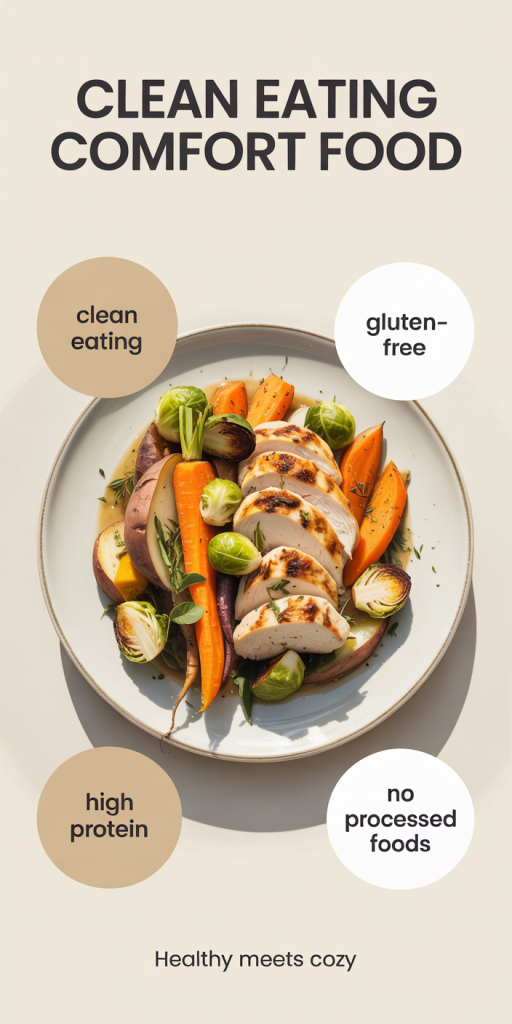
- Lean Proteins: Choose options such as chicken breast, turkey, beans, and legumes which provide essential amino acids without excess fat.
- Fresh Vegetables: Incorporating a variety of colors like leafy greens, bell peppers, and sweet potatoes adds flavor, texture, and vital nutrients.
- Healthy Fats: Avocados, nuts, and olive oil promote satiety and enhance flavor while providing beneficial omega-3 fatty acids.
- Natural Sweeteners: Instead of refined sugars, we can use honey, maple syrup, or dates to sweeten our dishes.
Popular Clean Eating Comfort Food Recipes
Let’s explore some comforting favorites reimagined through clean eating:
1. Clean Mac and Cheese
Using whole wheat pasta and a sauce made from pureed butternut squash, nutritional yeast, and almond milk, we can create a creamy, cheesy flavor without the heavy cream and processed cheese.
2. Quinoa Chili
We can whip up a spicy quinoa chili with black beans, kidney beans, diced tomatoes, and an assortment of spices. It’s hearty, nutritious, and perfect for a cozy night in.
3. Cauliflower Pizza Crust
By blending cauliflower with eggs and cheese, we create a low-carb pizza crust that’s both satisfying and gluten-free. Top it with fresh vegetables and herbs for added flavor.
4. Clean Chicken Alfredo
For a lighter version of Alfredo, we can use whole wheat pasta, grilled chicken, and a sauce made from blended cashews, garlic, and nutritional yeast to achieve that creamy texture.
Tips for Success in Clean Eating Comfort Food
Creating clean eating comfort food doesn’t have to be daunting. Here are some tips to ensure our success:
- Plan Ahead: Meal prepping can help us manage what we eat and keep our kitchen stocked with clean options.
- Experiment: Don’t be afraid to modify traditional recipes and make them our own. Swap ingredients, try new cooking methods, and adapt flavors to suit our tastes.
- Read Labels: If we do buy packaged foods, we should always check labels for added sugars and artificial ingredients.
- Mindful Cooking: As we cook, let’s stay mindful of the ingredients we’re using. Focus on the benefits of fresh foods and their flavors.
Adapting Traditional Comfort Food Recipes
Adapting our favorite comfort food recipes is a satisfying try. Here’s how we can approach this:
- Substitute Smartly: Replace refined flour and unhealthy fats with whole alternatives, such as oat flour or coconut oil.
- Make it Plant-Based: Where possible, we can turn meat-based dishes into vegetarian or vegan options using beans, tofu, or lentils.
- Reduce Sugar: Experiment with reducing the sugar in recipes or replacing it entirely with natural sweeteners to maintain sweetness without excess compromise on health.
- Incorporate Vegetables: Sneak in greenery or veggies wherever we can, this adds nutrients and volume, making meals more satisfying.
Conclusion
To conclude, clean eating comfort food allows us to enjoy the warmth and satisfaction of our favorite dishes while nourishing our bodies. By understanding clean eating principles and making thoughtful ingredient choices, we can reinvent our meals into healthier versions that still bring us joy. As we continue exploring this culinary journey, let’s remember that food is meant to be savored and enjoyed, enriching both our taste buds and our health. So, let’s embrace clean eating comfort food and transform the way we connect with what we eat.