
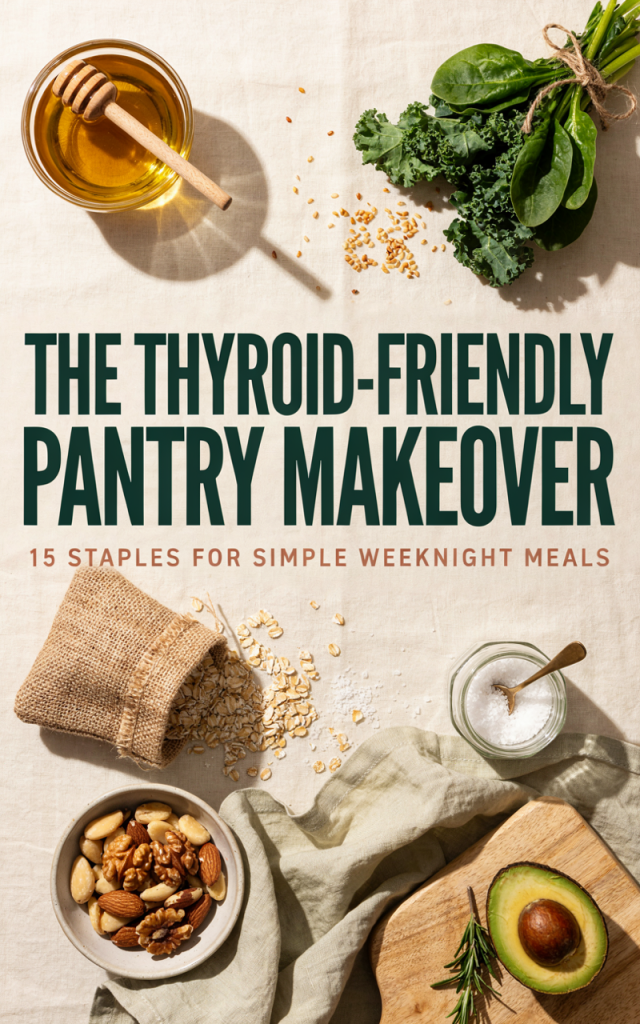
The Thyroid-Friendly Pantry Makeover: 15 Staples for Simple Weeknight Meals
A well-stocked pantry makes weeknight cooking faster, less stressful, and more nourishing — especially when you’re managing thyroid health. Whether you’re supporting hypothyroidism, hyperthyroidism, or trying to eat in a way that supports long-term thyroid wellness, a few thoughtful staples can help you prepare balanced, anti-inflammatory, nutrient-dense dinners without a lot of planning. This guide walks you through 15 thyroid-friendly pantry staples and gives a simple, practical weeknight recipe for each one so you can start cooking from your new pantry tonight.
Note: Food can support thyroid health, but it doesn’t replace medical care. If you take thyroid medication (e.g., levothyroxine), be mindful of timing: many minerals, supplements, and certain foods (calcium, iron supplements, high-fiber foods, soy products) can interfere with absorption. Check with your clinician to tailor diet and medication timing to your needs.
Why a thyroid-friendly pantry matters
Thyroid-supportive eating focuses on nutrients like iodine, selenium, zinc, vitamin D, iron, and balanced omega-3s — plus anti-inflammatory meals and sensible timing around medications. A targeted pantry makes it easy to include these elements consistently, reduce processed food triggers, and create satisfying meals that won’t complicate your medication schedule.
Below are 15 thoughtfully chosen staples that are shelf-stable or long-lasting, practical, and supportive of thyroid-friendly meals, each paired with a quick weeknight recipe.
Top 15 thyroid-friendly pantry staples (and a recipe for each)
1) Extra-virgin olive oil
Extra-virgin olive oil is anti-inflammatory, versatile, and a healthier fat choice for daily cooking and dressings. It’s appropriate for low- to medium-heat cooking and finishing dishes.
Quick Salmon Patties (uses canned salmon and olive oil)
– Ingredients:
– 1 can (about 6–7 oz) wild-caught canned salmon, drained
– 1–2 tablespoons extra-virgin olive oil
– 1/4 cup finely chopped onion (or 1 tsp onion powder)
– 1/3 cup breadcrumbs or gluten-free crumbs
– 1 egg (or flax egg)
– 1 tablespoon lemon juice
– 1/2 teaspoon iodized salt
– 1/4 teaspoon black pepper
– Instructions:
1. Combine salmon, onion (or powder), breadcrumbs, egg, lemon juice, salt, and pepper in a bowl and mix until cohesive.
2. Shape into 2–3 patties.
3. Heat olive oil in a nonstick skillet over medium heat.
4. Cook patties 3–4 minutes per side until golden and heated through.
5. Serve with a lemon wedge and a side salad or quick quinoa.
2) Canned sardines (in olive oil)
Sardines are rich in omega-3s and selenium, both beneficial for thyroid health. They’re shelf-stable and ready-to-eat.
Sardine & White Bean Salad
– Ingredients:
– 1 can sardines in olive oil, drained
– 1 can white beans, drained and rinsed
– 1 tablespoon extra-virgin olive oil
– 1 tablespoon lemon juice or vinegar
– 1/4 teaspoon dried oregano
– Pinch of iodized salt and black pepper
– Instructions:
1. Combine white beans, lemon juice, olive oil, oregano, salt, and pepper in a bowl.
2. Gently fold in sardines, keeping some chunks intact.
3. Taste and adjust seasoning.
4. Serve over mixed greens, on toast, or with whole-grain crackers.
3) Dried seaweed (nori, wakame)
Seaweed is a natural source of iodine. Use it sparingly if you have autoimmune thyroid disease and discuss iodine intake with your provider.
Quick Miso & Wakame Soup
– Ingredients:
– 3 cups low-sodium vegetable broth or water + 1 tsp miso paste
– 1 tablespoon dried wakame (or small sheet nori, torn)
– 1 green onion, thinly sliced (optional)
– 1/2 teaspoon grated ginger or pinch ginger powder
– Instructions:
1. Heat broth until simmering.
2. Whisk miso paste in a small bowl with a bit of warm broth, then stir back into the pot.
3. Add wakame and simmer 1–2 minutes until rehydrated.
4. Ladle into bowls and top with green onion and grated ginger.
4) Iodized salt (use sparingly and intentionally)
Iodized salt is an easy way to ensure adequate iodine intake if dietary sources are limited. Balance is key — avoid excess.
Lemony Herb Quinoa (seasoned with iodized salt)
– Ingredients:
– 1 cup quinoa, rinsed
– 2 cups water or low-sodium broth
– 1 tablespoon extra-virgin olive oil
– 1/2 teaspoon iodized salt
– 1 tablespoon lemon juice
– 1 teaspoon dried parsley or oregano
– Instructions:
1. Bring quinoa and water/broth to a boil, reduce heat, cover, and simmer 15 minutes until water is absorbed.
2. Fluff with a fork and stir in olive oil, lemon juice, salt, and herbs.
3. Serve as a base for proteins or roasted vegetables.
5) Quinoa
Quinoa is a complete plant protein, gluten-free, and versatile as a base for bowls or salads.
One-Pot Quinoa & Chickpeas
– Ingredients:
– 1 cup quinoa
– 1 can chickpeas, drained and rinsed
– 2 cups low-sodium broth
– 1 teaspoon cumin
– 1/2 teaspoon iodized salt
– 1 tablespoon olive oil
– Instructions:
1. In a pot, heat olive oil and add cumin for 30 seconds.
2. Add quinoa, chickpeas, broth, and salt; bring to a boil.
3. Reduce heat, cover, and simmer 15 minutes.
4. Fluff and serve with a squeeze of lemon.
6) Canned chickpeas
Chickpeas are rich in protein, fiber, and iron-friendly components. They’re quick to turn into satisfying stews and salads.
Quick Chickpea Tomato Stew
– Ingredients:
– 1 can chickpeas, drained and rinsed
– 1 can diced tomatoes
– 1 tablespoon olive oil
– 1 teaspoon smoked paprika
– 1/2 teaspoon iodized salt
– Optional: handful of spinach (fresh or frozen)
– Instructions:
1. Heat olive oil in a skillet and add paprika for 30 seconds.
2. Add diced tomatoes and chickpeas; simmer 8–10 minutes.
3. Stir in spinach until wilted.
4. Taste, adjust salt, and serve over quinoa or toast.
7) Dried or canned lentils
Lentils cook quickly (especially red lentils) and are rich in iron and fiber — helpful especially if you’re at risk of iron deficiency.
15-Minute Red Lentil Soup
– Ingredients:
– 1 cup red lentils, rinsed
– 4 cups low-sodium broth
– 1 teaspoon ground turmeric
– 1/2 teaspoon iodized salt
– 1 tablespoon olive oil
– 1/2 onion or 1 tsp onion powder
– Instructions:
1. Heat olive oil; sauté onion until soft (or add onion powder with some water).
2. Add lentils, broth, turmeric, and salt; bring to a boil.
3. Simmer 12–15 minutes until lentils are soft.
4. Blend slightly for creaminess (optional) and serve.
8) Low-sodium bone broth or bouillon
Bone broth supplies minerals and a savory base for soups; low-sodium versions help control electrolytes and medication interactions.
15-Minute Bone Broth Veggie Soup
– Ingredients:
– 4 cups low-sodium bone broth
– 1 cup frozen mixed vegetables
– 1 can drained chickpeas or lentils
– 1 teaspoon Italian herb blend
– 1/2 teaspoon iodized salt
– Instructions:
1. Bring broth to a simmer in a pot.
2. Add frozen vegetables and chickpeas; simmer 5–8 minutes.
3. Add herbs and salt; adjust seasoning.
4. Serve with a slice of whole-grain or gluten-free bread.
9) Nuts and seeds (esp. Brazil nuts and walnuts)
Brazil nuts are selenium powerhouses; walnuts provide omega-3 ALA. Keep portions controlled — a couple of Brazil nuts daily provides selenium.
Selenium Energy Bites (no-bake)
– Ingredients:
– 10 pitted dates
– 6 Brazil nuts
– 1/2 cup rolled oats
– 1 tablespoon chia or flaxseed
– 1 tablespoon unsweetened cocoa powder (optional)
– Instructions:
1. Pulse dates and Brazil nuts in a food processor until combined.
2. Add oats, seeds, and cocoa powder; pulse until mixture sticks together.
3. Roll into 8–10 balls and refrigerate until firm.
4. Store in an airtight container for quick snacks.
10) Ground turmeric + black pepper
Turmeric is anti-inflammatory; black pepper improves curcumin absorption. Great for sauces, stews, and warming drinks.
Golden Turmeric Lentils (quick)
– Ingredients:
– 1 cup red lentils
– 4 cups water or broth
– 1 teaspoon ground turmeric
– 1/4 teaspoon black pepper
– 1/2 teaspoon iodized salt
– Instructions:
1. Combine lentils, water, turmeric, black pepper, and salt in a pot.
2. Bring to a simmer; cook 12–15 minutes until lentils are soft.
3. Serve with a drizzle of olive oil and lemon.
11) Gluten-free oats
Oats provide soluble fiber and support steady blood sugar. If you take thyroid medication, separate oat consumption from medication timing to avoid absorption interference.
Savory Quick Oats with Chickpeas
– Ingredients:
– 1/2 cup gluten-free oats
– 1 cup water or broth
– 1/4 cup canned chickpeas, rinsed
– 1/4 teaspoon iodized salt
– 1/2 teaspoon dried herbs
– Instructions:
1. Bring oats and water/broth to a simmer.
2. Stir in chickpeas, salt, and herbs; cook 3–5 minutes until thickened.
3. Top with olive oil and a squeeze of lemon.
12) Nut or seed butter (almond, sunflower, or peanut)
Nut butters provide healthy fats, protein, and flavor. Sunflower butter is a good nut-free option.
Quick Almond Butter Noodle Sauce (serve with quick-cook rice noodles or zucchini noodles)
– Ingredients:
– 2 tablespoons almond butter
– 1 tablespoon low-sodium soy sauce or tamari (or coconut aminos)
– 1 tablespoon lemon juice or rice vinegar
– 1 teaspoon honey or maple syrup
– 1/4 cup warm water to thin
– Instructions:
1. Whisk almond butter, soy sauce, lemon juice, and honey in a bowl.
2. Add warm water a tablespoon at a time to reach sauce consistency.
3. Toss with cooked noodles or zucchini noodles and top with chopped green onion.
13) Canned diced tomatoes
Tomatoes are a versatile acidic base for stews and sauces that pair well with protein-rich beans and fish.
Quick Chickpea & Tomato Skillet
– Ingredients:
– 1 can diced tomatoes
– 1 can chickpeas, drained and rinsed
– 1/2 teaspoon smoked paprika
– 1/2 teaspoon iodized salt
– 1 tablespoon olive oil
– Instructions:
1. Heat olive oil and add paprika for 30 seconds.
2. Add tomatoes and chickpeas; simmer 8–10 minutes.
3. Adjust salt and serve over quinoa or with bread.
14) Dried herbs & spice blends (oregano, thyme, cumin, smoked paprika)
A few go-to herbs and spices make simple ingredients sing and reduce the need for high-sugar or processed sauces.
Herbed Tuna & White Bean Skillet
– Ingredients:
– 1 can light tuna in water, drained
– 1 can white beans, drained and rinsed
– 1 tablespoon olive oil
– 1 teaspoon dried thyme or oregano
– 1/2 teaspoon iodized salt
– Instructions:
1. Heat oil in a skillet and add herbs for 30 seconds.
2. Add tuna and beans; gently toss and heat 3–4 minutes.
3. Season with salt and serve over quinoa or greens.
15) Shelf-stable fortified plant milk or canned coconut milk
Fortified plant milks add vitamin D and calcium options (note: calcium supplements should be spaced from thyroid meds) and canned coconut milk is great for creamy curries.
Coconut Chickpea Curry (easy, 20 minutes)
– Ingredients:
– 1 can chickpeas, drained and rinsed
– 1 can light coconut milk
– 1 tablespoon curry powder
– 1/2 teaspoon iodized salt
– 1 tablespoon olive oil
– Optional: frozen vegetables
– Instructions:
1. Heat oil and curry powder in a pot for 30 seconds.
2. Add coconut milk and bring to a gentle simmer.
3. Stir in chickpeas and frozen vegetables; simmer 8–10 minutes.
4. Season with salt and serve over quinoa or rice.
Quick pantry pairing ideas for weeknight cooking
- Bowl: Quinoa + roasted or canned protein (sardines, salmon, tuna) + quick sauce (almond butter dressing or olive oil + lemon) + seeds.
- Soup night: Start with low-sodium bone broth, add lentils or canned beans, a can of tomatoes, and spices — simmer for 15–20 minutes.
- One-skillet: Olive oil, spice blend, canned tomatoes, canned chickpeas or lentils, and quinoa on the side.
- Power snack: 1–2 Brazil nuts + a small energy bite or piece of fruit.
How to shop and rotate these staples
- Keep a running list of canned goods and expiry dates; rotate older cans to the front.
- Store nuts and seeds in the fridge or freezer if you buy in bulk to prevent rancidity.
- Buy smaller jars of ground spices if you rarely cook with them to preserve potency.
- Choose low-sodium broths and canned goods, or rinse canned beans to reduce sodium.
- If you take thyroid medication, keep a small notebook to track how certain foods make you feel and note timing adjustments around medication.
Medication and timing tips (important)
- Take levothyroxine on an empty stomach, typically 30–60 minutes before breakfast or 3–4 hours after a high-calcium/iron meal or supplement.
- Avoid consuming iron supplements, calcium-fortified foods, high-fiber meals, or soy products within 3–4 hours of your thyroid medication.
- Coffee and some heavily fortified foods can also interfere with absorption; plan to take medication on an empty stomach and eat routine breakfasts consistently.
Meal planning hacks for busy weeknights
- Batch cook quinoa, lentils, or brown rice on Sunday and portion in the fridge for 3–4 days.
- Make large jars of dressings (olive oil + lemon + herbs; almond butter sauces) to toss on bowls and salads.
- Keep 2–3 cans each of protein-rich fish and legumes on hand to rotate meals easily.
- Use a slow cooker or instant pot for hands-off soups and stews you can reheat all week.
Troubleshooting common concerns
- Concerned about iodine? If you have autoimmune thyroid disease, discuss iodine intake with your provider — avoid overconsumption of seaweed supplements.
- Worried about medication interactions? Keep a consistent medication schedule and allow appropriate gaps between meds and high-calcium or iron-containing meals.
- Tired of bland food? Spices and citrus are your friends — turmeric, cumin, smoked paprika, lemon juice, and herbs add flavor without inflammatory triggers.
Conclusion
Transforming your pantry into a thyroid-friendly fuel station doesn’t require a costly overhaul — just 15 smart staples, a few simple recipes, and some organization. These ingredients emphasize selenium, omega-3s, iodine (used thoughtfully), anti-inflammatory spices, and shelf-stable proteins that make weeknight meals fast and nourishing. Start by picking three or four staples to add to your shopping list this week, try one new recipe from this list, and see how easy it becomes to support your thyroid through food.
If you’re managing thyroid disease or taking medication, talk with your clinician or registered dietitian for personalized guidance on iodine intake, timing of medications, and any supplements. Small, consistent changes to your pantry and meal routine add up — and you don’t have to do it all at once. You’ve got this.


