
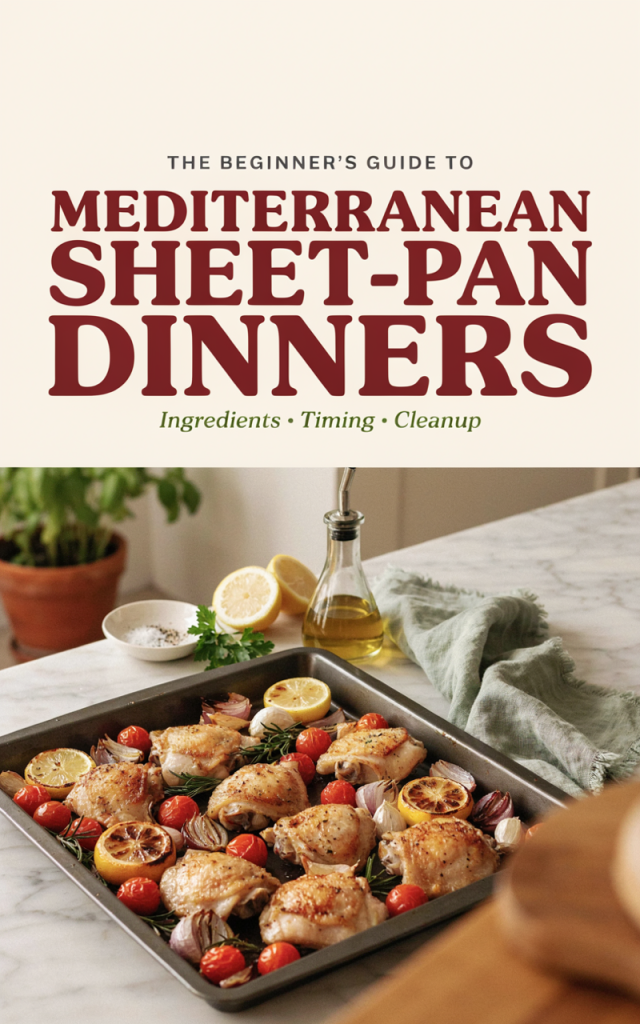
The Beginner’s Guide to Mediterranean Sheet-Pan Dinners: Ingredients, Timing, and Cleanup
Mediterranean sheet-pan dinners are the unsung heroes of weeknight cooking: minimal hands-on time, big flavors, and healthy ingredients roasted to perfection on one pan. This guide is designed for beginners who want to master this simple, satisfying style of cooking. You’ll learn pantry essentials, how to balance vegetables and proteins, optimal oven timing and temperatures, cleanup shortcuts, and several complete recipes you can start using tonight.
Whether you’re cooking for one, feeding a family, or prepping meals for the week, sheet-pan Mediterranean dinners make nutritious eating easy, flexible, and delicious. Read on for step-by-step guidance and foolproof recipes.
What is a Mediterranean sheet-pan dinner?
A Mediterranean sheet-pan dinner is a one-pan meal where Mediterranean-inspired ingredients—think olive oil, garlic, lemon, tomatoes, olives, herbs, fish, poultry, legumes, and vegetables—are roasted together on a rimmed baking sheet. The result is a balanced plate with roasted vegetables, a flavorful protein, and concentrated, caramelized flavors that epitomize the region’s cuisine.
Benefits:
– One tray, one roasting temperature, little cleanup
– Great for batch cooking and leftovers
– Naturally high in vegetables, healthy fats, and lean protein
– Easy to customize for vegetarian, pescatarian, and gluten-free diets
Recipes in this guide
- Classic Greek Chicken with Lemon and Potatoes
- Lemon-Garlic Salmon with Asparagus and Cherry Tomatoes
- Sheet-Pan Shrimp with Tomatoes, Olives, and Feta
- Roasted Mediterranean Vegetables and Chickpeas (Vegetarian, Vegan option)
- Spicy Merguez Sausage with Peppers and Herbed Potatoes
- Halloumi and Zucchini Sheet-Pan with Mint and Lemon
Each recipe below includes a bulleted ingredients list and numbered instructions so you can replicate them precisely.
Essential pantry & fridge ingredients for Mediterranean sheet-pan dinners
Before you start, stock this core list. These are the flavors and components you’ll reach for most often.
- Extra-virgin olive oil
- Lemon (or bottled lemon juice in a pinch)
- Garlic (fresh or paste)
- Dried oregano, thyme, rosemary, and crushed red pepper
- Smoked paprika
- Sea salt and freshly cracked black pepper
- Canned chickpeas (garbanzo beans)
- Cherry or grape tomatoes
- Olives (Kalamata or Castelvetrano)
- Capers (optional)
- Red onion and/or shallots
- Potatoes (baby or Yukon Gold) and/or sweet potatoes
- Zucchini, eggplant, bell peppers, asparagus
- Feta or halloumi (for vegetarian options)
- Chicken thighs, salmon fillets, firm white fish, or shrimp
- Quality sheet pan (rimmed baking sheet) and parchment paper or silicone baking mat
Equipment checklist
- Large rimmed sheet pan (half-sheet size recommended)
- Parchment paper or silicone baking mat
- Mixing bowls
- Tongs or spatula
- Chef’s knife and cutting board
- Small bowl for vinaigrette or herb dressing
Basic timing and temperature rules
Understanding how different ingredients behave in the oven is the key to success.
H2: Temperature
– Most Mediterranean sheet-pan dinners roast well at 400–425°F (200–220°C). This range gives vegetables a chance to caramelize and proteins to brown without drying out.
– Lower-fat proteins like fish or delicate greens may prefer 375–400°F (190–200°C).
H2: Timing by ingredient
– Root vegetables (potatoes, carrots, beets): 30–40 minutes at 400°F. Cut small or parboil for faster finish.
– Squash, bell peppers, onions, eggplant: 20–30 minutes at 400°F.
– Firm fish fillets (salmon, cod): 12–18 minutes at 400°F depending on thickness.
– Shrimp: 6–10 minutes at 425°F—watch closely to avoid rubberiness.
– Chicken thighs (bone-in): 35–45 minutes at 400°F. Boneless thighs: 20–30 minutes.
– Halloumi: 10–12 minutes at 425°F to get golden edges.
– Chickpeas: 20–30 minutes at 400–425°F to get crispy edges.
H2: Staggering approach
If a recipe includes items with different cook times:
1. Start with the ingredient that takes the longest (potatoes, thicker root veg).
2. After a set time, add quicker-cooking items (fish, shrimp, delicate greens).
3. Use separate sections of the pan if you need slightly different doneness levels.
H2: How to know when it’s done
– Vegetables: fork-tender with golden/browned edges.
– Chicken: internal temperature 165°F (74°C).
– Salmon: flakes easily and is opaque in the center.
– Shrimp: opaque and curled; avoid overcooking.
Flavor-building and finishing touches
Mediterranean cooking thrives on brightness and balance. After roasting, finish with:
– A squeeze of fresh lemon
– Drizzle of extra-virgin olive oil
– Handful of fresh herbs (parsley, mint, dill, or basil)
– Crumbled feta or toasted pine nuts
– A light vinaigrette (olive oil + lemon + garlic + oregano)
These finishing touches brighten flavors that deepen in the oven.
Recipe 1: Classic Greek Chicken with Lemon and Potatoes
Ingredients
– 1.5 pounds (700 g) bone-in, skin-on chicken thighs (or boneless if preferred)
– 1.5 pounds baby potatoes, halved
– 1 large red onion, cut into wedges
– 3 cloves garlic, sliced
– 2 tablespoons extra-virgin olive oil
– Zest and juice of 1 lemon
– 1 teaspoon dried oregano
– 1/2 teaspoon smoked paprika
– Salt and pepper to taste
– 1/2 cup Kalamata olives (optional)
– 2 tablespoons chopped fresh parsley
– 2 ounces crumbled feta (optional)
Instructions
1. Preheat oven to 400°F (200°C). Line a rimmed baking sheet with parchment.
2. In a large bowl, toss potatoes, onion, and garlic with 1 tablespoon olive oil, half the lemon zest, salt, pepper, and 1/2 teaspoon oregano. Spread on one side of the sheet pan.
3. In the same bowl, rub remaining olive oil, lemon juice, zest, oregano, paprika, salt, and pepper over the chicken thighs.
4. Nestle chicken among the potatoes on the sheet pan, skin side up. Scatter olives around if using.
5. Roast for 35–40 minutes, until potatoes are golden and chicken reaches 165°F (74°C).
6. Remove from oven, sprinkle with parsley and feta, and serve with extra lemon wedges.
Recipe 2: Lemon-Garlic Salmon with Asparagus and Cherry Tomatoes
Ingredients
– 4 salmon fillets (about 6 oz / 170 g each)
– 1 pound asparagus, woody ends trimmed
– 1 cup cherry tomatoes, halved
– 3 tablespoons olive oil, divided
– 2 cloves garlic, minced
– Zest and juice of 1 lemon
– 1 teaspoon dried thyme or dill
– Salt and pepper to taste
– 1 tablespoon capers (optional)
– Lemon slices for garnish
Instructions
1. Preheat oven to 400°F (200°C). Line a sheet pan with parchment.
2. Toss asparagus and tomatoes with 1 tablespoon olive oil, salt, and pepper. Spread in a single layer.
3. Place salmon fillets skin-side down among the vegetables. Brush salmon with remaining olive oil, then rub with garlic, lemon zest, lemon juice, and thyme. Season to taste.
4. Roast for 12–15 minutes, until salmon flakes easily and asparagus is tender-crisp.
5. Scatter capers and lemon slices over the pan before serving.
Recipe 3: Sheet-Pan Shrimp with Tomatoes, Olives, and Feta
Ingredients
– 1.5 pounds (700 g) large shrimp, peeled and deveined
– 2 cups cherry tomatoes
– 1/2 cup pitted olives, halved
– 1 small red onion, thinly sliced
– 3 tablespoons olive oil
– 3 cloves garlic, minced
– 1 teaspoon red pepper flakes (optional)
– Zest and juice of 1 lemon
– 3 tablespoons chopped parsley
– 3 ounces crumbled feta
– Sea salt and black pepper
Instructions
1. Preheat oven to 425°F (220°C). Prepare a sheet pan with parchment.
2. Toss tomatoes, olives, and onion with 2 tablespoons olive oil, garlic, salt, and pepper. Roast for 12 minutes to concentrate the tomatoes.
3. Remove pan, add shrimp tossed with 1 tablespoon olive oil, lemon zest, and red pepper flakes. Return to oven for 6–8 minutes until shrimp are opaque.
4. Finish with lemon juice, parsley, and crumbled feta. Serve hot with crusty bread or over greens.
Recipe 4: Roasted Mediterranean Vegetables and Chickpeas (Vegetarian; vegan option)
Ingredients
– 1 can (15 oz / 425 g) chickpeas, drained and rinsed
– 1 medium eggplant, cut into 1-inch cubes
– 1 red bell pepper, sliced
– 1 zucchini, sliced into half-moons
– 1 red onion, cut into wedges
– 2 cups cherry tomatoes
– 3 tablespoons olive oil
– 1 teaspoon smoked paprika
– 1 teaspoon ground cumin
– 1 teaspoon dried oregano
– Salt and pepper
– 2 tablespoons tahini (optional drizzle) — vegan
– Juice of 1 lemon
– Chopped parsley or cilantro for garnish
Instructions
1. Preheat oven to 425°F (220°C). Line a large sheet pan with parchment.
2. Toss eggplant, pepper, zucchini, onion, cherry tomatoes, and chickpeas with olive oil, smoked paprika, cumin, oregano, salt, and pepper. Spread into an even layer.
3. Roast 25–30 minutes, stirring once halfway through, until vegetables are tender and chickpeas have crispy edges.
4. Drizzle with lemon juice and tahini (if using), garnish with herbs, and serve over quinoa or greens.
Recipe 5: Spicy Merguez Sausage with Peppers and Herbed Potatoes
Ingredients
– 1 pound merguez sausages (or other spicy sausage)
– 1.5 pounds baby potatoes, quartered
– 2 bell peppers (mixed colors), sliced
– 1 red onion, sliced
– 3 tablespoons olive oil
– 1 teaspoon smoked paprika
– 1 teaspoon cumin
– Salt and pepper
– 2 tablespoons chopped mint and parsley
– Lemon wedges for serving
Instructions
1. Preheat oven to 400°F (200°C). Toss potatoes with 2 tablespoons olive oil, smoked paprika, cumin, salt, and pepper. Roast on sheet pan for 15 minutes.
2. Remove pan, add peppers and onion tossed with remaining oil and seasoning, and place sausages on the pan.
3. Roast another 20 minutes until sausages are cooked through and vegetables are caramelized.
4. Sprinkle with mint and parsley, squeeze lemon over everything, and serve.
Recipe 6: Halloumi and Zucchini Sheet-Pan with Mint and Lemon
Ingredients
– 8 ounces halloumi, sliced into 1/2-inch pieces
– 3 medium zucchinis, sliced on the bias
– 1 pint cherry tomatoes
– 1 red onion, thinly sliced
– 3 tablespoons olive oil
– 1 teaspoon dried oregano
– Salt and pepper
– Juice of 1 lemon
– Handful chopped mint
– Optional: drizzle of honey or balsamic for contrast
Instructions
1. Preheat oven to 425°F (220°C). Toss zucchini, tomatoes, and onion with olive oil, oregano, salt, and pepper. Spread on a sheet pan.
2. Roast for 10 minutes, then add halloumi slices to the pan.
3. Roast another 8–10 minutes until halloumi edges are golden and vegetables are tender.
4. Finish with lemon juice, mint, and optional drizzle of honey or balsamic.
Meal planning, portioning, and nutrition balance
- Aim for a plate that’s roughly half vegetables, one-quarter protein, and one-quarter starch or whole grains.
- Protein examples: 4–6 oz of cooked salmon or chicken per person, or 1.5 cups cooked chickpeas for vegetarian eaters.
- Add whole grains (quinoa, farro, brown rice) or crusty whole-grain bread for fiber and satiety.
- For lower-calorie meals, increase non-starchy vegetables and reduce oils slightly.
Substitutions and dietary swaps
- Vegan: Replace fish/poultry with extra-firm tofu, tempeh, or double the chickpeas, and omit cheeses.
- Gluten-free: All recipes here are naturally gluten-free—just check packaged seasonings.
- Dairy-free: Replace feta/halloumi with toasted nuts/seeds or omit.
- Low-carb: Swap potatoes for cauliflower florets or extra non-starchy veg.
Troubleshooting common mistakes
- Soggy vegetables: Don’t overcrowd the sheet pan—spread in a single layer. Use higher heat (425°F) for better caramelization.
- Dried-out fish: Lower oven temperature to 375–400°F and check earlier. Thicker fillets may need foil tenting for final minutes.
- Uneven cooking: Cut vegetables uniformly. Stagger cook times—start root veg first, add delicate items later.
- Burnt garlic: Add minced garlic later in the roasting time or use sliced garlic at lower temperature—garlic burns quickly and becomes bitter.
Cleanup: quick tricks that save time
- Line the pan: Parchment or a silicone baking mat makes cleanup almost effortless.
- Soak immediately: If you skip lining, soak the pan in hot soapy water while food is cooling to loosen stuck-on bits.
- Use a bench scraper: For stubborn burned-on areas, a flexible bench scraper works better than a metal spatula.
- Avoid metal scrubbers on nonstick surfaces; use a baking soda paste for tougher spots.
- Oven safety: Let the pan cool before soaking if it’s still very hot to avoid warping.
Storing and reheating leftovers
- Store cooled leftovers in airtight containers in the fridge for 3–4 days.
- Reheat in a 350°F (175°C) oven for 8–12 minutes to maintain texture. Microwave for quick reheating (1–2 minutes) but expect softer vegetables.
- For batch cooking, portion meals into individual containers with a fresh herb garnish and lemon wedge for grab-and-go lunches.
Final tips for beginners
- Keep ingredients simple: focus on fresh produce, a good olive oil, citrus, garlic, and a few herbs.
- Lean on balance: pair veggies with a protein and a whole grain for a complete meal.
- Prep in advance: chop vegetables and make marinades the night before to reduce weekday cooking time.
- Taste and adjust: always finish with acid (lemon) and fresh herbs to elevate flavors.
Conclusion
Mediterranean sheet-pan dinners are a practical, healthy, and flavorful way to simplify weeknight cooking. With a few key pantry staples, a reliable sheet pan, and an understanding of oven timing, you can create a wide range of satisfying meals in under an hour—often with less than 15 minutes of hands-on time. Use the recipes here as templates: swap vegetables, change proteins, and adjust herbs and spices to suit your taste. The method is forgiving, the results are delicious, and the cleanup is minimal—what’s not to love?
Start with one recipe this week, adapt it to your family’s preferences, and build a rotation of go-to sheet-pan meals. Soon you’ll find that healthy, Mediterranean-inspired dinners are not just easy but enjoyable and sustainable. Happy roasting!
