
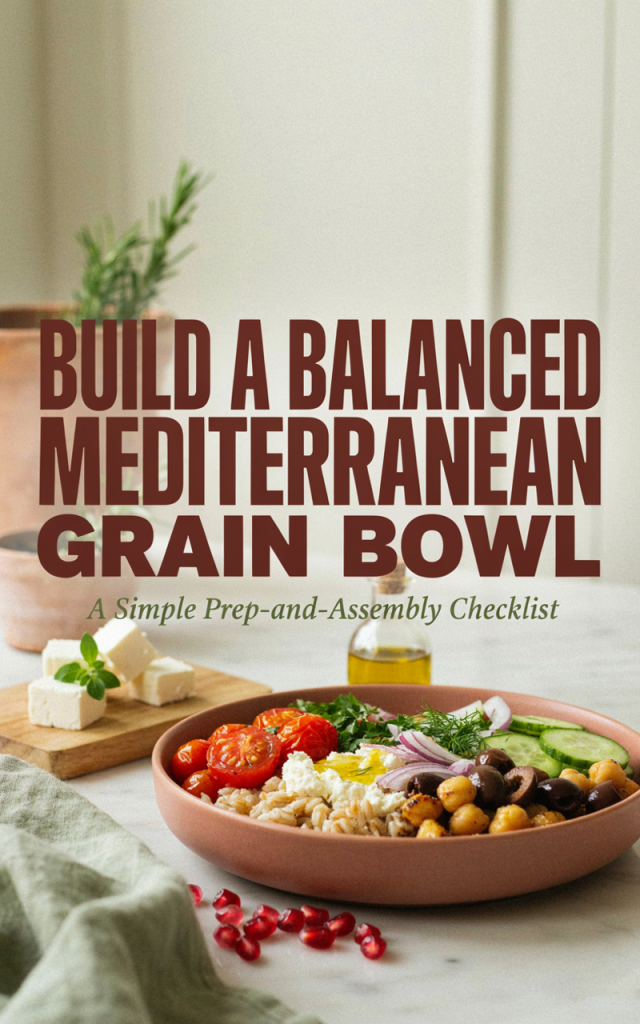
How to Build a Balanced Mediterranean Grain Bowl: A Simple Prep-and-Assembly Checklist
Introduction
Mediterranean cuisine is celebrated for its vibrant flavors, seasonal ingredients, and health benefits — particularly for heart health and longevity. A Mediterranean grain bowl takes everything great about that tradition and packages it into one convenient, customizable meal: grains, vegetables, protein, healthy fats, and bright dressings. Whether you’re meal-prepping for the week or assembling a quick lunch at work, a well-constructed grain bowl is satisfying, nutritious, and flexible.
This guide will walk you through the principles of balance, a clear prep-and-assembly checklist, smart make-ahead strategies, and six delicious Mediterranean grain bowl recipes (plus two classic dressings) you can use right away. Each recipe includes an ingredients list and numbered instructions so you can jump into the kitchen with confidence.
Why a Mediterranean Grain Bowl Works
Mediterranean grain bowls work because they combine complementary food groups in one bowl:
- Whole grains for steady energy and fiber
- Vegetables for volume, micronutrients, and fiber
- Protein (plant or animal) for satiety and muscle repair
- Healthy fats (olive oil, olives, nuts, seeds) for nutrient absorption and flavor
- Fresh herbs and acidic elements (lemon, vinegar) to brighten flavors and support digestion
A balanced bowl typically follows a simple plate-based ratio: about half vegetables (raw or cooked), one-quarter grains, and one-quarter protein, plus a drizzle of healthy fat and a flavorful dressing. This structure makes bowls both satisfying and easy to scale.
Build-Your-Bowl Components (The Template)
Use this template to design any Mediterranean grain bowl:
1) Base: Grains (choose one or mix)
- Brown rice
- Farro
- Quinoa (white, red, or tri-color)
- Orzo (whole wheat, if possible)
- Bulgur
- Barley
Portion: 1/2 to 1 cup cooked per serving depending on appetite and whether the bowl is a main or side.
2) Vegetables (aim for variety and color)
- Leafy greens (spinach, arugula, baby kale)
- Roasted vegetables (eggplant, zucchini, bell peppers)
- Fresh veg (cucumber, cherry tomatoes, red onion)
- Pickled veg (quick-pickled red onion, pickled cucumbers)
- Olives and artichokes
Aim for half the bowl to be vegetables.
3) Protein (choose plant or animal)
- Chickpeas, lentils, or white beans
- Grilled or roasted chicken breast
- Baked or pan-seared salmon
- Tuna (canned in olive oil is fine)
- Feta or halloumi (for vegetarian bowls)
One-quarter of the bowl by volume; adjust to your needs.
4) Healthy Fats & Toppings
- Extra virgin olive oil
- Tahini
- Olives
- Nuts/seeds (almonds, pistachios, pumpkin seeds)
- Avocado slices
5) Flavor Boosters
- Fresh herbs (parsley, mint, dill)
- Citrus (lemon zest + juice)
- Spices (sumac, za’atar, oregano)
- Yogurt or tzatziki
6) Dressing
- Lemon-tahini
- Olive oil & red wine vinegar vinaigrette
- Tzatziki
Dressing ties everything together; keep about 1–2 tablespoons per bowl.
The Simple Prep-and-Assembly Checklist
Follow this stepwise checklist when prepping and assembling bowls. Save it as a printable or phone note.
- [ ] Choose your grain(s) for the week (1–3 options)
- [ ] Choose 3–5 veg to rotate (include leafy, raw, and roasted)
- [ ] Choose 2–3 protein options (1 plant, 1 fish or poultry)
- [ ] Select dressings and make at least one batch
- [ ] Roast or grill vegetables in large batches
- [ ] Cook grains in bulk and cool quickly
- [ ] Prepare proteins (bake salmon, roast chicken, cook lentils/chickpeas)
- [ ] Chop fresh veg and herbs; store separately
- [ ] Pre-portion bowls or components for grab-and-go
- [ ] Assemble just before eating or store dressings separately to prevent sogginess
Prep Flow — A Practical Timeline for One Hour
If you have about an hour, here’s a logical sequence that maximizes oven and stovetop time:
- Preheat oven to 425°F (220°C). Line a sheet pan.
- Rinse grains and start cooking (farro or brown rice may take 20–40 minutes; quinoa ~15 minutes).
- Toss chosen roastables (eggplant, bell pepper, zucchini, red onion, cherry tomatoes) with olive oil, salt, pepper, and za’atar; roast 20–30 minutes.
- While grains and veg cook, make dressings (lemon-tahini and vinaigrette).
- Cook proteins: roast salmon in the oven during the last 12–15 minutes, or pan-sear chicken breasts.
- Rinse canned beans and warm or season as desired (5 minutes).
- Chop fresh herbs, cucumber, and greens.
- Cool grains quickly (spread on a tray), then portion into containers with grains at the base and vegetables/proteins on top (dressings stored separately).
Sample Recipes — Mediterranean Grain Bowls & Dressings
Below are six complete grain bowl ideas plus two dressings. Each recipe lists ingredients (bulleted) and step-by-step instructions (numbered).
1) Classic Greek Grain Bowl
Ingredients:
– 1 cup cooked farro (cooled)
– 1 cup mixed greens
– 1/2 cup cherry tomatoes, halved
– 1/2 cup cucumber, diced
– 1/4 cup Kalamata olives, pitted and halved
– 1/3 cup crumbled feta
– 1/2 cup cooked chickpeas (drained and rinsed)
– 1 tbsp extra virgin olive oil
– 1 tbsp lemon juice
– Salt and pepper
– Fresh oregano or parsley to garnish
Instructions:
1. Place cooked farro in the base of a bowl.
2. Arrange mixed greens on one side and scatter cherry tomatoes, cucumber, and olives around the bowl.
3. Add chickpeas and sprinkle crumbled feta over the top.
4. Drizzle olive oil and lemon juice, season with salt and pepper.
5. Garnish with fresh oregano or parsley and serve immediately.
2) Lemon-Herb Farro with Roasted Vegetables & Feta
Ingredients:
– 1 cup cooked farro
– 1 cup roasted vegetables (eggplant, zucchini, bell pepper)
– 1/2 cup arugula or baby spinach
– 1/4 cup crumbled feta
– 1 tbsp chopped fresh parsley
– 1 tsp lemon zest + 1 tbsp lemon juice
– 1 tbsp olive oil
– Salt, black pepper, and pinch of red pepper flakes
Instructions:
1. Add cooked farro to a serving bowl and warm if desired.
2. Top with roasted vegetables and a handful of arugula.
3. Sprinkle parsley, lemon zest, and crumbled feta over the bowl.
4. Drizzle with olive oil and lemon juice; season with salt, pepper, and red pepper flakes.
5. Toss gently or eat as assembled.
3) Chickpea & Quinoa Power Bowl
Ingredients:
– 1 cup cooked quinoa
– 3/4 cup roasted chickpeas or warmed canned chickpeas
– 1/2 cup shredded carrot
– 1/2 cup cucumber, diced
– 1/4 cup chopped fresh mint and parsley mix
– 1 tbsp toasted pine nuts or slivered almonds
– 2 tbsp lemon-tahini dressing (recipe below)
Instructions:
1. Spoon cooked quinoa into a bowl.
2. Add chickpeas, shredded carrot, and cucumber in sections.
3. Sprinkle chopped herbs and toasted nuts on top.
4. Drizzle with lemon-tahini dressing before serving.
5. Mix and enjoy.
4) Mediterranean Chicken & Bulgur Bowl
Ingredients:
– 1 cup cooked bulgur
– 4–5 oz grilled or roasted chicken breast, sliced
– 1/2 cup roasted red peppers
– 1/2 cup baby spinach
– 2 tbsp crumbled feta
– 1 tbsp chopped kalamata olives
– 1–2 tbsp olive oil & red wine vinaigrette (recipe below)
Instructions:
1. Place cooked bulgur into the bowl.
2. Layer sliced chicken breast, roasted red peppers, and spinach.
3. Sprinkle olives and feta over the top.
4. Drizzle with vinaigrette and toss slightly.
5. Serve warm or at room temperature.
5) Salmon & Orzo Bowl with Dill-Yogurt
Ingredients:
– 1 cup cooked orzo (cooled slightly)
– 4–6 oz oven-baked salmon (seasoned with lemon and oregano)
– 1/2 cup cucumber, diced
– 1/4 cup chopped dill
– 2 tbsp tzatziki or dill-yogurt (recipe below)
– 1 tbsp capers (optional)
– Lemon wedge to serve
Instructions:
1. Put cooked orzo in the bowl.
2. Flake the cooked salmon and arrange it over the orzo.
3. Add cucumber, dill, and capers.
4. Dollop tzatziki/dill-yogurt over the salmon and squeeze lemon juice.
5. Mix gently and serve.
6) Warm Lentil & Brown Rice Bowl with Tahini Drizzle
Ingredients:
– 1/2 cup cooked brown rice
– 1/2 cup cooked green or brown lentils
– 1 cup roasted Brussels sprouts and carrots
– 1/4 avocado, sliced
– 1 tbsp toasted pumpkin seeds
– 2 tbsp lemon-tahini dressing (recipe below)
– Salt and black pepper
Instructions:
1. Warm rice and lentils together and place in the bowl.
2. Add roasted vegetables on top.
3. Lay avocado slices and sprinkle with pumpkin seeds.
4. Drizzle lemon-tahini dressing over bowl and season with salt and pepper.
5. Serve warm.
Lemon-Tahini Dressing (Batch)
Ingredients:
– 1/3 cup tahini
– 3 tbsp lemon juice (fresh)
– 2 tbsp extra virgin olive oil
– 2–3 tbsp water to thin (as needed)
– 1 garlic clove, minced
– Salt and pepper to taste
Instructions:
1. Whisk together tahini and lemon juice until smooth (it may thicken).
2. Add olive oil and minced garlic; whisk again.
3. Thin with water, 1 tablespoon at a time, until desired consistency is reached.
4. Season with salt and pepper. Store refrigerated up to 5 days.
Classic Tzatziki (Quick)
Ingredients:
– 1 cup Greek yogurt
– 1/2 cup cucumber, finely grated and excess liquid squeezed out
– 1 tbsp lemon juice
– 1 tbsp chopped fresh dill
– 1 garlic clove, minced
– Salt and pepper to taste
Instructions:
1. Combine Greek yogurt, grated cucumber, lemon juice, dill, and garlic in a bowl.
2. Stir until smooth and taste for seasoning.
3. Refrigerate for at least 15 minutes to meld flavors. Use within 3–4 days.
Make-Ahead and Storage Tips
- Grains: Store cooked grains in airtight containers for up to 5 days in the fridge. Reheat with a splash of water or olive oil.
- Roasted Vegetables: Keep roasted veg separate from fresh greens; they last 3–4 days refrigerated.
- Proteins: Cooked chicken or salmon will keep 3–4 days refrigerated if stored properly. Legumes are good for 4–5 days.
- Dressings: Most dressings last 4–7 days; tahini-based dressings may thicken — whisk before use.
- Assembly: Keep dressings separate until serving to prevent sogginess. Layer bowls in mason jars or portioned containers: grains -> sturdy veg/protein -> fresh greens -> dressing on the side.
Portioning and Nutrition Guidance
- Aim for about 400–700 calories for a main meal bowl depending on energy needs.
- A typical balanced bowl composition:
- 1/2 cup to 1 cup cooked grains (~150–250 kcal)
- 3–4 oz protein (~120–200 kcal)
- Plenty of vegetables (~50–100 kcal)
- 1 tbsp olive oil or 2 tbsp dressing (~120–160 kcal)
- Swap to reduce calories: cut grains by half and increase vegetables. To boost calories for athletic needs, add extra olive oil, nuts, or avocado.
Flavor Variations and Substitutions
- Make it vegan: use lentils or baked tofu instead of animal protein and swap out dairy feta for marinated tofu or olive tapenade.
- Low-carb option: replace grains with cauliflower rice; keep the Mediterranean flavors (olives, lemon, herbs).
- Kid-friendly: mild seasonings, roasted sweet potatoes, and shredded rotisserie chicken with tzatziki on the side.
- For extra crunch: add toasted almonds, pistachios, or pumpkin seeds right before serving.
Troubleshooting Common Problems
- Bowl is soggy: Store dressings separately; add fresh greens at assembly, not during long-term storage.
- Bland flavor: Add acid (lemon or vinegar), a pinch of coarse salt, or a finishing herb like parsley or mint.
- Too dry: Add a dollop of yogurt, a drizzle of olive oil, or some tzatziki.
- Reheating leftovers: Reheat grains and proteins separately; add fresh veggies and dressing after warming.
Conclusion
Building a balanced Mediterranean grain bowl is a practical, delicious way to eat more vegetables, savor seasonal produce, and enjoy flexible protein choices. Use the template and checklist in this guide to streamline weeknight meals and meal prep batches. Start with one grain, two vegetables, and one protein, then customize with herbs, nuts, olives, and bright dressings. With the six bowl recipes and two dressings provided, you have a ready-to-use rotation that keeps lunch and dinner interesting, nutritious, and utterly satisfying.
Take one hour one day this week to batch-cook grains and roast vegetables — then assemble quick, balanced Mediterranean grain bowls all week long. You’ve got this. Enjoy the flavors, and let the bowls be your canvas.
