
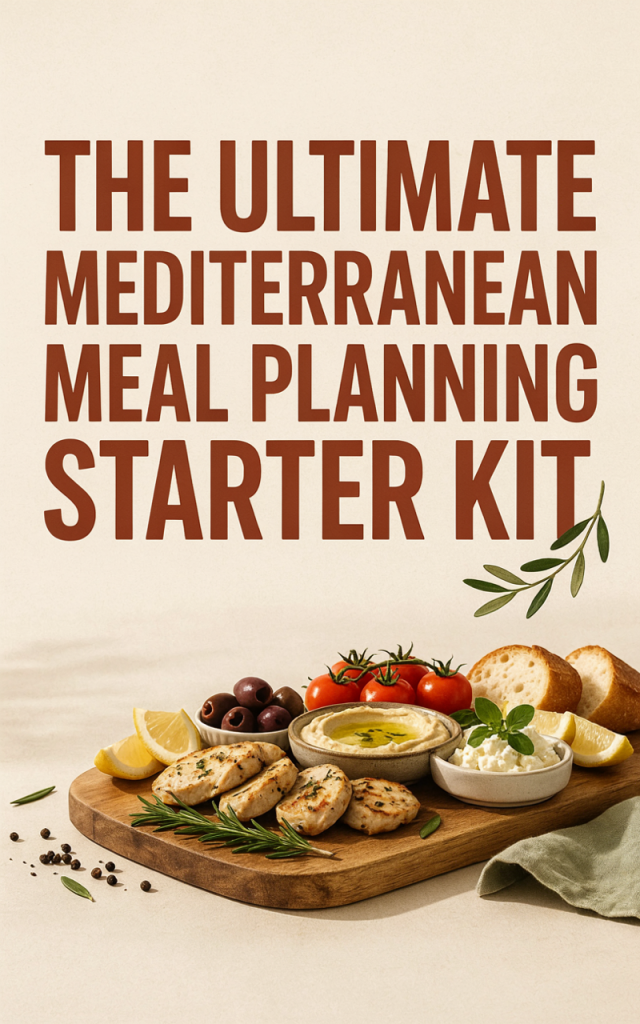
The Ultimate Mediterranean Meal Planning Starter Kit
The Mediterranean eating pattern has become a favorite for people who want delicious, simple meals built around whole foods. If you’re ready to bring more plant-forward dinners, vibrant produce, and flavor-first cooking into your weekly routine, this starter kit gives you everything you need: pantry staples, a realistic meal-planning framework, shopping and batch-cooking tips, a sample week of meals, and easy recipes to get you cooking today.
Ready to make Mediterranean eating easier? Get the 30-Day Mediterranean Meal Plan System with a complete 30-day calendar, 53 recipes, grocery lists, preparation guidance, and three bonus guides. You can also add the 30-page Quick-Meal Vault for fast, practical meal ideas.
This guide focuses on practical steps you can apply right away—no fussy ingredients, no restrictive rules—just sensible choices that make dinner faster, tastier, and more varied.
What the Mediterranean eating pattern means in practice
Rather than a rigid diet plan, the Mediterranean approach is a flexible way of eating that emphasizes:
– Vegetables, fruits, whole grains, legumes, nuts, and seeds.
– Olive oil as the main fat.
– Moderate amounts of fish and seafood, with poultry and dairy used regularly and red meat less often.
– Fresh herbs, citrus, and bold flavors to keep dishes interesting.
Think of it as a pattern you can adapt to your tastes, budget, and schedule: swap ingredients, reuse leftovers, and focus on seasonal produce.
Mediterranean pantry staples (your go-to shopping list)
Stocking a few key items makes meal-planning simple. Keep these on hand and you can mix and match meals without last-minute store runs.
- Extra-virgin olive oil
- Canned tomatoes (whole, crushed, or diced)
- Canned chickpeas and other beans (lentils, cannellini)
- Whole grains: brown rice, bulgur, farro, or quinoa
- Pasta (preferably whole grain)
- Nuts and seeds: almonds, walnuts, pine nuts
- Olives and capers
- Citrus: lemons and oranges
- Vinegars: red wine, balsamic
- Dried herbs & spices: oregano, thyme, cumin, smoked paprika
- Garlic and onions
- Dijon mustard
- Anchovy fillets or paste (optional, for depth)
- Jarred roasted red peppers
- Shelf-stable tahini (optional)
- Low-sodium vegetable or chicken stock
Fresh produce to keep rotating:
– Leafy greens: spinach, kale, or mixed greens
– Tomatoes (fresh and cherry)
– Cucumbers
– Bell peppers
– Eggplant and zucchini (when in season)
– Fresh herbs: parsley, basil, mint
– Seasonal fruit for snacks and desserts
Proteins to buy weekly:
– Fresh or frozen fish (salmon, sardines, or mackerel)
– Chicken breasts or thighs
– Greek-style yogurt or plain yogurt
– Eggs
– Cheese: feta, pecorino, or mild goat cheese
Kitchen tools that make Mediterranean cooking easier
You don’t need fancy equipment—focus on a few durable, multipurpose items:
– A heavy skillet (cast iron or stainless steel)
– A medium saucepan
– A sheet pan (for roasting and one-pan meals)
– A sharp chef’s knife and paring knife
– A cutting board
– Mixing bowls
– A colander
– A blender or immersion blender (for soups, hummus, sauces)
A simple meal-planning framework (use this each week)
Use this flexible template to plan a week without stress:
- Pick three proteins for the week: one fish, one poultry or vegetarian, one bean/lentil-based.
- Choose two whole grains (e.g., quinoa and farro) to prepare in batch.
- Plan four vegetable-forward dinners and three simple lunches that double as snacks or light dinners.
- Reserve one night for leftovers or “build-your-own” bowls to avoid waste.
- Schedule one 45–60 minute batch-cook session on the weekend to roast veggies, cook grains, and make a big pot of a base (soup, beans, or braised chickpeas).
Why this works: two cooked grains plus roasted vegetables and a protein can be mixed and matched into many meals: bowls, wraps, salads, and quick pasta dishes. That variety keeps eating interesting without extra shopping.
Batch-cooking strategies that save time
- Roast a large tray of mixed vegetables (eggplant, zucchini, bell peppers, red onion) at 425°F/220°C for 25–35 minutes with olive oil, salt, and pepper. Use them all week.
- Cook 2–3 cups of dry grains (yields 6–8 cups cooked) and portion into containers.
- Make a big pot of lentil soup or braised beans and freeze single portions.
- Prepare a jar salad: layer dressing at the bottom, hearty ingredients (beans, grains) in the middle, and greens on top—shake when ready to eat.
Batch-cooking keeps weekday dinners under 20 minutes: heat grains, reheat protein, toss with roasted veg, add a squeeze of lemon and herbs.
Sample 7-day Mediterranean-style meal plan
This is a flexible sample to inspire your own week. Swap proteins, grains, or vegetables based on what’s on hand.
Day 1
– Breakfast: Greek yogurt with honey, walnuts, and sliced orange
– Lunch: Grain bowl (quinoa, roasted veg, chickpeas, tahini drizzle)
– Dinner: Sheet-pan salmon with lemon and cherry tomatoes
Day 2
– Breakfast: Whole-grain toast with smashed avocado and a soft-boiled egg
– Lunch: Lentil and tomato soup with crusty bread
– Dinner: Greek-style salad with grilled chicken, cucumbers, olives, feta
Day 3
– Breakfast: Fruit, nuts, and a handful of oats mixed into yogurt
– Lunch: Hummus and roasted pepper wrap with mixed greens
– Dinner: Spicy tomato pasta with sautéed spinach and toasted pine nuts
Day 4
– Breakfast: Overnight oats with chopped dates and almonds
– Lunch: Leftover salmon over mixed greens with vinaigrette
– Dinner: Chickpea and vegetable stew with brown rice
Day 5
– Breakfast: Scrambled eggs with sautéed tomatoes and basil
– Lunch: Nicoise-style salad with canned tuna, green beans, and potatoes
– Dinner: Grilled eggplant and halloumi with a lemon-herb dressing
Day 6
– Breakfast: Smoothie with spinach, banana, yogurt, and tahini
– Lunch: Leftover stew or soup
– Dinner: Shrimp and vegetable skewers with farro
Day 7
– Breakfast: Cottage cheese or ricotta with berries and honey
– Lunch: Leftover grain bowl with feta and olives
– Dinner: Homemade pizza with whole-grain crust, tomatoes, basil, and olive oil
Practical recipes to start cooking (easy, adaptable)
Below are four recipes that exemplify the Mediterranean eating pattern—simple to make, easy to scale, and great for leftovers.
1) Greek-Style Chickpea Salad
Ingredients:
– 2 cans chickpeas, drained and rinsed
– 1 cup cherry tomatoes, halved
– 1 cucumber, diced
– 1/2 red onion, thinly sliced
– 1/2 cup Kalamata olives, pitted and halved
– 1/2 cup crumbled feta
– 1/4 cup chopped parsley
– 3 tbsp extra-virgin olive oil
– Juice of 1 lemon
– 1 tsp dried oregano
– Salt and black pepper to taste
Instructions:
1. In a large bowl, combine chickpeas, cherry tomatoes, cucumber, red onion, olives, feta, and parsley.
2. In a small jar, whisk together olive oil, lemon juice, oregano, salt, and pepper.
3. Pour dressing over the salad and toss to combine. Taste and adjust seasoning.
4. Let the salad sit for 10–15 minutes before serving to let flavors meld. Serve over greens or with whole-grain pita.
2) Sheet-Pan Salmon with Cherry Tomatoes and Olives
Ingredients:
– 4 salmon fillets (4–6 oz each)
– 2 cups cherry tomatoes
– 1/2 cup pitted olives (Kalamata or Castelvetrano), halved
– 1 small red onion, sliced
– 3 tbsp olive oil
– Zest and juice of 1 lemon
– 2 garlic cloves, minced
– 1 tsp dried thyme or oregano
– Salt and pepper
– Fresh parsley for garnish
Instructions:
1. Preheat oven to 425°F (220°C). Line a sheet pan with parchment paper.
2. Toss cherry tomatoes, olives, and red onion with 2 tbsp olive oil, half the lemon zest, garlic, thyme, salt, and pepper. Spread in a single layer.
3. Move vegetables to the sides and place salmon fillets in the center; brush fillets with the remaining olive oil, lemon juice, and remaining lemon zest.
4. Roast for 12–15 minutes, until salmon flakes easily and tomatoes blister.
5. Garnish with parsley and serve with a side of cooked grain or a green salad.
3) Simple Lentil and Tomato Soup
Ingredients:
– 2 tbsp olive oil
– 1 onion, diced
– 2 carrots, diced
– 2 celery stalks, diced
– 3 garlic cloves, minced
– 1 cup brown or green lentils, rinsed
– 1 can (14 oz) crushed tomatoes
– 4 cups low-sodium vegetable or chicken broth
– 1 bay leaf
– 1 tsp ground cumin (optional)
– Salt and pepper
– Lemon wedges and chopped parsley to serve
Instructions:
1. Heat olive oil in a large pot over medium heat. Add onion, carrots, and celery. Cook, stirring occasionally, until softened (about 6–8 minutes).
2. Add garlic and cumin; cook 1 minute until fragrant.
3. Stir in lentils, crushed tomatoes, broth, and bay leaf. Bring to a simmer.
4. Reduce heat, cover, and simmer until lentils are tender, about 25–30 minutes. Remove bay leaf.
5. Season with salt and pepper. Serve with a squeeze of lemon and chopped parsley.
4) Mediterranean Grain Bowl with Roasted Vegetables and Tahini Dressing
Ingredients:
– 2 cups cooked farro or brown rice
– 3 cups roasted vegetables (see roasting method above)
– 1 cup cooked chickpeas or white beans
– 1/4 cup crumbled feta or goat cheese (optional)
– 1/4 cup chopped parsley
– For the tahini dressing:
– 3 tbsp tahini
– Juice of 1 lemon
– 1 tbsp olive oil
– 1 tbsp warm water (more if needed)
– 1/2 tsp salt
– Pinch of smoked paprika
Instructions:
1. Whisk together tahini, lemon juice, olive oil, warm water, salt, and smoked paprika until smooth. Add more water to reach a pourable consistency.
2. Assemble bowls: a base of cooked grain, top with roasted vegetables, beans, feta, and parsley.
3. Drizzle with tahini dressing and serve warm or at room temperature.
Ready to make Mediterranean eating easier? Get the 30-Day Mediterranean Meal Plan System with a complete 30-day calendar, 53 recipes, grocery lists, preparation guidance, and three bonus guides. You can also add the 30-page Quick-Meal Vault for fast, practical meal ideas.
Grocery list you can print (one-week baseline)
Produce:
– Mixed greens, spinach
– 6–8 tomatoes or 2 pints cherry tomatoes
– 2 cucumbers
– 2 bell peppers
– 1 eggplant
– 2 zucchinis
– 1 red onion and 1 yellow onion
– 1 bulb garlic
– 1 bunch parsley, 1 bunch basil
– 4 lemons
– Seasonal fruit (apples, pears, berries)
Pantry & fridge:
– Olive oil
– Canned chickpeas (3 cans)
– Canned crushed tomatoes
– Dry lentils (1 lb)
– Brown rice or farro
– Whole-grain pasta
– Olives and capers
– Tahini
– Dijon mustard
– Greek yogurt
– Feta cheese
– Eggs
– Nuts (walnuts or almonds)
Proteins:
– Fresh or frozen salmon (2 fillets)
– Canned tuna (2 cans)
– Chicken (thighs or breasts)
– Halloumi or a grilling cheese (optional)
Budgeting, substitutions, and pantry swaps
- Beans and lentils are inexpensive, shelf-stable, and interchangeable for many recipes—swap chickpeas for white beans or lentils where needed.
- Use canned fish (sardines, tuna) as a low-cost alternative to fresh fish; they’re great in salads and pasta.
- Seasonal vegetables cost less and taste better; opt for what’s on sale and roast them.
- Bulk grains are cheaper per serving—buy in bulk and store in airtight containers.
- Frozen vegetables and frozen fish fillets are a budget-friendly, nutritious fallback.
Eating out and travel tips
- Look for menu items that emphasize grilled fish, vegetable-based sides, or salads with olive oil–based dressings.
- Ask for dressing on the side and opt for whole-grain or legume-based sides when possible.
- Choose tomato-based sauces over cream-based ones; enjoy small portions of cheese and bread rather than making them the meal center.
Common mistakes and how to avoid them
- Mistake: Over-relying on cheese, bread, and wine while neglecting produce.
- Fix: Make vegetables the largest portion of your plate and use cheese as an accent.
- Mistake: Thinking Mediterranean eating is complicated.
- Fix: Focus on simple preparations (roast, grill, sauté) and reuse batch-cooked components.
- Mistake: Skipping legumes because they’re “boring.”
- Fix: Spice them up—roast chickpeas with smoked paprika, add lemon and herbs to lentil salads.
Simple swaps to make meals more Mediterranean
- Replace butter with olive oil for cooking and drizzling.
- Swap heavy cream sauces for tomato-based sauces or yogurt-based dressings.
- Exchange processed snacks for olives, nuts, fruit, or whole-grain crackers with hummus.
- Use whole grains in place of refined grains whenever possible.
How to measure success (non-scale, non-medical)
Track progress by how easy meal prep feels, the variety of vegetables you eat each week, how often you cook at home, and how satisfied you feel after meals. The Mediterranean eating pattern is sustainable when it fits your lifestyle—small, consistent changes are more important than perfection.
Final tips for beginners
- Start small: pick one new recipe a week and build from there.
- Make a simple rotation of 5–7 go-to dinners you can prepare without a recipe.
- Keep lemon, garlic, and fresh herbs on hand—these three ingredients make food taste vibrant.
- Embrace leftovers: repurpose last night’s grains and veggies into a new bowl or wrap.
Conclusion
The Ultimate Mediterranean Meal Planning Starter Kit is about practical, repeatable habits: a stocked pantry, a handful of flexible recipes, regular batch-cooking, and a simple weekly plan that lets you mix and match. Use the sample plans and recipes here as a foundation—adapt them to local produce, your schedule, and your flavor preferences. Over time you’ll build a personal rotation of Mediterranean-style meals that are flavorful, nourishing, and easy to prepare any night of the week.
Ready to make Mediterranean eating easier? Get the 30-Day Mediterranean Meal Plan System with a complete 30-day calendar, 53 recipes, grocery lists, preparation guidance, and three bonus guides. You can also add the 30-page Quick-Meal Vault for fast, practical meal ideas.
