
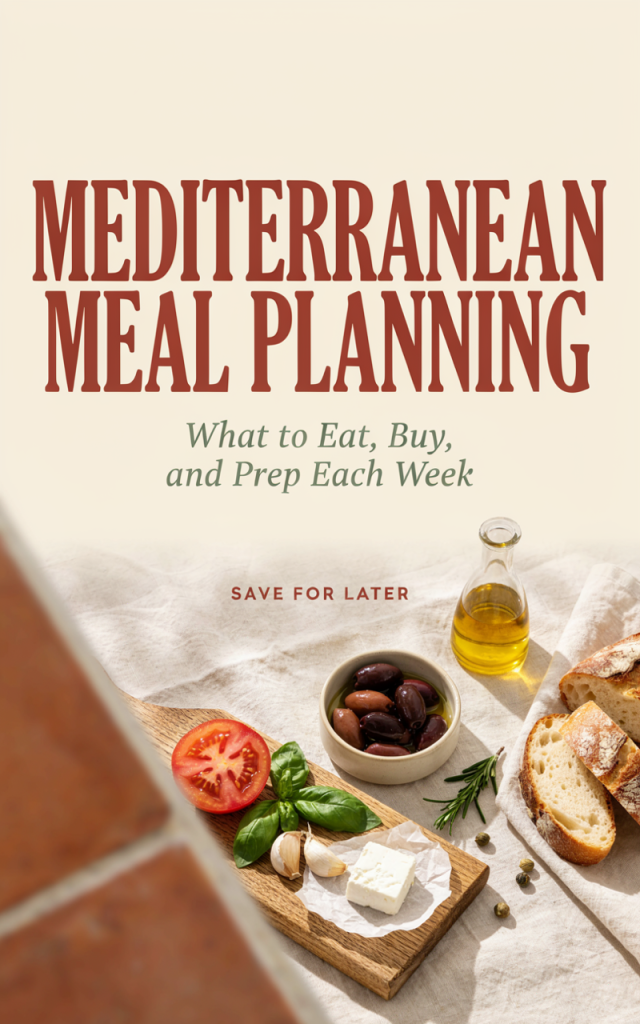
Mediterranean Meal Planning: What to Eat, Buy, and Prep Each Week
The Mediterranean eating pattern is less a strict plan and more a practical, delicious way to organize your weekly meals around whole, minimally processed foods. If you want simple guidance on what to eat, what to shop for, and how to prep so weeknights feel effortless, this article gives a clear, actionable blueprint you can use today. You’ll find a pragmatic shopping list, batch-cook tasks, a sample 7-day meal plan, and three make-ahead recipes to get you started.
Ready to make Mediterranean eating easier? Get the 30-Day Mediterranean Meal Plan System with a complete 30-day calendar, 53 recipes, grocery lists, preparation guidance, and three bonus guides. You can also add the 30-page Quick-Meal Vault for fast, practical meal ideas.
This approach emphasizes vegetables, fruit, legumes, whole grains, healthy fats (especially extra-virgin olive oil), nuts and seeds, fish and seafood, modest amounts of dairy and poultry, and occasional red meat and sweets. Read on for specific foods to buy, exact prep steps for the week, and stress-free recipes that store and reheat well.
What to eat: Building blocks of a Mediterranean week
Think of your weekly meals as combinations of these components. Aim to include several of them at each meal.
- Vegetables: leafy greens (spinach, arugula), cruciferous veggies (broccoli, cauliflower), colorful options (peppers, eggplant, tomatoes). Make vegetables the largest portion of most meals.
- Fruit: apples, oranges, berries, grapes, figs — whole fruit for snacks, chopped fruit for breakfasts and salads.
- Whole grains: farro, barley, brown rice, quinoa, whole-grain pasta, bulgur. Use these as the base for bowls and sides.
- Legumes: chickpeas, lentils, beans — great for salads, soups, and spreads.
- Healthy fats: extra-virgin olive oil as your primary cooking and finishing oil; small amounts of olives and avocado.
- Nuts and seeds: almonds, walnuts, pistachios, sunflower seeds — for snacks and toppings.
- Fish and seafood: fatty fish like salmon, mackerel, sardines, and a variety of white fish; aim to include fish 2–3 times per week if possible.
- Poultry, eggs, and dairy: lean cuts of chicken or turkey, eggs for breakfasts and salads, plain yogurt and small portions of cheese (feta, pecorino) as flavor enhancers.
- Herbs and spices: garlic, oregano, basil, rosemary, parsley, cumin, paprika for flavor instead of relying on heavy sauces.
- Occasional treats: red meat sparingly and sweets in moderation.
Frequency tip: Make vegetables and whole grains daily staples. Treat legumes as a weekly workhorse (several times a week), and include fish a couple of times weekly. No strict rules—focus on variety, flavor, and whole foods.
What to buy: A weekly Mediterranean shopping list
Shop once or twice a week depending on freshness and schedule. Below is a practical list for a single household planning meals for 3–5 days; scale quantities up or down for more people.
Produce
– 1–2 heads of leafy greens (romaine, spinach, or mixed salad greens)
– 4–6 seasonal vegetables (bell peppers, zucchini, eggplant, tomatoes)
– 1 head of broccoli or cauliflower
– 4–6 pieces of fruit (apples, oranges, or pears)
– 1 pint berries or 2 bananas (for breakfasts)
– 1 bunch of fresh herbs (parsley, basil, or cilantro)
– 1–2 lemons
Pantry staples
– Extra-virgin olive oil (good bottle for dressing and finishing)
– Balsamic or red wine vinegar
– Canned tomatoes (1–2 cans)
– Canned chickpeas and beans (2–4 cans)
– Whole grains (1 bag farro/quinoa/brown rice)
– Whole-grain pasta (1 box)
– Nuts (almonds or walnuts, 1 small bag)
– Seeds (sunflower or pumpkin seeds optional)
Protein and dairy
– 2–4 fillets of fish (salmon, trout, or canned sardines for convenience)
– 2 chicken breasts or thighs
– 6–12 eggs
– Plain Greek yogurt (one large tub)
– Small block of feta or pecorino (optional)
Flavorings and extras
– Garlic (1–2 bulbs)
– Olives (jar)
– Capers (optional)
– Dried herbs and spices (oregano, cumin, paprika)
– Whole-grain mustard or tahini (for dressings)
Budget tip: Frozen fish and vegetables are often less expensive, still nutritious, and freeze-ready for last-minute meals. Canned beans are inexpensive and shelf-stable—rinse before using to reduce sodium.
What to prep each week: Batch tasks that save time
Set aside 60–90 minutes once or twice a week for these tasks. They pay off across breakfasts, lunches, dinners, and snacks.
- Roast a tray of mixed vegetables
- Use carrots, bell peppers, eggplant, zucchini, and red onion tossed in olive oil, salt, and pepper. Roast at 400°F (200°C) for 25–35 minutes until tender and caramelized. Store in the fridge up to 4 days.
- Cook a big grain batch
- Prepare 3–4 cups cooked grain (brown rice, quinoa, or farro). Cool and store in airtight containers for bowls and sides.
- Cook legumes or open cans
- If using dried beans or lentils, cook on the stovetop or pressure cooker and portion into containers. Canned beans: rinse and store for quick salads and stews.
- Make a versatile dressing or vinaigrette
- Whisk olive oil, lemon juice or vinegar, Dijon or mustard, garlic, salt, and pepper. Store in a jar in the fridge for a week.
- Prep salad greens and chopped vegetables
- Wash and dry lettuce; tear into containers with paper towels to absorb moisture. Chop cucumbers, tomatoes, and peppers for quick assembly.
- Portion snacks and toppings
- Make small bags of nuts, cut fruit, and portion hummus or yogurt for grab-and-go.
- Marinate proteins if desired
- Marinate a few chicken pieces or a fish fillet in olive oil, lemon, garlic, and herbs to be cooked later in the week.
Storage note: Use airtight containers and cool food before sealing and refrigerating. Label with dates if you prep multiple batches.
Sample 7-day Mediterranean meal plan
This flexible plan emphasizes variety and repeats leftovers creatively. Adjust portion sizes to your energy needs.
Day 1
– Breakfast: Greek yogurt with berries, a drizzle of honey, and chopped walnuts
– Lunch: Farro bowl with roasted vegetables, chickpeas, and lemon-olive oil dressing
– Dinner: Pan-seared salmon with a side of sautéed spinach and brown rice
– Snack: Apple and a small handful of almonds
Day 2
– Breakfast: Overnight oats with chopped figs (or dates) and sesame seeds
– Lunch: Greek chickpea salad (chickpeas, cucumber, tomato, red onion, feta, oregano)
– Dinner: Whole-grain pasta with tomato-garlic sauce and a side salad
– Snack: Carrot sticks and hummus
Day 3
– Breakfast: Two eggs scrambled with spinach and cherry tomatoes
– Lunch: Leftover pasta or grain bowl with extra greens
– Dinner: Sheet-pan roasted chicken with lemon, olives, and roasted peppers
– Snack: Pear and a small piece of cheese
Day 4
– Breakfast: Toasted whole-grain bread with mashed avocado, lemon, and cracked pepper
– Lunch: Lentil soup (batch-cooked) with whole-grain roll
– Dinner: Grilled fish tacos with cabbage slaw and yogurt-tahini sauce
– Snack: Handful of grapes
Day 5
– Breakfast: Smoothie with plain yogurt, banana, spinach, and a spoon of almond butter
– Lunch: Salad of mixed greens, quinoa, roasted vegetables, and a drizzle of vinaigrette
– Dinner: Vegetable and chickpea tagine-style stew served over couscous or farro
– Snack: Roasted chickpeas
Day 6
– Breakfast: Cottage yogurt bowl with sliced peach and granola
– Lunch: Leftover tagine or stew with fresh herbs
– Dinner: Homemade pizza on whole-grain crust with tomato, olives, feta, and arugula
– Snack: Olives and cucumber slices
Day 7
– Breakfast: Omelet with mushrooms, tomatoes, and herbs
– Lunch: Mezze platter: hummus, whole-grain pita, olives, cucumber, and carrots
– Dinner: Grilled shrimp (or canned sardines tossed on salad) with a giant mixed vegetable salad
– Snack: Fresh fruit and a few walnuts
Swap freely: Use leftovers for lunches, turn roasted veg into frittatas, and fold beans into salads for protein.
Ready to make Mediterranean eating easier? Get the 30-Day Mediterranean Meal Plan System with a complete 30-day calendar, 53 recipes, grocery lists, preparation guidance, and three bonus guides. You can also add the 30-page Quick-Meal Vault for fast, practical meal ideas.
3 Make-ahead Mediterranean recipes
Below are three recipes designed to be made ahead, refrigerated, and assembled during the week. Each includes ingredients and numbered steps.
1. Greek Chickpea Salad (make-ahead, stores 3–4 days)
Ingredients
– 2 cans chickpeas, rinsed and drained (or ~3 cups cooked)
– 1 medium cucumber, diced
– 1 large tomato or 12 cherry tomatoes, halved
– 1/4 red onion, thinly sliced
– 1/2 cup crumbled feta
– 1/4 cup pitted olives, sliced
– 3 tablespoons extra-virgin olive oil
– 2 tablespoons red wine vinegar or lemon juice
– 1 teaspoon dried oregano
– Salt and black pepper to taste
– 2 tablespoons chopped fresh parsley
Instructions
1. In a large bowl, combine chickpeas, cucumber, tomatoes, red onion, feta, and olives.
2. Whisk olive oil, vinegar (or lemon), oregano, salt, and pepper in a small bowl.
3. Pour dressing over the salad and toss to combine.
4. Stir in chopped parsley and transfer to an airtight container. Chill up to 4 days. For serving, toss again and add a splash of fresh lemon if desired.
2. Mediterranean Grain Bowl (serves 4; makes 4–5 meal portions)
Ingredients
– 2 cups cooked farro (or quinoa/brown rice)
– 2 cups roasted vegetables (zucchini, bell peppers, eggplant)
– 1 cup cooked chickpeas or white beans
– 1/2 cup crumbled feta
– 1/4 cup chopped fresh herbs (parsley and mint)
– 3 tablespoons olive oil
– Juice of 1 lemon
– 1 garlic clove, minced
– Salt and pepper to taste
Instructions
1. Combine cooked grain, roasted vegetables, and beans in a large bowl.
2. Whisk olive oil, lemon juice, garlic, salt, and pepper to make a dressing.
3. Pour dressing over the grain mixture and toss to combine evenly.
4. Fold in crumbled feta and chopped herbs. Portion into containers and refrigerate. Serve cold, at room temperature, or gently reheated.
3. Sheet-Pan Lemon-Herb Salmon with Vegetables (serves 2–4; refrigerate 2–3 days)
Ingredients
– 2–4 salmon fillets (about 1–1.5 lb total)
– 2 cups mixed vegetables (broccoli florets, cherry tomatoes, sliced red onion)
– 2 tablespoons olive oil
– Juice of 1 lemon
– 1 tablespoon chopped fresh dill or parsley
– 1 garlic clove, minced
– Salt and pepper to taste
– Lemon slices for garnish
Instructions
1. Preheat oven to 400°F (200°C). Line a baking sheet with parchment paper.
2. Toss vegetables with 1 tablespoon olive oil, salt, and pepper. Spread on the baking sheet and roast for 10 minutes.
3. Meanwhile, brush salmon fillets with remaining olive oil, lemon juice, garlic, herbs, salt, and pepper.
4. Remove baking sheet from oven after 10 minutes and move vegetables to make space for salmon. Place fillets skin-side down and return to oven for 10–12 minutes, until salmon flakes with a fork.
5. Garnish with lemon slices. Cool and refrigerate in an airtight container up to 3 days. Reheat gently in a low oven or enjoy cold over a grain bowl.
Meal-prep schedule: When to do what
Sunday (90–120 minutes)
– Roast a large tray of mixed vegetables.
– Cook a big pot of grains and a pot of lentils or beans (or open cans).
– Make a dressing, chop herbs, wash greens, and portion snacks.
– Bake or roast protein (salmon, chicken) if you want completely ready meals.
Wednesday (30–45 minutes)
– Refresh greens and re-chop vegetables.
– Top up yogurt containers, smoothie bags, and snack portions.
– Cook a quick additional protein if running low.
Daily (10–15 minutes)
– Assemble bowls and salads from prepped components.
– Grill or pan-sear a small protein piece for freshness (eggs, fish, or chicken).
– Dress salads right before serving to keep greens crisp.
Practical tips for variety, budget, and freshness
- Use frozen produce for convenience: peas, spinach, and berries freeze well and are budget-friendly.
- Swap proteins: canned tuna or sardines are nutritious, shelf-stable, and inexpensive alternatives to fresh fish.
- Buy seasonal produce: it’s usually cheaper and more flavorful. Use strawberries in summer; citrus in winter.
- Stretch expensive items: small amounts of cheese or nuts go a long way for flavor and satiety.
- Repurpose leftovers: roasted vegetables become omelet fillings, and grain bowls turn into stuffed peppers or frittatas.
- Minimize waste: freeze extra cooked grains or soups in single portions to avoid spoilage.
- Keep dressings basic: olive oil + acid + mustard/honey + salt/pepper is a reliable base; add garlic or herbs for variety.
Frequently asked practical questions
- How long will prepped foods last? Roasted vegetables and cooked grains keep 3–4 days in the fridge. Cooked fish is best eaten within 2–3 days. Beans and salads with dressing added are best used within 3 days.
- Can I follow this if I’m vegetarian? Yes—replace fish and poultry with extra legumes, tofu, tempeh, and additional nuts and seeds. Emphasize whole grains and vegetable variety.
- What about seasonings? Don’t be afraid of bold flavors: cumin, smoked paprika, sumac, za’atar, and fresh citrus brighten dishes with little effort.
Ready to make Mediterranean eating easier? Get the 30-Day Mediterranean Meal Plan System with a complete 30-day calendar, 53 recipes, grocery lists, preparation guidance, and three bonus guides. You can also add the 30-page Quick-Meal Vault for fast, practical meal ideas.
Conclusion
Mediterranean meal planning is practical, flexible, and adaptable to busy schedules. Each week, prioritize vegetables, whole grains, legumes, olive oil, and a couple of portions of fish, while keeping dairy, poultry, and red meat moderate. A single 60–90 minute prep session can supply roasted vegetables, cooked grains, beans, and dressings that make healthy-sounding choices the quickest ones at meal time. Use the sample week and the make-ahead recipes above as a template: mix and match ingredients, scale quantities to your household, and lean on frozen or canned options when needed. With a bit of planning and a handful of simple recipes, weeknight Mediterranean-style meals are both delicious and doable.


