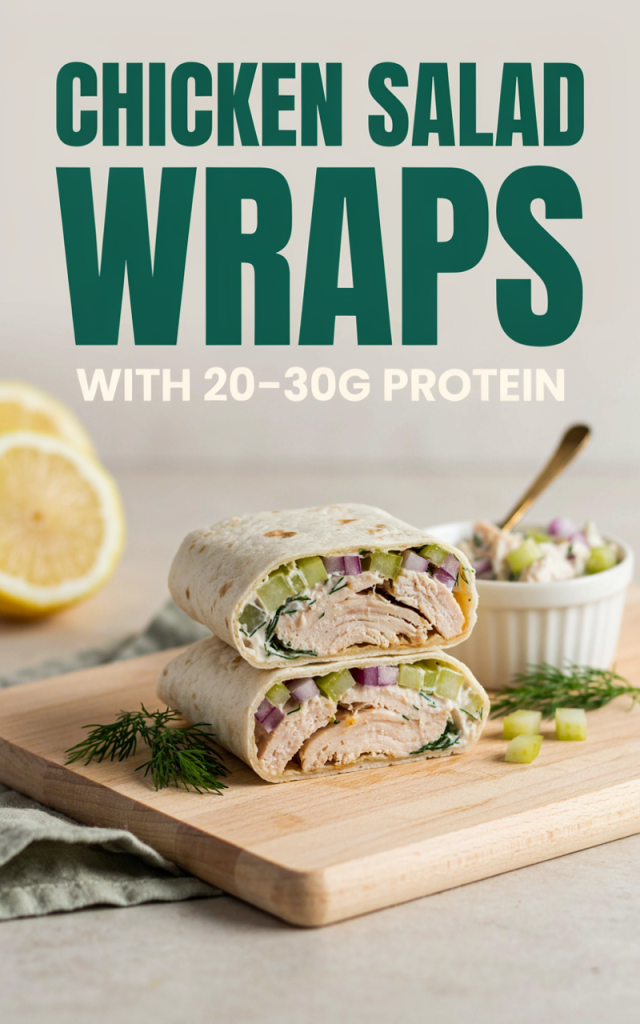
Chicken Salad Wraps With 20–30 Grams of Protein
Chicken salad wraps are a classic, portable meal that’s easy to make, endlessly customizable, and—when built with intention—perfect for hitting a targeted protein range. This guide will walk you through why chicken salad wraps are an excellent high-protein option, how to reliably reach 20–30 grams of protein per serving, and six delicious, tested chicken salad wrap recipes that land squarely in that protein window. Each recipe includes ingredients and clear, numbered instructions so you can make them right away.
Whether you’re meal-prepping for the week, packing lunch for work, or wanting a satisfying post-workout meal, these wraps are practical, flavorful, and nourishing. Let’s get into it.
Why aim for 20–30 grams of protein per meal?
Hitting 20–30 grams of protein in a meal is a sweet spot for most adults who want to:
– Support muscle maintenance and recovery
– Feel satiated for longer and reduce mid-afternoon cravings
– Keep blood sugar steady by pairing protein with fiber and healthy fats
A chicken salad wrap is an excellent format for this because cooked, lean chicken breast provides a concentrated amount of protein, and the other ingredients—yogurt, cheese, nuts, or seeds—can be used strategically to keep total protein in the 20–30 g range.
Protein math: how to reliably hit 20–30 grams per wrap
Consistency comes from using a baseline protein amount and then choosing your carrier (tortilla, wrap, or lettuce) carefully.
- Cooked chicken breast protein: ~31 g protein per 100 g (3.5 oz).
For our recipes we’ll use 80 g (approx 2.8 oz) cooked chicken per wrap which yields ~25 g protein. - Additions:
- 2 tablespoons plain Greek yogurt: ~3–4 g protein
- 1 tablespoon mayo: 0 g protein
- 1 oz cheddar cheese: ~7 g protein (this could push over 30 g)
- Wheat or high-protein tortilla: 4–8 g protein (choose carefully)
- Large iceberg or butter lettuce leaf (lettuce wrap): ~0–1 g protein
To keep wraps within 20–30 g protein:
– Use ~80 g cooked chicken per wrap for a reliable ~25 g base.
– Prefer a lettuce wrap or a low-protein tortilla (1–4 g) if you plan to include additional protein-rich mix-ins.
– If you use Greek yogurt or small amounts of cheese, keep quantities modest to avoid crossing 30 g.
Now, here are six chicken salad wrap recipes, each engineered to fall in the 20–30 g protein range. Every recipe lists ingredients and step-by-step instructions.
1) Classic Chicken Salad Wrap (Approx. 24–27 g protein)
Ingredients
– 80 g cooked, shredded or chopped chicken breast (about 2.8 oz) — ~25 g protein
– 1–2 tablespoons plain mayonnaise or light mayo
– 1 tablespoon finely chopped celery
– 1 tablespoon finely chopped red onion or scallion
– 1 teaspoon Dijon mustard
– Salt and pepper, to taste
– 1 large butter lettuce leaf or low-protein tortilla (choose lettuce for lower protein)
– Optional: lemon wedge for squeezing
Instructions
1. In a small bowl, combine mayonnaise, Dijon mustard, salt, and pepper.
2. Add chopped chicken, celery, and onion. Stir to coat evenly.
3. Taste and adjust seasoning. Add a squeeze of lemon if desired.
4. Place the chicken salad onto a large lettuce leaf or low-protein tortilla.
5. Wrap tightly and serve immediately or wrap in parchment for lunch.
Protein note: Using a lettuce leaf keeps total protein at ~25 g. If you use a standard 6-inch flour tortilla (4–6 g protein), total protein will be ~29–31 g—still close to the target but may slightly exceed 30 g if your tortilla is high-protein.
2) Greek Yogurt & Dill Chicken Wrap (Approx. 27–30 g protein depending on wrap)
Ingredients
– 80 g cooked, shredded chicken breast — ~25 g protein
– 2 tablespoons plain nonfat Greek yogurt — ~3 g protein
– 1 tablespoon chopped fresh dill (or 1 tsp dried dill)
– 1 teaspoon lemon zest and 1 teaspoon lemon juice
– 1 tablespoon diced cucumber
– 1 small garlic clove, minced (optional)
– Salt and pepper, to taste
– 1 large lettuce leaf or low-protein whole-grain tortilla
Instructions
1. Whisk Greek yogurt, lemon zest, lemon juice, dill, garlic, salt, and pepper in a bowl.
2. Stir in the chicken and cucumber until well combined.
3. Taste and adjust lemon, dill, and salt.
4. Spoon the chicken salad into a lettuce leaf or onto a low-protein tortilla.
5. Roll or fold and enjoy.
Protein note: Greek yogurt bumps this to ~28 g; with a low-protein tortilla or lettuce wrap you remain within 20–30 g. If using a higher-protein wrap, choose 1 tablespoon less yogurt to stay under 30 g.
3) Avocado & Lime Chicken Wrap (Approx. 24–27 g protein)
Ingredients
– 80 g cooked, chopped chicken breast — ~25 g protein
– 1/4 medium avocado, mashed (adds healthy fats, ~1 g protein)
– 1 tablespoon plain Greek yogurt OR 1 teaspoon olive oil (optional)
– 1 tablespoon chopped cilantro
– 1 teaspoon lime juice
– 1 tablespoon diced red pepper or tomato
– 1 large romaine leaf or low-protein tortilla
Instructions
1. Mash the avocado with lime juice and, if using, Greek yogurt or olive oil until creamy.
2. Mix in cilantro and diced pepper/tomato.
3. Fold in the chicken and gently combine.
4. Spoon onto a romaine leaf or low-protein tortilla and wrap.
5. Serve immediately to enjoy the avocado’s texture.
Protein note: This version relies on chicken for the protein (~25–26 g). The avocado adds satiety without significantly upping protein.
4) Curried Chicken Salad Wrap (Approx. 25–28 g protein)
Ingredients
– 80 g cooked, chopped chicken breast — ~25 g protein
– 1 tablespoon light mayo or Greek yogurt (use yogurt for slight protein boost)
– 1 teaspoon mild curry powder
– 1 tablespoon diced apple or raisins (for sweetness)
– 1 tablespoon chopped celery
– Salt and pepper, to taste
– 1 large lettuce leaf or low-protein tortilla
Instructions
1. Mix curry powder into mayo or Greek yogurt until smooth.
2. Stir in chopped chicken, celery, apple or raisins. Season with salt and pepper.
3. Adjust curry and sweetness to taste.
4. Spoon into a lettuce leaf or wrap and roll.
5. Pack chilled if making ahead.
Protein note: Using Greek yogurt adds ~3 g protein, keeping this at ~28 g if you choose a lettuce or low-protein wrap.
5) Caesar-Style Chicken Wrap (Approx. 22–28 g protein depending on add-ins)
Ingredients
– 80 g cooked chicken breast, thinly sliced — ~25 g protein
– 1 tablespoon light Caesar dressing or 1 tablespoon Greek yogurt + 1/2 tsp anchovy paste (optional)
– 1/4 cup finely shredded romaine lettuce
– 1 tablespoon grated Parmesan cheese (optional; adds ~2 g protein)
– Fresh black pepper
– 1 large lettuce leaf or low-protein tortilla
Instructions
1. Toss sliced chicken with Caesar dressing or yogurt mixture until coated.
2. Mix in shredded lettuce and a sprinkle of Parmesan if using.
3. Place mixture into lettuce leaf or low-protein tortilla.
4. Add fresh black pepper and wrap tightly.
5. Serve with a lemon wedge or additional hot sauce if desired.
Protein note: Skip or limit Parmesan if you need to keep the wrap under 26–27 g; with Parmesan, totals can approach the upper end of 28 g.
6) Smoky BBQ Chicken Wrap (Approx. 24–27 g protein)
Ingredients
– 80 g cooked chicken breast, shredded — ~25 g protein
– 1 tablespoon low-sugar BBQ sauce (small amount to control carbs)
– 1 tablespoon finely chopped red onion
– 1 tablespoon chopped cilantro
– 1 tablespoon plain Greek yogurt or 1 tsp olive oil (optional)
– 1 large lettuce leaf or low-protein tortilla
Instructions
1. Combine shredded chicken with BBQ sauce and optional Greek yogurt or olive oil.
2. Fold in chopped red onion and cilantro.
3. Taste and adjust sauce for sweetness or smoke.
4. Spoon into a lettuce leaf or wrap and roll.
5. Serve with coleslaw or pickles on the side if desired.
Protein note: The base chicken provides most of the protein (~25 g). Using Greek yogurt is optional and adds a small bump.
Wrap-building tips and ingredient swaps
Choosing the right chicken
– Use cooked, skinless chicken breast or shredded rotisserie chicken (remove skin). Aim for ~80 g cooked per wrap for ~24–26 g protein.
– If using dark meat (thighs), protein per gram is similar but fat content is higher.
Wrap carriers — how they affect protein totals
– Lettuce wraps (butter, romaine): ~0–1 g protein — best for staying within 20–30 g even when using yogurt or small amounts of cheese.
– Low-calorie, thin tortillas: ~1–3 g protein — still safe for most combinations.
– Standard flour or whole-wheat tortillas (6–8 inches): ~4–8 g protein — may push total protein toward or slightly over 30 g when combined with yogurt and cheese. If you want to stay under 30 g, use smaller tortillas or reduce chicken to ~70 g.
– High-protein wraps (added pea or wheat protein): 8–12 g protein — these will often push total above 30 g when paired with 80 g chicken. If you prefer such a wrap, reduce the chicken to maintain the 20–30 g window.
Sauces and binders
– Greek yogurt is a healthy binder with extra protein (~1.5–2 g per tbsp). Use 1–2 tablespoons for creaminess and protein control.
– Mayonnaise adds creaminess without much protein—use it to avoid pushing over 30 g.
– Mustard, hot sauce, and lemon add flavor with negligible protein.
Protein-adding and -reducing strategies
– To increase protein slightly without changing chicken weight: add 1 tablespoon chia seeds (~1.6 g protein), 1 tablespoon hemp seeds (~3 g), or 1 tablespoon crushed almonds (~2 g).
– To reduce total protein: use 70 g cooked chicken (~21–22 g) or use a lettuce wrap and skip Greek yogurt and cheese.
Meal prep, storage, and portability
- Make a batch of chicken salad (multiply the recipes by the number of servings), store in an airtight container in the fridge for up to 3–4 days.
- Keep tortillas or lettuce separate and assemble wraps the day you plan to eat them to avoid sogginess.
- Pack components in meal-prep containers: chicken salad in one compartment, wraps or lettuce in another, and any crunchy additions (nuts, fresh veggies) in a sealed small container.
- To reheat chicken versions: if you prefer warm wraps, gently reheat the chicken salad (without lettuce) and assemble with fresh greens. Do not microwave plastic wraps—use oven or stovetop.
Nutrition considerations beyond protein
- Fiber: Add vegetables like spinach, shredded carrot, cucumber, and bell peppers to boost fiber and micronutrients.
- Healthy fats: Include avocado or a drizzle of olive oil to make the meal more satisfying and support absorption of fat-soluble vitamins.
- Sodium: Canned rotisserie chicken or store-bought dressings can be high in sodium. Taste and adjust; consider using low-sodium BBQ or making your dressing.
- Calories: If you’re watching calories, use lettuce wraps, light mayo, and limited cheese. For added calories and healthy fats, add avocado or a small handful of nuts.
FAQs
H3: Can I use canned chicken?
Yes—canned chicken is a convenient option. Drain well and measure to about 80 g cooked-equivalent per wrap to match protein goals.
H3: What if I want vegetarian versions?
If you want 20–30 g protein with a vegetarian wrap, use firm tofu, tempeh, or a larger portion of Greek yogurt-based fillings combined with seeds and high-protein tortillas. Note: vegetarian substitutes will change flavor and texture significantly.
H3: Are these wraps suitable for weight loss or muscle building?
They can be. The 20–30 g protein target supports muscle retention and satiety. For weight loss, control calories by choosing lettuce wraps and light binders. For muscle building, pair a wrap with a small snack that includes extra protein and carbs as needed.
Quick checklist for building a 20–30 g protein chicken salad wrap
- Use ~80 g cooked chicken per serving (~25 g protein).
- Choose a low- or no-protein wrap (lettuce or thin tortilla) if adding yogurt or cheese.
- Measure additions: 1–2 tablespoons Greek yogurt adds ~3–4 g protein; 1 oz cheese adds ~7 g.
- Aim to keep total protein additions between 0–5 g so total stays 20–30 g.
Conclusion
Chicken salad wraps are a flexible, delicious way to get a reliably satisfying 20–30 grams of protein per meal. The key is consistency: use a measured serving of cooked chicken (around 80 g) as your protein anchor, choose your wrap intentionally, and add mix-ins with an eye on their protein content. The six recipes above—from a classic mayo-based version to a bright Greek yogurt & dill option—give you a range of flavors that all fit the protein target and are easy to prep in advance.
Try a different variation each week, or prepare a big batch of the chicken salad base and customize wraps each day for variety. With simple swaps and mindful portioning, your chicken salad wraps will keep you full, fueled, and satisfied—without overshooting your protein goals.
Ready to make one now? Pick a recipe above, gather your ingredients, and you’ll have a high-protein lunch or snack in minutes.