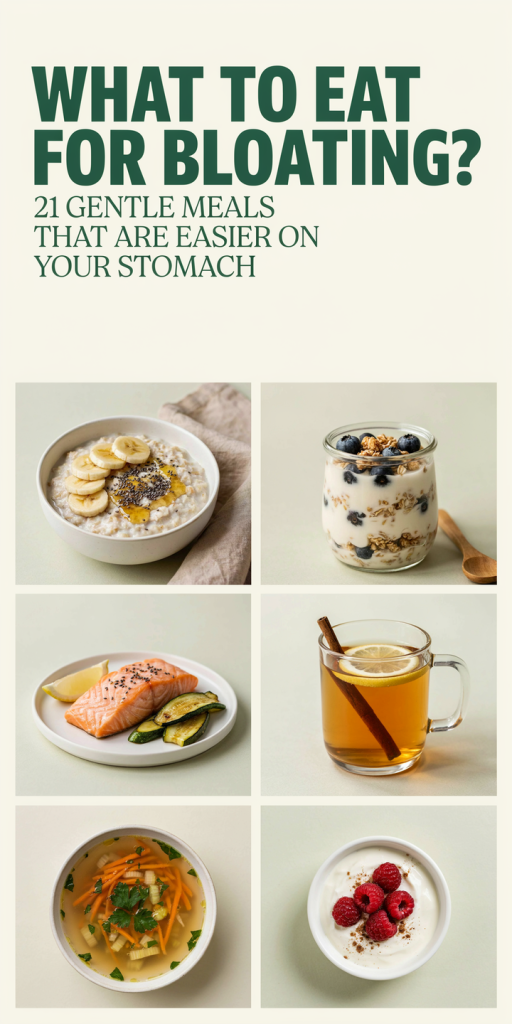
What Should I Eat for Bloating? 21 Gentle Meals That Are Easier on Your Stomach
Introduction
Bloating can be uncomfortable, distracting, and sometimes embarrassing — but you can often ease it with the right foods and gentle meals. Whether your bloating is occasional (after a big meal or a salty night out) or recurring, choosing low‑irritation, easy‑to‑digest meals can help reduce gas, calm inflammation, and keep your digestion moving smoothly.
This guide gives you 21 carefully chosen, stomach‑friendly meal ideas and simple recipes that focus on soothing ingredients: bone broths, cooked vegetables, gentle proteins, fermented foods, and low‑FODMAP swaps. Each idea includes ingredients and step‑by‑step instructions so you can start cooking meals that support comfort and digestion today.
Why food matters for bloating (quick overview)
- Foods high in fermentable fibers (FODMAPs), certain dairy products, and carbonated drinks can increase gas production in the gut.
- Eating meals that are cooked, lower in raw cruciferous vegetables, and rich in anti‑inflammatory spices (ginger, turmeric) often reduces bloating.
- Hydration, portion size, and mindful eating (chewing thoroughly, slowing down) are as important as the ingredients.
Before we dive into the recipes: if your bloating is severe, persistent, or accompanied by weight loss, bleeding, or fever, see a clinician. These meals are intended for common, diet‑related bloating and digestive sensitivity.
21 Gentle Meals That Are Easier on Your Stomach
Below are exactly 21 meal ideas. Each is presented with ingredients and simple instructions. Many include optional swaps for common intolerances.
1. Ginger‑Turmeric Bone Broth
Ingredients:
– 4 cups homemade or low‑sodium bone broth
– 1-inch piece fresh ginger, sliced
– 1/2 teaspoon ground turmeric (or 1-inch fresh turmeric)
– 1 small carrot, sliced
– Pinch of black pepper
– Fresh parsley or cilantro for garnish (optional)
Instructions:
1. Combine broth, ginger, turmeric, and carrot in a small saucepan and bring to a gentle simmer.
2. Simmer 10–15 minutes to infuse flavors; season with a pinch of black pepper and salt if needed.
3. Strain or serve as is; garnish with parsley. Sip slowly while warm.
2. Gentle Vegetable Broth with Fennel
Ingredients:
– 4 cups water or low‑sodium vegetable broth
– 1 small fennel bulb, thinly sliced
– 1 small carrot, sliced
– 1 sprig thyme or a bay leaf
– Salt to taste
Instructions:
1. Add water/broth, fennel, carrot, and thyme to a pot; bring to a simmer.
2. Cook 12–15 minutes until vegetables are tender and flavors meld.
3. Remove thyme, season gently, and sip or strain. Fennel helps reduce gas and bloating.
3. Poached Chicken and White Rice
Ingredients:
– 1 boneless, skinless chicken breast
– 1 cup cooked white rice
– 2 cups low‑sodium chicken broth or water
– 1 slice fresh ginger
– Pinch of salt
Instructions:
1. Place chicken, broth/water, and ginger in a saucepan; simmer gently for 12–15 minutes until cooked through.
2. Remove chicken and shred or slice; keep warm.
3. Serve shredded chicken over white rice with a little cooking liquid drizzled on top.
4. Steamed White Fish with Lemon and Dill
Ingredients:
– 4–6 oz white fish fillet (cod, haddock)
– 1 teaspoon olive oil
– Juice of 1/2 lemon
– Fresh dill or parsley
– Salt and pepper to taste
Instructions:
1. Season fish with salt, pepper, lemon juice, and olive oil.
2. Steam for 6–8 minutes until opaque and flakes easily.
3. Serve with fresh dill and a wedge of lemon. Fish is easy to digest and gentle on the stomach.
5. Plain Oatmeal with Banana and Cinnamon
Ingredients:
– 1/2 cup rolled oats
– 1 cup water or lactose‑free milk (or oat milk)
– 1 small ripe banana, sliced
– 1/2 teaspoon ground cinnamon
– Optional: 1 teaspoon maple syrup
Instructions:
1. Cook oats with water or milk according to package directions (usually 5 minutes).
2. Stir in cinnamon, top with banana slices, and add maple syrup if desired.
3. Eat warm; oats are soothing and soluble fiber helps regulate digestion.
6. Quinoa and Roasted Carrot Salad
Ingredients:
– 1/2 cup cooked quinoa
– 1 medium carrot, peeled and roasted
– 1 tablespoon olive oil
– 1 teaspoon lemon juice
– Salt, pepper, and a few chopped parsley leaves
Instructions:
1. Roast carrot at 400°F (200°C) for 20–25 minutes until tender; slice.
2. Toss cooked quinoa with olive oil, lemon, carrot slices, and parsley.
3. Season to taste and serve slightly warm or room temperature.
7. Baked Sweet Potato with Olive Oil and Chives
Ingredients:
– 1 medium sweet potato
– 1 teaspoon olive oil
– Pinch of salt
– Fresh chives or green onion tops (use only the green part if sensitive to FODMAPs)
Instructions:
1. Pierce sweet potato and bake at 400°F (200°C) for 45–60 minutes until soft.
2. Split open, drizzle with olive oil, and sprinkle chives and salt.
3. Mash slightly and enjoy — sweet potato is fiber‑rich but usually well tolerated when baked.
8. Zucchini Noodles with Garlic‑Infused Oil and Basil
Ingredients:
– 2 medium zucchinis, spiralized
– 1 tablespoon olive oil
– 1 clove garlic (optional — use garlic‑infused oil instead for low‑FODMAP)
– Fresh basil leaves
– Salt and pepper
Instructions:
1. Warm olive oil in a pan; if using garlic‑infused oil, heat briefly with basil to infuse.
2. Add zucchini noodles and sauté 2–3 minutes until just tender.
3. Season with salt and pepper and serve immediately.
9. Coconut Yogurt Parfait with Berries and Chia
Ingredients:
– 3/4 cup unsweetened coconut yogurt (dairy‑free)
– 1/4 cup mixed berries (blueberry, strawberry)
– 1 tablespoon chia seeds
– 1 teaspoon honey or maple syrup (optional)
Instructions:
1. Layer coconut yogurt, berries, and chia seeds in a bowl or jar.
2. Drizzle a little honey if desired.
3. Let sit 5–10 minutes to soften chia; coconut yogurt is lactose‑free and often easier to digest.
10. Papaya and Ginger Smoothie
Ingredients:
– 1 cup ripe papaya, cubed
– 1/2 cup lactose‑free milk or water
– 1/2-inch piece fresh ginger (small)
– 1/4 cup ice (optional)
Instructions:
1. Blend papaya, ginger, and liquid until smooth.
2. Strain if you prefer a smoother texture.
3. Drink slowly; papaya contains papain, an enzyme that helps digestion.
11. Miso Soup with Silken Tofu and Wakame
Ingredients:
– 3 cups low‑sodium dashi or water
– 1–2 tablespoons white miso paste
– 1/2 cup silken tofu, cubed
– 1 tablespoon dried wakame seaweed, rehydrated
Instructions:
1. Warm dashi (do not boil) and dissolve miso paste in a small amount of warm broth.
2. Add tofu and wakame and heat gently for 2–3 minutes.
3. Serve warm; fermented miso supports gut bacteria and is easy on digestion when used in moderation.
12. Grilled Turkey Breast with Steamed Spinach
Ingredients:
– 4–6 oz turkey breast
– 1 teaspoon olive oil
– 1 cup fresh spinach
– Lemon wedge, salt, and pepper
Instructions:
1. Grill or pan‑sear turkey breast with olive oil for ~4–6 minutes per side until cooked through.
2. Steam spinach 1–2 minutes until wilted; squeeze lemon over top.
3. Slice turkey and serve with spinach. Lean turkey is less likely to cause reflux or bloating than fattier meats.
13. Millet Porridge with Maple and Toasted Seeds
Ingredients:
– 1/2 cup millet
– 1 1/4 cups water or lactose‑free milk
– 1 teaspoon maple syrup
– 1 tablespoon toasted pumpkin or sunflower seeds
Instructions:
1. Rinse millet, then simmer with liquid for 15–20 minutes until soft and creamy.
2. Stir in maple syrup and top with toasted seeds.
3. Eat warm; millet is gluten‑free and often gentle on sensitive stomachs.
14. Cucumber and Mint Salad with Olive Oil and Lemon
Ingredients:
– 1 large cucumber, thinly sliced
– 2 tablespoons fresh mint, chopped
– 1 tablespoon olive oil
– 1 teaspoon lemon juice
– Pinch of salt
Instructions:
1. Combine cucumber slices and mint in a bowl.
2. Drizzle olive oil and lemon juice, season lightly, and toss.
3. Serve chilled; cucumber is hydrating and mint can help reduce bloating.
15. Rice Congee with Ginger and Scallion Oil
Ingredients:
– 1/2 cup short‑grain rice
– 5 cups water or low‑sodium broth
– 1 thumb‑sized piece fresh ginger, sliced
– 1 teaspoon sesame oil or scallion oil (use only green parts of scallion if sensitive)
Instructions:
1. Combine rice, water/broth, and ginger; simmer gently for 45–60 minutes, stirring occasionally until porridge‑like.
2. Remove ginger, season with a touch of salt, and drizzle with sesame oil.
3. Congee is a classic soothing meal for upset stomachs.
16. Fennel and Orange Salad with Toasted Almonds
Ingredients:
– 1 small fennel bulb, thinly sliced
– 1 orange, segmented
– 1 tablespoon toasted almonds, chopped
– 1 teaspoon olive oil
– Pinch of salt
Instructions:
1. Toss fennel and orange segments together with olive oil.
2. Sprinkle with toasted almonds and a pinch of salt.
3. Serve chilled or room temperature — fennel aids digestion and citrus adds gentle acidity.
17. Mashed Pumpkin with Olive Oil and Turmeric
Ingredients:
– 1 cup cooked pumpkin or butternut squash
– 1 teaspoon olive oil
– 1/4 teaspoon ground turmeric
– Salt and pepper to taste
Instructions:
1. Mash cooked pumpkin with olive oil and turmeric until smooth.
2. Season to taste and warm gently if desired.
3. Pumpkin is soft, fiber‑rich, and usually easy to digest when cooked well.
18. Baked Salmon with Steamed Asparagus
Ingredients:
– 4–6 oz salmon fillet
– 1 teaspoon olive oil
– Juice of 1/2 lemon
– 6–8 asparagus spears, trimmed
– Salt and pepper
Instructions:
1. Season salmon with olive oil, lemon juice, salt, and pepper; bake at 375°F (190°C) for 12–15 minutes.
2. Steam asparagus 3–4 minutes until tender.
3. Serve salmon with asparagus. Salmon’s omega‑3s can reduce low‑grade inflammation linked to bloating.
19. Red Lentil Dahl (Well‑Cooked)
Ingredients:
– 1/2 cup red lentils, rinsed
– 2 cups water
– 1/2 teaspoon grated ginger
– 1/4 teaspoon turmeric
– Pinch of salt
– Optional: a pinch of asafoetida (hing) if you tolerate it
Instructions:
1. Combine lentils, water, ginger, and turmeric in a pot; bring to a boil then simmer 15–20 minutes until very soft.
2. Mash lightly or blend for an even smoother texture.
3. Season lightly and serve with a small scoop of rice. Well‑cooked red lentils are easier to digest than other legumes.
20. Baked Banana with Cinnamon and Walnuts
Ingredients:
– 1 ripe banana
– 1/2 teaspoon cinnamon
– 1 tablespoon chopped walnuts
Instructions:
1. Halve banana lengthwise and place on a baking sheet.
2. Sprinkle with cinnamon and walnuts; bake at 350°F (175°C) for 8–10 minutes until warmed.
3. Eat as a gentle dessert or light breakfast — bananas are often soothing for the stomach.
21. Herbed Polenta with Grilled Zucchini
Ingredients:
– 1/2 cup instant polenta
– 2 cups water or low‑sodium broth
– 1 small zucchini, sliced and grilled
– 1 teaspoon olive oil
– Fresh parsley, salt, and pepper
Instructions:
1. Bring water/broth to a boil, whisk in polenta, and cook 3–5 minutes until thickened.
2. Stir in olive oil and chopped parsley; season to taste.
3. Top with grilled zucchini slices and serve warm. Polenta is gentle and easy to digest.
Foods and ingredients to avoid when you’re bloated
H2: Common bloating triggers to limit
– High‑FODMAP foods: onions, garlic, cauliflower, mushrooms, certain fruits (apples, pears), and legumes (for some people) can increase gas.
– Carbonated beverages and beer — they add air to the digestive tract.
– Excessive fructose and sugar alcohols (sorbitol, xylitol) found in some gums and diet foods.
– Large fatty meals — heavy, fatty foods slow gastric emptying and can worsen bloating for some.
– Dairy if you’re lactose intolerant — choose lactose‑free or fermented options.
Tips for eating to reduce bloating
H2: Practical, encouraging advice
– Eat smaller, more frequent meals instead of one large meal.
– Chew slowly and avoid talking with your mouth full — swallowed air increases bloating.
– Keep a food and symptom diary for 1–2 weeks to spot personal triggers.
– Try ginger, fennel, peppermint, or chamomile tea after meals to ease gas and cramping (avoid peppermint if you have reflux).
– Stay hydrated — water helps digestion and reduces constipation‑related bloating.
– Consider low‑FODMAP trial under dietician guidance if bloating is chronic.
When to see a professional
H2: Red flags that warrant medical attention
– Severe, persistent bloating accompanied by weight loss, blood in stools, recurrent vomiting, or fever.
– Rapidly worsening symptoms that don’t respond to dietary changes.
– If you suspect a food intolerance or IBS, a registered dietitian or gastroenterologist can help.
Conclusion
Bloating is common, but manageable with thoughtful food choices and simple habits. The 21 meals above are designed to be gentle, nourishing, and easy to prepare — focusing on cooked vegetables, gentle proteins, fermented elements, and soothing spices like ginger and turmeric. Start by trying a few of these meals, monitor how you feel, and adjust ingredients to your personal tolerance. Small, consistent changes in what and how you eat often lead to big improvements in comfort. Be patient with your gut — with the right meals and mindful habits, you can reduce bloating and support healthier digestion.