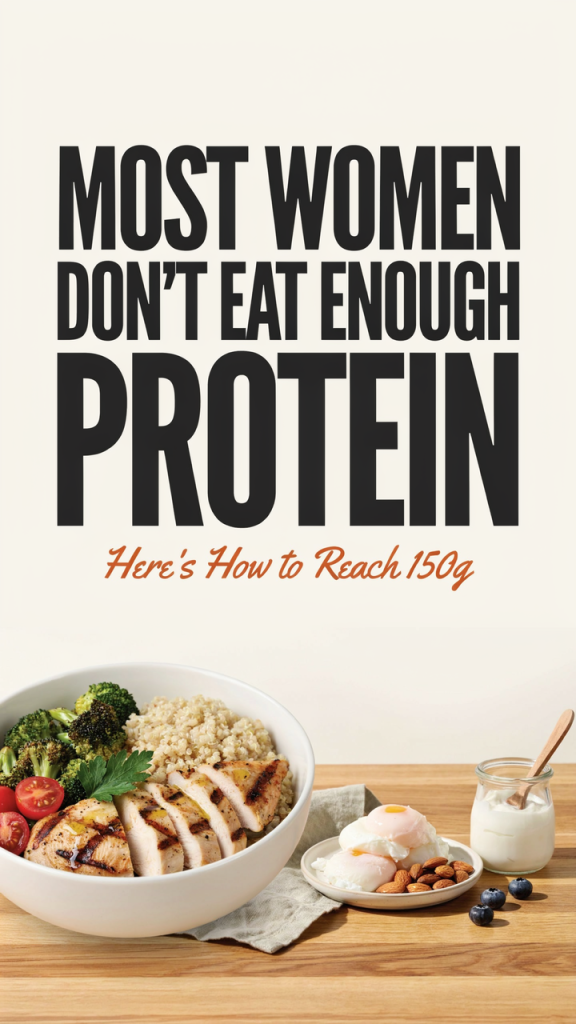
Most Women Don’t Eat Enough Protein—Here’s How to Reach 150g
Protein is one of the most powerful nutrients for health, body composition, strength, energy and longevity. Yet many women fall short of recommended protein intake—especially if they’re trying to build or preserve muscle, lose fat, or stay active as they age. This post explains why hitting 150 grams of protein per day can be a smart target for many women, and shows practical, enjoyable ways to reach it with real foods and recipes you can start using today.
This is a detailed, practical guide: why protein matters, why many women don’t get enough, how to calculate your needs, real strategies to increase intake, eight tested recipes and meal ideas (with ingredients and step-by-step instructions), sample daily plans that hit ~150 g, supplement guidance, meal-prep tips, and safety notes. Read on—you’re closer than you think.
Why protein matters (and why 150 g might be the right target)
Protein does more than build muscle. It:
– Supports immune function, hormones, skin and hair.
– Preserves muscle during weight loss and aging (sarcopenia prevention).
– Keeps you full longer—helpful for appetite control.
– Has the highest thermic effect of macronutrients (burns more calories during digestion).
How much do you need? Traditional RDA is 0.8 g/kg body weight—often too low for active people and older adults. Many health and performance experts recommend 1.2–2.2 g/kg for active women. For someone of average size who trains or wants to preserve/raise lean mass, 150 g/day is a practical, evidence-supporting target for many women, especially those who are taller, heavier, or strength-training regularly.
Why many women don’t eat enough protein
- Prioritizing carbs or low-fat meals for calories.
- Relying on snacks that are carbohydrate-driven (chips, pastries, sugary bars).
- Underestimating portion sizes of protein at meals.
- Following calorie-restricted diets without adjusting protein upward.
- Vegetarian or vegan diets without planned high-protein sources.
It’s rarely about lack of will—it’s usually habits and a lack of simple, realistic meal structures.
How to calculate your own protein needs (quick guide)
- Convert weight to kilograms: weight (lb) ÷ 2.2 = kg.
- Choose a multiplier:
- Sedentary: 0.8–1.0 g/kg
- Active/aerial fitness classes: 1.2–1.6 g/kg
- Strength training/higher goals: 1.6–2.2 g/kg
For many women aiming to preserve or build muscle, 1.6–1.8 g/kg puts you near the 150 g mark if you weigh ~85–95 kg (187–210 lb). But meeting 150 g can also be a good fixed goal if you want a straightforward, effective target.
Note: these are general guidelines. If you have kidney disease or other medical conditions, consult your healthcare provider.
Practical strategies to reach 150 g per day
Hitting 150 g isn’t about one massive meal. It’s about distribution and planning:
- Aim for 3–5 protein-focused meals/snacks per day.
- Target ~30–50 g protein per main meal, and ~10–25 g for snacks/drinks.
- Use a high-quality protein powder for a reliable, quick boost.
- Prioritize protein at breakfast (eggs, yogurt, cottage cheese, protein pancakes) — the meal most often low in protein for women.
- Prep protein portions ahead of time (grilled chicken, boiled eggs, packed tofu).
- Use lean meats, fish, legumes, dairy, eggs, tofu/tempeh, edamame, and protein-enriched products.
- Track intake for a week to build awareness—apps or a simple notebook work.
Below are recipes and meal ideas you can use to structure your day and reach 150 g.
8 Recipes and Meal Ideas (all include ingredients and step-by-step instructions)
Each recipe lists approximate protein per serving—values are estimates and vary by brand/preparation.
1) High-Protein Breakfast Omelet (approx. 35–40 g protein)
Ingredients:
– 3 large eggs
– 4 egg whites (or ½ cup liquid egg whites)
– 1/2 cup low-fat cottage cheese
– 1/2 cup chopped spinach
– 1/4 cup diced bell pepper
– 1 oz reduced-fat cheddar cheese (optional)
– 1 tsp olive oil or cooking spray
– Salt and pepper to taste
Instructions:
1. Whisk eggs, egg whites, cottage cheese, salt, and pepper in a bowl until blended.
2. Heat a nonstick skillet over medium and add olive oil or spray.
3. Sauté bell pepper and spinach 1–2 minutes until wilted.
4. Pour egg mixture into the skillet, cook until edges set, lifting edges to let uncooked eggs flow underneath.
5. Sprinkle cheddar if using, fold omelet in half, and cook 30–60 seconds more.
6. Serve immediately.
Protein estimate: eggs (3×6 g = 18 g) + egg whites (~14 g) + cottage cheese (14 g per 1/2 cup—varies) → ~46 g if using full cottage cheese numbers; adjust to 35–40 g depending on portions.
2) Green Protein Smoothie (approx. 25–30 g protein)
Ingredients:
– 1 scoop whey or plant-based protein powder (20–25 g protein)
– 1 cup unsweetened almond milk or dairy milk
– 1/2 medium banana
– 1 cup baby spinach
– 1 tbsp natural peanut butter or 1 tbsp chia seeds
– Ice cubes as desired
Instructions:
1. Add all ingredients to a blender.
2. Blend on high until smooth, adding more liquid for desired consistency.
3. Taste and adjust sweetness with a little honey or cinnamon if desired.
4. Pour into a glass and enjoy.
Protein estimate: protein powder (20–25 g) + peanut butter (4–8 g depending) → ~25–33 g.
3) Greek Yogurt + Berry Protein Bowl (approx. 30 g protein)
Ingredients:
– 1 3/4 cups (about 450 g) plain nonfat Greek yogurt (approx. 30–35 g protein)
– 1/2 cup mixed berries (fresh or frozen)
– 2 tbsp chopped walnuts or almonds
– 1 tbsp honey or maple syrup (optional)
– 1 tbsp ground flaxseed (optional)
Instructions:
1. Spoon Greek yogurt into a bowl.
2. Top with berries, nuts, flaxseed and honey if using.
3. Stir gently or leave layered—eat with a spoon.
Protein estimate: depends on brand—this amount of nonfat Greek yogurt often provides ~30–35 g protein.
4) Turkey & Quinoa Power Bowl (approx. 45–50 g protein)
Ingredients:
– 6 oz (170 g) cooked lean ground turkey or sliced turkey breast (~40–50 g protein)
– 1 cup cooked quinoa (~8 g protein)
– 1 cup steamed broccoli
– 1/4 avocado, sliced
– 2 tbsp tzatziki or a drizzle of olive oil
– Salt, pepper, and lemon juice to taste
Instructions:
1. Cook turkey in a nonstick pan until internal temp reaches 165°F and no pink remains. Season while cooking.
2. Steam or microwave broccoli until tender.
3. Warm quinoa if needed.
4. Assemble bowl: quinoa base, turkey on top, broccoli beside, avocado slices.
5. Drizzle tzatziki or oil and squeeze lemon juice on top. Season with salt and pepper.
6. Serve warm.
Protein estimate: turkey (~42 g for 6 oz cooked turkey breast) + quinoa 8 g → ~50 g.
5) Lentil & Tofu Curry (Vegetarian — approx. 30–35 g protein per serving)
Ingredients:
– 1 cup cooked lentils (~18 g protein)
– 200 g extra-firm tofu, pressed and cubed (~16 g protein)
– 1 cup canned diced tomatoes
– 1/2 cup light coconut milk
– 1 cup spinach
– 1 tbsp curry powder
– 1 tbsp olive oil
– 1/2 onion, chopped
– 1 garlic clove, minced
– Salt and pepper to taste
– Serve with 1/2 cup cooked brown rice (optional, ~3–4 g protein)
Instructions:
1. Heat oil in a pan and sauté onion until translucent, add garlic and curry powder for 30 seconds.
2. Add tomatoes and coconut milk, stir to combine.
3. Add lentils and tofu cubes, simmer 5–8 minutes until warmed through and flavors meld.
4. Stir in spinach until wilted. Season with salt and pepper.
5. Serve over rice if desired.
Protein estimate: lentils 18 g + tofu 16 g = ~34 g (plus rice adds ~3–4 g).
6) Seared Salmon with Edamame Salad (approx. 45 g protein)
Ingredients:
– 6 oz salmon fillet (~34 g protein)
– 1 cup shelled edamame (~17 g protein)
– 1 cup mixed salad greens
– 1/4 cup diced cucumber
– 1 tbsp olive oil + lemon juice dressing
– Salt, pepper, and fresh dill (optional)
Instructions:
1. Heat a skillet over medium-high heat and sear salmon 3–4 minutes per side (depending on thickness) until cooked through. Season with salt and pepper.
2. Steam or microwave edamame per package instructions.
3. Toss salad greens, cucumber, and edamame with olive oil and lemon juice.
4. Place seared salmon on top of salad, garnish with dill.
5. Serve immediately.
Protein estimate: salmon (~34 g for 6 oz) + edamame 17 g → ~51 g for the plate (can scale salmon size to adjust).
7) Chickpea & Chicken Salad Wrap (approx. 30–35 g protein)
Ingredients:
– 3 oz cooked chicken breast, shredded (~25 g protein)
– 1/2 cup canned chickpeas, rinsed (~7 g protein)
– 1 whole-grain wrap or large lettuce leaves
– 1 tbsp Greek yogurt or light mayo
– 1/4 cup diced celery and red onion
– Salt, pepper, and paprika to taste
Instructions:
1. In a bowl combine shredded chicken, chickpeas, Greek yogurt, celery, onion, and seasonings.
2. Mix until combined and adjust seasoning.
3. Spoon filling onto a whole-grain wrap or lettuce leaves.
4. Roll or fold and serve.
Protein estimate: chicken 25 g + chickpeas 7 g → ~32 g.
8) No-Bake Protein Bars (makes ~8 bars, ~15–20 g protein per bar depending on protein powder)
Ingredients:
– 2 cups rolled oats
– 1 cup natural peanut butter or almond butter
– 1/2 cup honey or maple syrup
– 1/2 cup protein powder (whey or plant)
– 1/4 cup chopped nuts or dark chocolate chips (optional)
– Pinch of salt
Instructions:
1. Line an 8×8 pan with parchment paper.
2. Combine peanut butter and honey in a microwave-safe bowl and warm 20–30 seconds until slightly runny, stir until smooth.
3. In a large bowl, mix oats, protein powder, and salt. Add nut/choc chips if using.
4. Pour peanut butter-honey mixture into dry mix and stir until combined. Press firmly into the lined pan.
5. Chill in fridge for at least 1 hour. Cut into 8 bars.
6. Store in the fridge up to 10 days.
Protein estimate: depends on protein powder and nut butter. With a 20–25 g protein powder and nut butter contribution, bars are ~15–20 g each.
Sample day plans to hit ~150 g protein
Here are two real-world sample days using recipes above. Protein values are approximate.
Day A — Balanced mixed animal-protein day (approx. 155 g)
– Breakfast: High-Protein Breakfast Omelet (3 eggs + ½ cup cottage cheese) — ~45 g
– Snack: Green Protein Smoothie (1 scoop whey) — ~25 g → subtotal 70 g
– Lunch: Turkey & Quinoa Power Bowl (6 oz turkey + 1 cup quinoa) — ~50 g → subtotal 120 g
– Snack: No-Bake Protein Bar — ~15 g → subtotal 135 g
– Dinner: Seared Salmon (4 oz) + salad (edamame 1/2 cup) — ~20–25 g → daily total ~155–160 g
Day B — Vegetarian-focused day (approx. 150 g)
– Breakfast: Greek Yogurt + Berry Protein Bowl (1 3/4 cups yogurt) — ~30–35 g
– Snack: Protein Smoothie (vegan protein powder) — ~25 g → subtotal ~60 g
– Lunch: Lentil & Tofu Curry (serving) + 1/2 cup brown rice — ~35–38 g → subtotal ~95–98 g
– Snack: Cottage cheese 1 cup or 1/2 cup + nuts — ~20 g → subtotal ~115–118 g
– Dinner: Large salad with 1 cup shelled edamame and a generous portion of tempeh (150 g tempeh ~30 g protein) — ~35 g → daily total ~150–153 g
You can adjust portion sizes, swap ingredients, or add a small protein shake to fine-tune totals.
Supplements and protein powders: when and how to use them
- Protein powders (whey, casein, pea, soy, rice) are convenient, low-effort ways to add 20–30 g per serving.
- Use a shake post-workout for quick recovery, or in smoothies for an easy meal.
- Protein bars can be practical but check sugar and ingredient lists.
- Creatine (not a protein, but synergistic) supports strength and lean mass when combined with protein and resistance training.
- Supplements are not required if you can meet needs via food, but they’re a useful tool for busy people.
Timing and distribution: what the evidence suggests
- Aim for even protein distribution across meals—roughly 30–40 g per meal—to maximize muscle protein synthesis.
- A leucine-rich meal (2.5–3 g leucine)—often met with 20–40 g of high-quality protein—helps stimulate muscle building.
- Post-workout protein (~20–30 g) is helpful for recovery, but total daily protein is the most important factor.
Practical meal-prep and tracking tips
- Cook a large batch of chicken, turkey, or tofu and portion into containers for 3–4 days.
- Boil a dozen eggs at once for grab-and-go breakfasts/snacks.
- Keep Greek yogurt, cottage cheese, and pre-portioned nuts in the fridge for quick hits.
- Use a kitchen scale for a week to learn portion sizes (then you can eyeball).
- Track for a week using an app or notebook; once accustomed to the pattern you’ll need less tracking.
- Pack snack-size portions of edamame, jerky, protein bars, or cottage cheese for workdays.
Safety notes and who should consult a professional
- If you have kidney disease or other chronic conditions, consult a doctor or registered dietitian before greatly increasing protein.
- For most healthy adults, 150 g/day is safe when balanced in a varied diet and adequate fluid intake.
- Pregnant or breastfeeding women should consult their healthcare provider for individualized protein targets.
Sample grocery list (protein-focused)
- Eggs
- Nonfat Greek yogurt
- Cottage cheese
- Chicken breast, turkey breast
- Salmon, canned tuna
- Lean ground turkey
- Extra-firm tofu, tempeh
- Lentils, chickpeas, edamame
- Quinoa, brown rice
- Rolled oats
- Natural nut butters
- Protein powder (whey or plant)
- Nuts and seeds
Final tips to make 150 g sustainable and enjoyable
- Start by adding one protein-rich habit each week (e.g., protein at breakfast).
- Make small swaps: Greek yogurt for cereal, cottage cheese instead of chips as a snack.
- Flavor matters—use spices, citrus, fresh herbs, salsas, and hot sauces to keep meals exciting.
- Focus on variety to ensure you get other nutrients, vitamins, and fiber.
Conclusion
Reaching 150 grams of protein per day is a realistic, powerful strategy for many women who want to preserve or build muscle, manage weight, and feel more satisfied between meals. It’s not about depriving yourself or eating bland food—it’s about better structure and a few simple swaps: prioritizing protein at breakfast, adding a protein-rich snack, using lean protein portions at meals, and leveraging quick tools like Greek yogurt and protein powder.
Start small: add one high-protein meal this week, try one of the recipes here, and measure how much better you feel with steady, predictable protein at each meal. Over time those daily choices add up to stronger muscles, steadier energy, and better health. If you have unique medical needs, check with a healthcare professional or registered dietitian for personalized guidance. You’ve got this—one high-protein bite at a time.