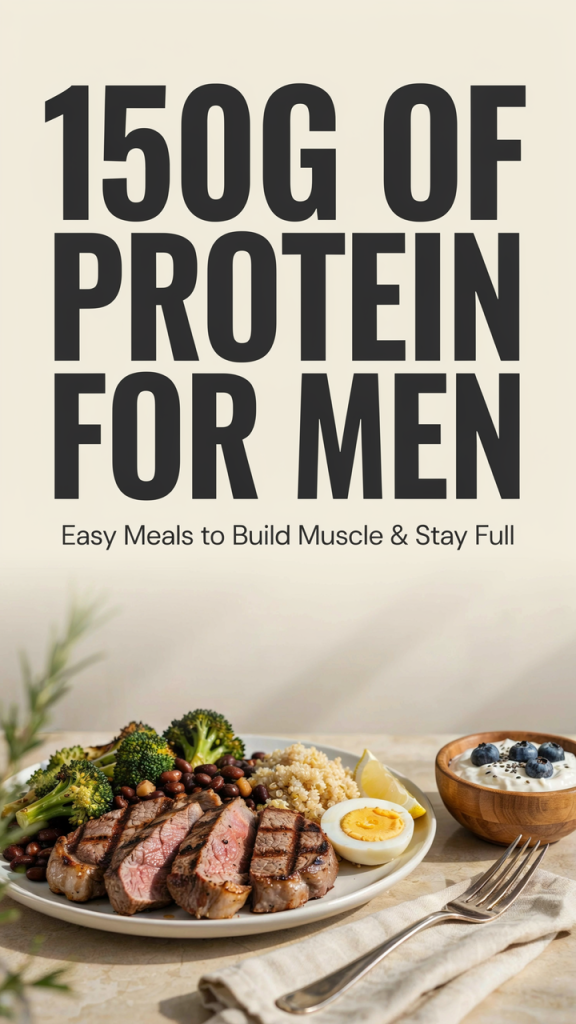
150g of Protein for Men: Easy Meals to Build Muscle and Stay Full
Building muscle, staying full between meals, and supporting recovery all come down to consistent protein intake. For many active men, 150 grams of protein per day is a practical target: high enough to maximize muscle repair and growth for most gym-goers, flexible for different body sizes, and achievable without living on protein powders alone. This guide walks you through why 150g can work, how to distribute it across the day, and — most importantly — offers easy, actionable meals and recipes to hit your target without fuss.
Whether you’re cutting, bulking, or maintaining, these meals are designed to be realistic, tasty, and repeatable. I’ll give you meal ideas, complete recipes (with ingredients and step-by-step instructions), and sample daily plans so you can start hitting 150g of protein today.
Why 150g of Protein? The Rationale for Men Who Lift
Protein needs vary by bodyweight, activity level, and goals. General guidelines:
– Sedentary adult: ~0.8 g/kg bodyweight.
– Active lifter aiming for muscle gain: 1.6–2.2 g/kg (0.73–1.0 g/lb) bodyweight.
– For a 75–95 kg (165–210 lb) man working out regularly, 120–200 g/day can be appropriate. 150 g sits squarely in that range and is a practical, broadly applicable target.
Benefits of hitting 150g consistently:
– Maximizes muscle protein synthesis when paired with resistance training.
– Improves satiety, helping control calories and reduce snacking.
– Supports recovery, immune function, and metabolic health.
Distribution matters. Aim to spread protein across 3–6 feeding opportunities (meals + snacks/shakes) to keep muscle protein synthesis stimulated throughout the day.
How to Reach 150g: Practical Strategies
- Prioritize protein at every meal: aim for 25–40 g per main meal and 10–30 g for snacks/shakes.
- Use complete protein sources (animal proteins, whey) and combine plant proteins (legumes + grains) for quality.
- Include a daily shake or high-protein snack for convenience.
- Meal prep: batch-cook lean meats, grains, and roasted veggies to assemble meals quickly.
- Track portions at first to learn how much protein is in common foods (chicken breast, eggs, Greek yogurt, etc.).
Now let’s get practical. Below are easy, delicious recipes and meal ideas to help you hit 150g without monotony. Each recipe includes ingredients and numbered instructions so you can cook and pack with confidence.
High-Protein Breakfasts
Hearty Turkey & Veg Omelette (≈40 g protein)
A filling, savory omelette that keeps you full until lunch.
Ingredients
– 3 large eggs
– 3 large egg whites (or 1/2 cup liquid egg whites)
– 100 g (3.5 oz) lean ground turkey, cooked and seasoned
– 1/2 cup diced bell pepper
– 1/4 cup diced onion
– 1/2 cup baby spinach
– 1 oz reduced-fat cheddar cheese (optional)
– 1 tsp olive oil
– Salt and pepper to taste
Instructions
1. Heat olive oil in a nonstick skillet over medium heat. Sauté onion and bell pepper until softened (2–3 minutes).
2. Add ground turkey, season, and stir until heated through (2 minutes).
3. Add spinach and cook until wilted, then transfer mixture to a plate.
4. Whisk eggs and egg whites with salt and pepper. Pour into the skillet and cook gently until edges set.
5. Add turkey-veggie mix on one half of the omelette and sprinkle cheese on top.
6. Fold the omelette and cook 1 more minute until cheese melts. Serve hot.
Tip: Swap turkey for lean ham or smoked salmon for variety.
Greek Yogurt Power Bowl (≈25–30 g protein)
Quick, no-cook option for busy mornings.
Ingredients
– 1 1/2 cups plain Greek yogurt (approx. 20–25 g protein)
– 2 tbsp chia seeds
– 1/2 cup mixed berries (fresh or frozen)
– 2 tbsp chopped almonds or walnuts
– 1 tsp honey or maple syrup (optional)
Instructions
1. Scoop Greek yogurt into a bowl.
2. Stir in chia seeds and top with berries and nuts.
3. Drizzle honey if you want extra sweetness. Mix and enjoy.
Add a scoop of protein powder if you want to boost protein to 35–40 g.
Simple, Prep-Friendly Lunches
Chicken, Quinoa & Veg Meal Prep Bowl (≈45 g protein)
Batch-friendly lunch that reheats well and stays satisfying.
Ingredients
– 6 oz (170 g) cooked chicken breast, diced
– 1 cup cooked quinoa
– 1 cup roasted broccoli florets
– 1/2 cup roasted sweet potato cubes
– 2 tbsp hummus or tzatziki for flavor
– 1 tbsp olive oil
– Salt, pepper, smoked paprika to taste
Instructions
1. Preheat oven to 425°F (220°C). Toss sweet potato and broccoli in olive oil, salt, pepper, and smoked paprika. Roast 20–25 minutes until tender.
2. Cook quinoa according to package instructions; fluff with fork.
3. Season and grill or pan-sear chicken breast until internal temp reaches 165°F (74°C). Let rest and dice.
4. Assemble bowls with quinoa, chicken, roasted veg, and a spoonful of hummus or tzatziki.
5. Store in meal prep containers; reheat when ready to eat.
Swap quinoa for brown rice, farro, or lentils to change texture and micronutrient profile.
Filling Dinners to Build Muscle
Baked Salmon, Sweet Potato & Broccoli (≈40 g protein)
Omega-3s plus lean protein make this a recovery-focused dinner.
Ingredients
– 6 oz (170 g) salmon fillet
– 1 medium sweet potato, cubed
– 1 cup broccoli florets
– 1 tbsp olive oil
– 1/2 lemon, sliced
– Salt, pepper, garlic powder to taste
Instructions
1. Preheat oven to 400°F (200°C). Toss sweet potato cubes with 1/2 tbsp olive oil, salt, and pepper; spread on a baking sheet and roast 15 minutes.
2. Add broccoli tossed with remaining oil to the sheet; push sweet potatoes to one side.
3. Season salmon with salt, pepper, and garlic powder. Place salmon on the sheet with lemon slices on top.
4. Roast everything for 12–15 minutes until salmon flakes easily and vegetables are tender.
5. Serve with an extra squeeze of lemon.
Tip: Use a foil packet for the salmon to keep it moist.
Beef & Veggie Stir-Fry with Brown Rice (≈50 g protein)
A fast dinner you can make in one skillet; great for higher-calorie goals.
Ingredients
– 8 oz (225 g) lean beef strips (sirloin or flank steak)
– 2 cups mixed stir-fry vegetables (bell pepper, snap peas, carrots)
– 1 cup cooked brown rice
– 2 tbsp low-sodium soy sauce or tamari
– 1 tbsp sesame oil
– 1 clove garlic, minced
– 1 tsp fresh grated ginger
Instructions
1. Cook brown rice per package instructions.
2. Heat sesame oil in a large skillet or wok over high heat. Add garlic and ginger; stir 30 seconds.
3. Add beef strips and sear until browned (2–4 minutes). Remove and set aside.
4. Add vegetables and stir-fry until crisp-tender (3–4 minutes).
5. Return beef to skillet, add soy sauce, and toss to combine. Cook 1 more minute.
6. Serve over brown rice.
Make extra and portion into containers for 3–4 lunches.
Snacks & Shakes (Easy Protein Boosts)
Chocolate Peanut Butter Protein Smoothie (≈35–50 g protein depending on powder)
Fast post-workout refuel or high-protein snack.
Ingredients
– 1 scoop whey (or plant) protein powder (20–30 g protein per scoop)
– 1 cup low-fat milk or unsweetened almond milk (8 g protein if dairy milk)
– 1 tbsp natural peanut butter
– 1/2 banana
– 1 tbsp cocoa powder (optional)
– Ice to thicken
Instructions
1. Add all ingredients to a blender.
2. Blend until smooth. Adjust liquid or ice for desired consistency.
3. Pour and drink within an hour post-exercise for best recovery.
Tip: Use two scoops if you need a bigger protein boost (safety: stay within daily calorie/protein goals).
Cottage Cheese & Pineapple Snack (≈20–25 g protein)
High-protein, low-effort snack to bridge meals.
Ingredients
– 1 cup low-fat cottage cheese
– 1/2 cup pineapple chunks (fresh or canned in juice)
– 1 tbsp chopped walnuts or flax seeds (optional)
Instructions
1. Scoop cottage cheese into a bowl.
2. Top with pineapple and nuts/seeds.
3. Mix and eat immediately or pack for later.
Plant-Based/Vegetarian Option
Lentil & Black Bean Chili (≈30–35 g protein per serving)
Hearty vegetarian chili that stores well and freezes.
Ingredients
– 1 cup dry brown lentils (or two 15-oz cans drained)
– 1 can (15 oz) black beans, drained and rinsed
– 1 can (15 oz) diced tomatoes
– 1 medium onion, diced
– 2 cloves garlic, minced
– 1 cup vegetable broth
– 1 tbsp olive oil
– 1 tbsp chili powder, 1 tsp cumin, salt & pepper to taste
Instructions
1. Heat olive oil in a pot over medium heat. Sauté onion until translucent, add garlic and cook 30 seconds.
2. Add spices and toast 30 seconds to bloom flavors.
3. Add lentils (or canned lentils), black beans, diced tomatoes, and vegetable broth.
4. Bring to a simmer and cover. Cook 25–30 minutes for dry lentils (less if using canned), stirring occasionally, until lentils are tender.
5. Adjust seasoning and serve with optional Greek yogurt or shredded cheese to bump protein.
Pair with a scoop of cottage cheese or a side of quinoa for extra protein.
Sample Day: Hitting 150g (Practical Example)
This sample day balances convenience, whole foods, and variety. Adjust portion sizes and snacks to match your calorie needs.
- Breakfast: Hearty Turkey & Veg Omelette — ~40 g
- Morning Snack: Greek Yogurt Power Bowl — ~25 g
- Lunch: Chicken, Quinoa & Veg Meal Prep Bowl — ~45 g
- Post-Workout: Chocolate Peanut Butter Protein Smoothie (1.5 scoops) — ~25–30 g
- Dinner: Baked Salmon, Sweet Potato & Broccoli (smaller portion) — ~20–25 g
Total: Approximately 155–165 g (adjust by reducing omelette yolks, yogurt quantity, or protein powder to trim to 150 g precisely).
You can swap meals from the recipe list depending on schedule and calories.
Meal Prep Tips to Make 150g Practical
- Batch-cook 4–6 chicken breasts, a few servings of quinoa, and roast a large tray of mixed vegetables; combine daily.
- Portion protein shakes in travel bottles for post-workout convenience.
- Use measured scoops: a kitchen scale helps you learn protein quantities fast.
- Freeze single-serving chili and soups for quick high-protein dinners.
- Keep high-protein snacks (Greek yogurt, cottage cheese, jerky) on hand to avoid empty-calorie snacks.
Common Questions
H3: Will 150g of protein make me bulky?
No. Protein supports muscle growth when paired with a calorie surplus and resistance training. If you want lean gains, control calories and continue progressive lifting — protein itself doesn’t automatically bulk you up.
H3: Is it safe to eat this much protein long-term?
For most healthy adults, 150 g/day is safe. If you have pre-existing kidney disease or specific health concerns, consult a physician. Stay hydrated and include fiber-rich vegetables and whole grains.
H3: Can I get 150g without protein powder?
Yes — with careful portioning of meat, dairy, eggs, and legumes. However, protein powder is a convenient tool that simplifies hitting targets, especially around workouts.
Tracking Progress and Adjusting
- Track for 1–2 weeks to ensure consistency.
- If not gaining desired muscle, increase calories (carbs/fats) first, then protein if needed.
- If feeling bloated or heavy, reduce volume or experiment with different protein sources (lean fish, plant proteins, or egg whites) until you find what feels best.
Final Notes on Nutrition Quality
- Prioritize whole, minimally processed proteins most of the time.
- Include fish 2–3 times per week for omega-3s.
- Pair protein with fiber-rich carbs and healthy fats for blood sugar control and sustained energy.
- Get 7–9 hours of sleep and follow a progressive resistance-training plan to convert dietary protein into muscle effectively.
Conclusion: Make 150g Work for Your Life
Hitting 150 grams of protein a day is a powerful habit for any man looking to build muscle, recover faster, and stay satiated. With a mix of hearty breakfasts, simple meal-prep lunches, satisfying dinners, and strategic snacks or shakes, you can meet this goal without monotony or excessive supplements. Start by choosing two or three recipes above that suit your taste and schedule, batch-cook for the week, and use a protein shake as a reliable backstop. Consistency beats perfection — aim for steady progress, adjust portions to match your goals, and enjoy the meals that fuel your gains.
Ready to try it for a week? Pick one breakfast, one lunch, one dinner, and two snacks from this list, prep on Sunday, and see how much better you feel in the gym and throughout the day. You’ve got this.