
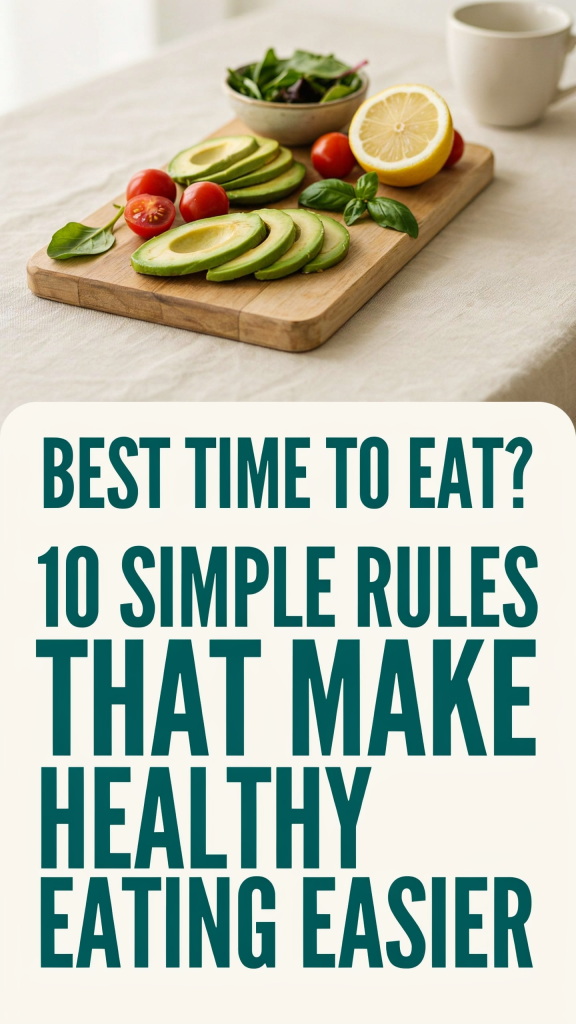
What Is the Best Time to Eat? 10 Simple Rules That Make Healthy Eating Easier
Eating well is about more than just what you put on your plate. When you eat matters too. Meal timing affects energy, digestion, sleep, blood sugar control, weight management, and even mood. But with busy schedules, social life, and conflicting advice online, it’s easy to feel overwhelmed. This guide breaks meal timing into 10 simple, science-backed rules you can start using today. You’ll also get practical windows for breakfast, lunch, dinner, and four easy recipes that fit these rules.
Whether you want better sleep, steadier energy, or an easier way to lose (or maintain) weight, these rules will give you a realistic framework—no extreme diets or strict calorie counting required. Read on, pick one rule to try this week, and build sustainable habits from there.
Why meal timing matters (short primer)
Your body runs on rhythms. Circadian biology — the internal 24-hour clock present in nearly every cell — regulates hormones like insulin, cortisol, and melatonin. These hormones influence hunger, digestion, metabolism, and sleep. Eating in alignment with your circadian rhythm (daytime eating, sleeping at night) generally improves metabolic health.
Key reasons timing matters:
– Insulin sensitivity is typically higher earlier in the day, so your body handles carbohydrates better at breakfast and lunch than late at night.
– Eating late can disrupt sleep and digestion, raising the risk of weight gain and metabolic issues.
– Consistent meal timing can regulate appetite and reduce impulsive snacking.
– Time-restricted eating (a form of intermittent fasting) can improve metabolic markers for some people.
That said, personal factors — work shifts, family needs, exercise timing, and health conditions — affect what’s “best.” Use these rules as a flexible framework, not rigid laws.
10 Simple Rules That Make Healthy Eating Easier
- Eat breakfast within 1–2 hours of waking (most days)
- Having a balanced breakfast kick-starts metabolism, stabilizes blood sugar, and reduces late-morning cravings. Aim for protein + fiber + healthy fat (e.g., eggs with veggies and whole-grain toast, or Greek yogurt with berries and nuts).
- If you don’t feel hungry, a small protein-rich option or coffee with a light snack works until appetite returns. For people practicing intermittent fasting, a later first meal is fine—consistency matters more than the exact hour.
- Favor larger meals earlier in the day
- Evidence shows better glucose control and weight outcomes when more calories are consumed earlier (breakfast/lunch) and less at dinner. If you want to lose weight or stabilize energy, shift a bit of dinner calories forward.
- A practical swap: move a heavy evening carbohydrate to lunch (e.g., rice or pasta at lunch rather than dinner).
- Maintain consistent meal times daily
- Regular meal timing trains hunger hormones (ghrelin/leptin), reduces overeating, and supports circadian rhythms. Try to keep a 30–60 minute window for your main meals each day.
- On weekends, keep a similar schedule to support sleep quality and appetite regulation.
- Finish your last meal 2–3 hours before bedtime
- Late-night eating can impair sleep and disrupt overnight fasting. Stopping food 2–3 hours before bed helps digestion and allows insulin and blood sugar to stabilize for better sleep quality.
- If you need a bedtime snack, keep it small and balanced (protein + fiber or protein + healthy fat) — e.g., a handful of almonds or cottage cheese with berries.
- Spread protein across meals
- Aim for a moderate amount of protein at each meal (roughly 20–35 g depending on body size and goals). Protein supports satiety, muscle maintenance, and blood sugar stability.
- An egg, Greek yogurt, a scoop of protein powder, or a palm-sized portion of chicken or fish are simple ways to distribute protein.
- Prioritize a pre- or post-workout snack based on workout timing
- If you exercise in the morning, a small carbohydrate + protein snack beforehand (banana + nut butter) can boost performance. After workouts, prioritize protein + carbs to support recovery.
- For evening workouts, try to complete your meal or recovery snack at least 60–90 minutes before bed to avoid sleep disruption.
- Use time-restricted eating (TRE) if it fits your lifestyle
- TRE narrows the daily eating window (e.g., 10–12 hours) without counting calories. Many people do well with a 10–12 hour window (e.g., 8 AM–6 PM). Shorter windows (8 hours) can benefit some, but aren’t necessary for everyone.
- Choose a window that aligns with your family and work life to improve adherence.
- Snack intentionally, not out of boredom
- Choose snacks that combine protein and fiber to keep blood sugar stable and prevent overeating at the next meal (e.g., apple slices with cheese, hummus with carrot sticks).
- Plan a snack only if you’re genuinely hungry or need fuel before/after activity. Set a small routine (e.g., mid-afternoon snack at 3 PM) to avoid random grazing.
- Adjust timing around medications and health conditions
- Certain medications or health conditions require specific meal timing (e.g., diabetes, GERD, thyroid medication). Consult your healthcare provider to align meal timing with medical needs.
- If you have reflux, avoid late large meals and limit trigger foods near bedtime. If you’re managing diabetes, coordinate carbohydrate intake with medication and blood glucose monitoring.
- Be flexible and prioritize sustainability
- The “best” time to eat is the one you can maintain. Life events (travel, social dinners, shift work) happen—plan practical adjustments (e.g., shift your eating window, pre-pack snacks).
- Evaluate progress by how you feel: energy, sleep quality, hunger control, mood, and performance—not just the number on the scale.
Practical meal timing windows (examples you can adapt)
These are sample schedules to match common lifestyles. Choose one that fits your day and personal goals, then adjust.
- Early riser (wake 5:30–6:30 AM)
- Breakfast: 6:30–7:30 AM
- Lunch: 12:00–1:00 PM
- Snack: 3:00–4:00 PM
- Dinner: 6:00–7:00 PM
- Eating window: ~6:30 AM–7:00 PM (12.5 hours)
- Typical 9–5 worker (wake 6:30–7:30 AM)
- Breakfast: 7:00–8:00 AM
- Lunch: 12:00–1:00 PM
- Snack: 3:30–4:00 PM
- Dinner: 6:30–7:30 PM
- Eating window: ~7:00 AM–7:30 PM (12.5 hours) or shorten to 8 AM–6 PM for a 10-hour TRE
- Evening-oriented schedule (wake 8:00–9:00 AM)
- Breakfast: 8:30–9:30 AM
- Lunch: 1:00–2:00 PM
- Snack: 4:00 PM
- Dinner: 7:30–8:30 PM (finish 2–3 hours before bed)
- Eating window: adapt to 9 AM–8:30 PM (11.5 hours) or compress if aiming for TRE
- Shift workers
- Align meals to the start and end of your shift, and avoid large meals immediately before sleeping. Small, protein-rich snacks during breaks help maintain alertness.
Meal ideas that work with these rules
Below are four simple, balanced recipes/meal ideas that follow the timing rules: they’re protein-forward, include fiber, and are easy to prepare. Use them as templates—swap in seasonal produce or your preferred protein.
Overnight Oats Power Breakfast
– Ingredients
– 1/2 cup rolled oats
– 1/2 cup milk (dairy or plant-based)
– 1/2 cup Greek yogurt (plain)
– 1 tbsp chia seeds
– 1/2 cup mixed berries (fresh or frozen)
– 1 tbsp chopped nuts (almonds or walnuts)
– 1 tsp honey or maple syrup (optional)
– Instructions
1. Combine oats, milk, Greek yogurt, and chia seeds in a jar or bowl; stir well.
2. Fold in berries and drizzle honey if using.
3. Cover and refrigerate overnight (or at least 4 hours).
4. In the morning, top with chopped nuts and enjoy cold or warmed slightly.
Balanced Lunch Bowl (protein + grain + veggies)
– Ingredients
– 3–4 oz cooked chicken breast, tofu, or chickpeas
– 1/2 cup cooked quinoa or brown rice
– 1–2 cups mixed greens or steamed veggies
– 1/4 avocado, sliced
– 1–2 tbsp dressing (olive oil + lemon or tahini)
– Salt, pepper, and herbs to taste
– Instructions
1. Place mixed greens or steamed vegetables in a bowl.
2. Add cooked quinoa or brown rice and your chosen protein.
3. Top with avocado slices and drizzle with dressing.
4. Season with salt, pepper, and fresh herbs; toss and serve.
Quick 20-Minute Salmon and Veggies (dinner)
– Ingredients
– 4–6 oz salmon fillet
– 1 cup broccoli florets or mixed vegetables
– 1 tbsp olive oil
– 1/2 lemon
– Salt, pepper, garlic powder, and dried herbs
– Instructions
1. Preheat oven to 425°F (220°C) or heat a skillet on medium-high.
2. Toss broccoli with half the olive oil, salt, and pepper; spread on a baking sheet.
3. Place salmon on the sheet, brush with remaining oil, sprinkle seasonings, and squeeze half a lemon over the top.
4. Roast for 12–15 minutes (or sear salmon 4–5 minutes per side in skillet and briefly roast broccoli) until salmon is cooked through and veggies are tender.
Protein + Fiber Snack: Greek Yogurt Parfait
– Ingredients
– 3/4 cup plain Greek yogurt
– 1/4 cup high-fiber granola or oats
– 1/4 cup mixed berries or chopped apple
– 1 tsp chia seeds or ground flaxseed
– Instructions
1. Spoon Greek yogurt into a small bowl or container.
2. Layer granola or oats and top with fruit.
3. Sprinkle with chia seeds or flaxseed and stir lightly before eating.
Each recipe supports stable energy and satiety and is easy to time around your day (breakfast, lunch, dinner, and snack).
Special considerations
H3: If you have diabetes or are on insulin
Consistency is crucial. Coordinate carbohydrates with medication and monitor blood glucose. Work with your care team to set meal times and portion sizes that maintain target glucose levels. Avoid erratic late-night carbohydrates.
H3: If you have reflux or GERD
Avoid large meals, spicy foods, and lying down right after eating. Finish the last big meal 2–3 hours before bed. Smaller, balanced meals and slower eating help reduce symptoms.
H3: If you’re trying to lose weight
Shifting calories earlier, spreading protein evenly, and reducing late-night eating can aid weight loss. Time-restricted eating might help some people by naturally reducing calories, but the best approach is one you can maintain long-term.
H3: For athletes and highly active people
Fueling matters. Eat carbohydrates and some protein in the 1–3 hours before intense workouts and prioritize post-workout recovery nutrition (protein + carbs) within 30–90 minutes when possible. Timing should align with training demands, not strict meal clock adherence.
How to adopt these rules without stress
- Start small: Pick one rule (e.g., “finish eating 2 hours before bed”) and practice it for one week.
- Use reminders: Set phone alarms for meal windows when establishing consistency.
- Meal prep: Batch-cook proteins and grains so healthy meals are ready and quick to eat within your chosen schedule.
- Flexible planning: Accept occasional social or travel-related deviations. Return to your routine the next day.
- Track how you feel: Energy, sleep, cravings, and hunger cues are better metrics than short-term weight changes.
Troubleshooting common obstacles
- “I work late nights.” Schedule your meals around your wake-sleep cycle. Treat the start of your day (whenever it happens) as “morning” and front-load calories early in your wake period.
- “I’m never hungry in the morning.” Start with a small protein-rich drink or snack and build up to a fuller breakfast over time.
- “I get hangry in the afternoon.” Ensure protein and fiber at lunch and include a pre-planned snack to prevent dips in blood sugar.
- “I’m traveling and off schedule.” Choose balanced meals and compress or expand your eating window temporarily. Staying hydrated and prioritizing protein at meals helps.
Tracking progress (simple metrics)
Rather than obsessing over the clock, monitor:
– Energy throughout the day (are you steady or crashy?)
– Sleep quality (do you fall asleep and wake refreshed?)
– Hunger and cravings (are they manageable?)
– Performance (work, workouts, concentration)
– Weight trends over weeks, if that’s a goal
If you try one change and it doesn’t feel sustainable after a few weeks, try another rule—small wins compound into lasting habits.
Conclusion
There is no single “best” time to eat that fits everyone. But certain principles—eating more earlier, keeping an eating window consistent, finishing meals a few hours before bed, and spreading protein across meals—give you the best odds for steady energy, better sleep, and healthier metabolism. Use the 10 rules above as a practical toolkit: pick one to start, try the meal timing windows that match your life, and use the recipes here as simple, nourishing options.
Healthy eating is as much about patterns as it is about individual meals. Be patient, flexible, and kind to yourself. Small, consistent changes in when you eat will often produce bigger, lasting benefits than dramatic short-term diets. Start today: choose one rule, set a realistic schedule, and see how your body responds over the next two weeks.


