
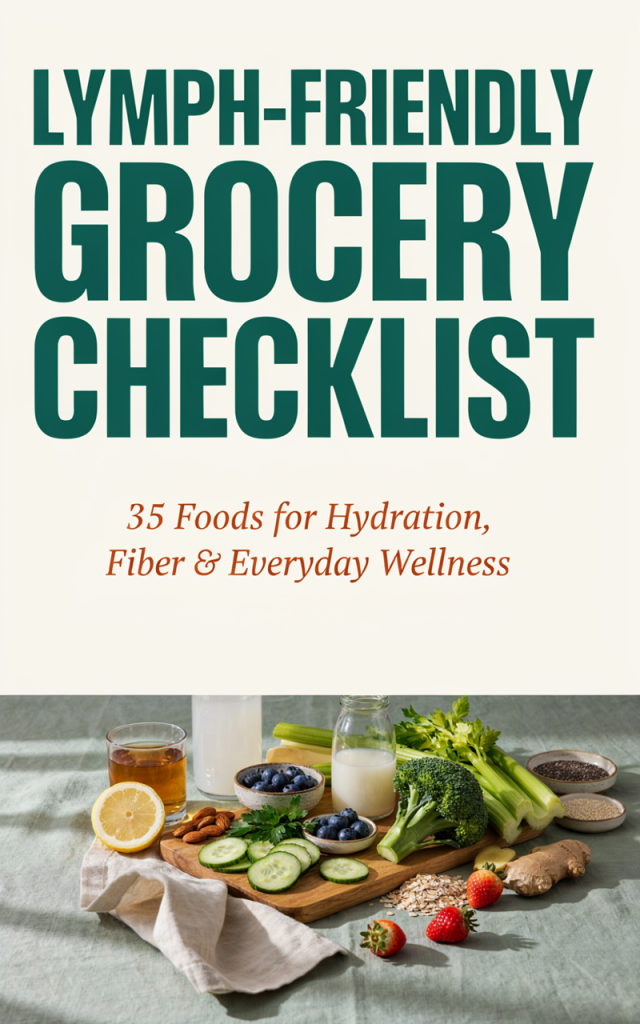
Lymph-Friendly Grocery Checklist: 35 Foods for Hydration, Fiber, and Everyday Wellness
An efficient, simple grocery list can be a powerful tool for supporting lymphatic health. The lymphatic system quietly clears toxins, transports immune cells, and helps regulate fluid balance. When it’s supported with the right hydration, fiber, anti-inflammatory nutrients, and circulation-friendly foods, most people notice better energy, less puffiness, and improved digestion. This post gives you a focused, practical grocery checklist of exactly 35 lymph-friendly foods, plus shopping tips, meal ideas, and four easy recipes you can make with items from the list.
Whether you’re new to lymph-conscious eating or want to restock your pantry with supportive staples, this post will guide you through what to buy and how to use it—without fads or complicated rules.
Why foods matter for lymphatic health
The lymphatic system doesn’t have a pump like the heart; it relies on movement, hydration, and the properties of the fluid passing through lymph vessels. Nutrients and foods can support:
- Hydration and fluid balance (so lymph flows smoothly)
- Healthy digestion and regular elimination (reduces toxin backlog)
- Reduced inflammation (less swelling and improved circulation)
- Microbial balance (beneficial gut bacteria support immune signaling)
The checklist below focuses on three core priorities: hydration, fiber, and anti-inflammatory whole foods you can shop for easily and affordably.
The Lymph-Friendly Grocery Checklist (35 essentials)
- Filtered water
- Coconut water
- Cucumber
- Celery
- Watermelon
- Oranges
- Strawberries
- Apples (with skin)
- Pears (with skin)
- Blueberries
- Rolled oats
- Chickpeas (canned or dry)
- Lentils (green or brown)
- Black beans
- Sweet potatoes
- Broccoli
- Brussels sprouts
- Kale
- Spinach
- Salmon (wild if possible)
- Chicken breast (skinless)
- Eggs
- Avocado
- Extra-virgin olive oil
- Walnuts
- Almonds
- Chia seeds
- Flaxseeds (ground or whole)
- Turmeric (fresh root or powder)
- Fresh ginger
- Garlic
- Lemon
- Green tea
- Plain probiotic yogurt
- Parsley
Note: these items were selected to balance hydration (items 1–7), fiber-rich fruits, grains and legumes (8–15), cruciferous and leafy greens (16–19), lean proteins and healthy fats (20–25), nuts and seeds (26–28), anti-inflammatory herbs/spices and citrus (29–32), supportive beverages and probiotics (33–34), and fresh herbs that act as flavor boosters and mild diuretics (35).
How to use this checklist: shopping tips and priorities
- Start with hydration: Buy a reusable water bottle and coconut water for electrolyte support after workouts or when you need variety.
- Choose whole fruits and vegetables with skins when possible—the skin contains important fiber.
- Prioritize frozen produce for berries, greens, and broccoli when fresh isn’t available—nutrient retention is excellent and they’re budget-friendly.
- Buy legumes in bulk: dry lentils and beans are inexpensive and versatile; canned varieties are fine—rinse them to reduce sodium.
- Opt for wild salmon if possible for a better omega-3 profile; otherwise choose canned salmon or other fatty fish.
- Store turmeric and ginger in the fridge or freeze peeled pieces for longer shelf life. Grate frozen ginger directly into recipes.
- Select plain probiotic yogurt without added sugars; you can sweeten naturally with fruit or a drizzle of honey if desired.
- Keep nuts and seeds in the fridge or freezer for freshness and to preserve their healthy fats.
Lymph-friendly meal-building strategies
- Hydration-first breakfast: water or green tea + a bowl of oats with berries, chia, and a spoon of flaxseed.
- Fiber-forward lunch: salad with mixed greens, chickpeas, avocado, and lemon-olive oil dressing.
- Protein and greens for dinner: grilled salmon, steamed broccoli, and roasted sweet potato.
- Snacks: apple with almond butter, yogurt with blueberries, or a handful of walnuts.
These patterns emphasize fluid intake, soluble and insoluble fiber, anti-inflammatory fats, and foods that encourage circulation and digestion.
Recipes and meal ideas (explicitly listed)
Below are four simple recipes using items from the checklist. Each recipe presents ingredients in a bulleted list and instructions in a numbered list for clarity.
1) Lymph-Boosting Citrus & Cucumber Hydration Water
Ingredients:
– 1 liter filtered water (or two 16-oz bottles)
– 1/2 cup coconut water
– 1/2 cucumber, thinly sliced
– 1/2 orange, thinly sliced
– 1/2 lemon, thinly sliced
– 6–8 fresh parsley sprigs (optional)
– Ice (optional)
Instructions:
1. Add sliced cucumber, orange, lemon, and parsley to a large pitcher.
2. Pour in filtered water and coconut water; gently stir to combine.
3. Refrigerate at least 30 minutes for flavors to infuse (overnight is ideal).
4. Serve over ice or chilled; refill the pitcher once with water for continued flavor.
Why this helps: Hydration with added electrolytes (coconut water), gentle diuretic and circulation support from parsley and citrus, and cooling cucumber to reduce swelling.
2) Fiber-Rich Chickpea & Greens Bowl
Ingredients:
– 1 cup cooked chickpeas (or 1/2 can, rinsed)
– 2 cups fresh spinach and kale (mixed)
– 1/2 avocado, sliced
– 1/2 cup roasted sweet potato cubes
– 1/4 cup cooked black beans (optional)
– 1 tablespoon extra-virgin olive oil
– Juice of 1 lemon
– Salt and pepper to taste
– 1 tablespoon chia seeds or ground flaxseeds
Instructions:
1. Warm chickpeas, sweet potato cubes, and black beans in a skillet or microwave until heated through.
2. Toss spinach and kale with olive oil and lemon juice in a bowl.
3. Arrange warm chickpeas and sweet potato over the greens.
4. Top with avocado slices, chia or flaxseeds, and season with salt and pepper.
5. Serve immediately—mixing warm and cold components helps digestion and makes meals more satisfying.
Why this helps: This bowl combines soluble and insoluble fiber, healthy fats, and plant protein to promote regular elimination and balanced lymph flow.
3) Anti-Inflammatory Turmeric-Ginger Smoothie
Ingredients:
– 1 cup plain probiotic yogurt (or unsweetened dairy-free yogurt)
– 1/2 cup blueberries (fresh or frozen)
– 1 small banana (for texture and potassium)
– 1/2 teaspoon ground turmeric (or 1 teaspoon grated fresh turmeric)
– 1/2 teaspoon grated fresh ginger
– 1 tablespoon ground flaxseeds or chia seeds
– 1/2 cup filtered water or coconut water (adjust for desired thickness)
– Pinch of black pepper (helps turmeric absorption)
Instructions:
1. Add yogurt, blueberries, banana, turmeric, ginger, flax/chia, black pepper, and water or coconut water to a blender.
2. Blend on high until smooth and creamy.
3. Taste and adjust thickness with more water or sweetness with a little honey if desired.
4. Pour into a glass and drink immediately.
Why this helps: Turmeric and ginger are anti-inflammatory, yogurt provides probiotics for gut health, and berries + seeds supply fiber and antioxidants.
4) Simple Salmon, Broccoli & Lemon-Garlic Roast
Ingredients:
– 2 salmon fillets (about 4–6 oz each)
– 2 cups broccoli florets
– 2 cloves garlic, minced
– 1 tablespoon extra-virgin olive oil
– Juice and zest of 1 lemon
– Salt and pepper to taste
– 1 tablespoon chopped parsley (optional)
– 1 medium sweet potato, roasted (serve on the side)
Instructions:
1. Preheat oven to 400°F (200°C). Toss broccoli florets with half the olive oil, half the minced garlic, salt, and pepper on a baking sheet. Add sweet potato cubes if roasting together.
2. Roast broccoli and sweet potato for 10–12 minutes. Push to one side of the tray and place salmon fillets skin-side down on the tray. Drizzle salmon with remaining olive oil, remaining garlic, lemon juice, and zest.
3. Roast everything for an additional 8–10 minutes, until salmon is cooked through and broccoli is tender-crisp.
4. Sprinkle chopped parsley over the salmon and broccoli before serving. Serve with an extra lemon wedge.
Why this helps: Wild salmon supplies omega-3s (anti-inflammatory fats), garlic and lemon support circulation and detox pathways, and broccoli and sweet potato supply fiber and vitamins.
Snacks and on-the-go ideas
- Apple slices with almond or walnut butter.
- Plain yogurt with blueberries and a sprinkle of chia seeds.
- Raw carrots and celery sticks with hummus (chickpea-based).
- Handful of almonds and walnuts with a piece of fruit.
These snack combos combine fiber, healthy fats, and protein to help maintain steady blood flow and reduce fluid imbalances.
How to integrate these foods into a weekly plan
- Breakfasts: rotate oats with berries and flaxseed; yogurt smoothies; eggs with spinach.
- Lunches: salads with chickpeas/beans, avocado, and mixed greens; grain bowls with lentils and roasted vegetables.
- Dinners: oily fish or chicken with cruciferous vegetables and sweet potatoes; broth-based soups with legumes and greens.
- Snacks & beverages: hydration water, green tea, fruit + nuts, probiotic yogurt.
Aiming for at least three servings of vegetables, two servings of fruit, one serving of healthy fats, and a fiber-rich whole grain or legume every day is a practical goal.
Shopping frequency and storage suggestions
- Weekly fresh produce run for leafy greens, cucumbers, citrus, and herbs.
- Buy frozen berries and frozen greens for convenience and reduced waste.
- Keep a jar of rolled oats, canned or dried beans, and seeds in the pantry for quick meals.
- Refrigerate nuts and seeds if you won’t use them within a month.
- Portion and freeze fresh salmon fillets individually for easy defrosting.
Red flags and when to see a provider
- Sudden or painful swelling, hard lumps, skin redness, or fever should prompt immediate medical attention—these can signal infection or other urgent issues.
- If you have kidney disease or other medical conditions that restrict potassium or fluid intake, check with your clinician before increasing fruits like oranges, potatoes, or coconut water.
- If you’re on medication that affects fluid balance (for example certain blood pressure or diuretic medications), coordinate dietary changes with your provider.
Final tips to make this sustainable
- Prep once, eat well: roast a big pan of vegetables and legumes midweek for quick meals.
- Mix flavors you enjoy: lemon, garlic, parsley, and ginger are inexpensive ways to keep food exciting while supporting lymph health.
- Move daily: gentle activity like walking, rebounding (mini-trampoline), or yoga improves lymph flow—food and movement work best together.
- Keep it simple: you don’t need every item on the list—pick a handful of hydrating items, a few fiber sources, healthy fats, and one or two anti-inflammatory spices to rotate.
Conclusion
Supporting your lymphatic system is practical and enjoyable when you focus on hydration, fiber, and anti-inflammatory whole foods. This 35-item grocery checklist gives you a balanced set of staples to promote fluid balance, reduce inflammation, and support digestion and immune health. Use the shopping tips, meal patterns, and recipes here to build a routine that fits your tastes and day-to-day life. Small, consistent choices—like drinking water infused with cucumber and lemon, adding beans to salads, and choosing salmon for dinner—add up to meaningful improvements in how you feel.
Start with a few items from the list this week and add one new food or recipe every few days. Over time you’ll create a pantry and palate that support lymphatic wellness and everyday vitality. If you’re unsure how to adapt this checklist for medical conditions or medications, check with your healthcare provider or a registered dietitian—then enjoy cooking and feeling better, one grocery run at a time.


