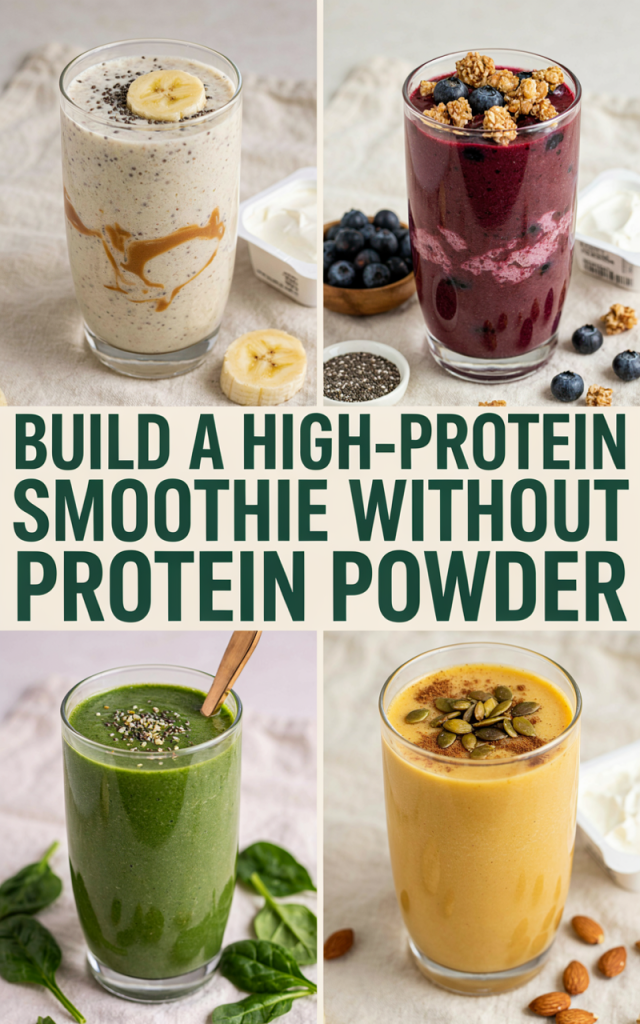
How to Build a High-Protein Smoothie Without Protein Powder
Introduction
If you want a quick, satisfying, and muscle-friendly drink but prefer to skip commercial protein powders, you’re in the right place. High-protein smoothies without protein powder can be creamy, delicious, and just as effective for recovery, meal replacement, or appetite control. They also let you control whole-food ingredients, flavor, and cost, while avoiding additives that some people prefer to avoid.
This guide will teach you the best whole-food protein sources, the simple building blocks of a high-protein smoothie, practical blending tips, allergy-friendly swaps, and 10 ready-to-make smoothie recipes that deliver serious protein — no powder required. Whether you’re a gym-goer, busy parent, or someone who wants a healthier daily habit, you’ll leave with both knowledge and recipes that are easy to customize.
Why build a high-protein smoothie without powder?
- Whole-food protein sources bring additional nutrients — probiotics (from yogurt/kefir), fiber (from oats/beans), vitamins, and minerals — that most powders lack.
- You can avoid processed ingredients, artificial sweeteners, or fillers found in some powders.
- Many people prefer the taste and texture of smoothies built with real food.
- Whole-food options are often budget-friendly: canned beans, yogurt, and oats are inexpensive protein boosters.
- Great for dietary preferences (e.g., those avoiding soy or certain additives in powders) and for introducing more varied protein sources into your diet.
High-protein ingredients to use (and how much protein they add)
Choose one or more of these protein-rich whole foods as the backbone of your smoothie. Protein amounts are approximate per common serving.
- Greek yogurt (plain, 1 cup): 15–20 g protein
- Cottage cheese (1/2 cup): 12–14 g protein
- Silken tofu (1/2 cup): 8–10 g protein
- Milk (cow, 1 cup): 8 g protein
- Soy milk (1 cup): 6–9 g protein
- Kefir (1 cup): ~9–11 g protein
- Cooked quinoa (1/2 cup): 4–6 g protein
- Cooked white beans (1/2 cup): 7–9 g protein
- Rolled oats (1/2 cup dry): 5–7 g protein
- Peanut or almond butter (2 tbsp): 6–8 g protein
- Hemp seeds (3 tbsp): 9–10 g protein
- Chia seeds (2 tbsp): 4–5 g protein
- Pumpkin seeds (1/4 cup): 8–9 g protein
- Nuts (1 oz): 4–7 g protein
Use combinations to hit your protein target. For example, 1 cup Greek yogurt + 2 tbsp nut butter yields ~22–28 g of protein.
How to build a high-protein smoothie: a step-by-step formula
A reliable formula helps you build a smoothie that’s balanced, tastes great, and reaches your protein goal.
H3: Target protein
– Aim for 20–30 g of protein for a post-workout or meal-replacement smoothie. For a snack, 10–15 g may suffice.
H3: The building blocks (add in this order when blending)
1. Liquid base (1–1.5 cups): milk, soy milk, kefir, or low-fat yogurt thinned with water.
2. Protein base (pick one or combine): Greek yogurt, cottage cheese, silken tofu, or cooked beans/quinoa.
3. Fiber & texture (add-ins): oats, banana, avocado, cooked quinoa.
4. Healthy fats (small amount): nut butter, seeds (hemp, chia), or avocado to increase satiety.
5. Flavor & sweetness: fresh or frozen fruit, vanilla, cocoa, cinnamon, dates, or a small amount of maple syrup.
6. Optional nutrient boosters: spinach/kale, lemon juice, instant espresso (for taste), ground flaxseed.
H3: Approximate proportions for a 16–20 oz smoothie
– Liquid: 1 to 1.25 cups
– Protein base: 1/2 to 1 cup (Greek yogurt or cottage cheese) or ~1/2 cup silken tofu
– Carbs/fiber: 1/2 banana and/or 1/4–1/2 cup frozen fruit and/or 1/4–1/2 cup oats
– Healthy fats: 1 tablespoon nut butter or 1–2 tbsp seeds
– Flavor: dash of cinnamon, 1 tsp cocoa, or 1–2 medjool dates
Adjust thickness by increasing or decreasing the liquid or adding ice.
H3: Quick macro planning
– Example: 1 cup Greek yogurt (18 g) + 1/2 cup oats (5 g) + 2 tbsp peanut butter (7 g) + 1 cup milk (8 g) = ~38 g protein. This is a generous, high-protein meal smoothie.
10 High-Protein Smoothie Recipes Without Protein Powder
Below are 10 complete recipes — each lists ingredients and step-by-step instructions. Approximate protein amounts are included per serving.
1) Greek Yogurt Berry Blast (Approx. 22–25 g protein)
Ingredients:
– 1 cup plain Greek yogurt
– 1/2 cup frozen mixed berries
– 1/2 banana (fresh or frozen)
– 1/2 cup milk (cow or soy)
– 1 tbsp chia seeds
– 1 tsp honey or maple syrup (optional)
Instructions:
1. Add milk and Greek yogurt to the blender first.
2. Add the fruit, chia seeds, and sweetener if using.
3. Blend on high until smooth, about 30–45 seconds.
4. Adjust thickness with more milk or a few ice cubes if desired. Serve immediately.
2) Creamy Cottage Cheese Banana Smoothie (Approx. 18–22 g protein)
Ingredients:
– 1/2 cup cottage cheese
– 1 medium banana (frozen preferred)
– 1/2 cup milk or almond milk (use soy milk for more protein)
– 1 tbsp almond butter
– 1/4 tsp cinnamon
Instructions:
1. Put milk and cottage cheese in the blender.
2. Add banana, almond butter, and cinnamon.
3. Blend until completely smooth, 30–60 seconds.
4. Taste and sweeten with a touch of maple syrup if needed. Pour and enjoy.
3) Silken Tofu Chocolate Peanut Butter Smoothie (Vegan) (Approx. 18–22 g protein)
Ingredients:
– 1 cup silken tofu
– 1 tbsp cocoa powder (unsweetened)
– 2 tbsp peanut butter
– 1/2 cup soy milk (or oat milk)
– 1 small frozen banana or 1/2 cup ice
Instructions:
1. Place silken tofu and soy milk in the blender.
2. Add cocoa powder, peanut butter, and banana/ice.
3. Blend until silky and smooth, scraping down sides once.
4. Taste and add a date or small sweetener if desired. Serve chilled.
4) Oat & Almond Morning Smoothie (Approx. 16–20 g protein)
Ingredients:
– 1/3 cup rolled oats (uncooked)
– 1 cup milk (cow or fortified soy)
– 2 tbsp almond butter
– 1/2 cup plain Greek yogurt (optional for extra protein)
– 1/2 tsp vanilla extract
– Ice as needed
Instructions:
1. Blend oats into a fine powder first (30 seconds) for smoother texture.
2. Add milk, almond butter, Greek yogurt, and vanilla.
3. Blend until smooth and creamy.
4. Add ice and blend to chill. Pour and drink within an hour for best texture.
5) Green Quinoa Kefir Smoothie (Approx. 20–24 g protein)
Ingredients:
– 1/2 cup cooked quinoa, cooled
– 1 cup plain kefir
– 1 cup spinach or kale (packed)
– 1/2 cup pineapple chunks (frozen)
– 1 tbsp hemp seeds
Instructions:
1. Add kefir and cooked quinoa to the blender.
2. Add greens, pineapple, and hemp seeds.
3. Blend until smooth and frothy, 45–60 seconds.
4. Taste and add lemon juice for brightness if desired. Serve immediately.
6) White Bean Vanilla Latte Smoothie (Approx. 16–20 g protein)
Ingredients:
– 1/2 cup cooked white beans (cannellini), rinsed
– 3/4 cup chilled brewed coffee or cold brew
– 1/2 cup milk (dairy or soy)
– 1/2 tsp vanilla extract
– 1–2 tsp maple syrup or honey (optional)
– Ice cubes
Instructions:
1. Combine all ingredients in the blender, starting with liquid.
2. Blend until perfectly smooth and creamy (beans make it thick).
3. Add ice to adjust chill and thickness. Serve as a coffee-forward protein boost.
7) Pumpkin Seed & Date Smoothie (Approx. 17–20 g protein)
Ingredients:
– 1 cup plain Greek yogurt
– 2 Medjool dates, pitted
– 2 tbsp pumpkin seeds
– 1/2 tsp pumpkin pie spice or cinnamon
– 1/2 cup water or milk
Instructions:
1. Soak dates in warm water for 5 minutes if very dry.
2. Add yogurt, dates, pumpkin seeds, spice, and liquid to blender.
3. Blend until smooth, scraping down sides once.
4. Adjust sweetness and serve chilled.
8) Tropical Soy Milk & Hemp Smoothie (Vegan) (Approx. 15–19 g protein)
Ingredients:
– 1 cup fortified soy milk
– 1/2 cup frozen mango
– 1/2 cup frozen pineapple
– 3 tbsp hemp seeds
– 1/2 banana (optional for creaminess)
Instructions:
1. Place soy milk and hemp seeds in the blender first.
2. Add fruits and banana.
3. Blend until smooth and creamy, about 45 seconds.
4. Pour and garnish with a sprinkle of hemp seeds if desired.
9) Chocolate Avocado Almond Butter Smoothie (Approx. 14–18 g protein)
Ingredients:
– 1/2 ripe avocado
– 1 tbsp almond butter
– 1 tbsp cocoa powder
– 1 cup milk (dairy or soy)
– 1 tbsp hemp seeds or 1/4 cup Greek yogurt for extra protein
Instructions:
1. Combine all ingredients in the blender.
2. Blend until perfectly smooth, adding a little water or milk to reach desired thickness.
3. Taste and sweeten with a small date if needed. Serve immediately.
10) Peanut Butter, Banana & Oat Recovery Smoothie (Approx. 25–30 g protein)
Ingredients:
– 1 cup Greek yogurt
– 1 banana (frozen)
– 1/3 cup rolled oats
– 2 tbsp peanut butter
– 1/2 cup milk (or more to thin)
Instructions:
1. Put milk and Greek yogurt in the blender.
2. Add banana, oats, and peanut butter.
3. Blend on high until smooth, 45–60 seconds.
4. Let sit for 1–2 minutes so oats soften slightly, then re-blend for a silky texture. Serve.
Tips for allergies and dietary preferences
H3: Dairy-free / vegan
– Use silken tofu, soy milk, fortified plant milks, hemp seeds, and nut butters. Yogurt alternatives (soy or coconut-based) work but check for protein content — many non-dairy yogurts are lower in protein than Greek yogurt.
H3: Nut-free
– Use sunflower seed butter, pumpkin seeds, hemp seeds, or oat butter instead of peanut/almond butter. Soy milk and kefir (if tolerated) are good liquid choices.
H3: Low-carb
– Focus on higher-fat and higher-protein bases: cottage cheese blended with water, unsweetened almond milk plus nut butter and seeds, and limit the amount of oats and fruit (use berries sparingly).
H3: Gluten-free
– Use certified gluten-free oats and quinoa as needed. Most other ingredients are naturally gluten-free.
Blending, prep, and storage tips
- For a smoother texture with oats, pulse oats first to powder them before adding other ingredients.
- Pre-freeze portions: assemble fruit, oats, and seeds in freezer bags so you can just add liquid and a protein base.
- If using beans or quinoa, make sure they’re well-cooked and cooled. Canned beans should be rinsed thoroughly.
- Storage: Smoothies are best fresh. If you must store, keep in an airtight container in the fridge up to 24 hours; shake or re-blend before drinking. Frozen portions can be blended from frozen or thaw slightly.
- To avoid a watery smoothie, limit excess liquid and add ice or frozen fruit instead.
- Clean your blender promptly; proteins like yogurt and beans can stick if left to dry.
When to drink a high-protein smoothie
- Post-workout: Aim for 20–30 g protein within 60 minutes to support recovery.
- Meal replacement: Make smoothies more substantial with oats, nut butter, and extra yogurt or cottage cheese to hold you for 3–4 hours.
- Midday snack: Go for 10–15 g protein to curb hunger and stabilize blood sugar.
- Weight management: High-protein smoothies can increase satiety and help maintain lean mass when paired with a balanced diet.
Common mistakes to avoid
- Not including enough protein: Count the protein from every ingredient, not just the “protein base.”
- Relying only on fruit and liquid: Fruit adds flavor but is low in protein; pair with yogurt, tofu, or seeds.
- Over-sweetening: Many whole-food ingredients are naturally sweet. Taste before adding syrups.
- Skipping fiber or fat: Without them, your smoothie may spike blood sugar and leave you hungry sooner.
Quick “build-your-own” smoothie checklist
- Pick a liquid: milk, soy milk, or kefir (1–1.25 cups).
- Choose a protein base: Greek yogurt (1 cup), cottage cheese (1/2 cup), silken tofu (1/2–1 cup), or cooked beans/quinoa (1/2 cup).
- Add one carbohydrate/fiber: 1/3–1/2 cup fruit or 1/4–1/2 cup oats.
- Add healthy fat: 1 tbsp nut/seed butter or 1–2 tbsp seeds.
- Flavor: cocoa, vanilla, cinnamon, citrus, or herbs.
- Blend and adjust thickness.
This simple checklist helps you hit ~20 g protein or more depending on portion sizes.
Conclusion
Building a high-protein smoothie without protein powder is practical, delicious, and flexible. With whole-food ingredients like Greek yogurt, cottage cheese, silken tofu, beans, oats, and seeds, you can easily create smoothies that support muscle recovery, keep you full between meals, and add variety to your daily routine. Use the step-by-step formula and the 10 recipes above as starting points, then customize flavors, textures, and protein targets to suit your preferences and goals.
Start with one recipe this week — maybe the Greek Yogurt Berry Blast or the Peanut Butter, Banana & Oat Recovery Smoothie — and tweak it until it becomes your go-to. Building nutritious habits is about regular, enjoyable choices. You’ve got this: real food, real protein, and real results.