
Chia Pudding With 20–30 Grams of Protein
Chia pudding is one of the simplest, most versatile breakfasts or snacks you can make. But on its own, chia seeds are not a huge source of protein — they’re packed with fiber, omega-3s, and micronutrients. If you want a chia pudding that satisfies hunger, supports muscle recovery, and keeps you full for hours, you need to build it around concentrated protein sources. This guide gives you multiple tested chia pudding recipes that each deliver roughly 20–30 grams of protein per serving, plus tips for tailoring macros, vegan options, topping ideas, and storage instructions. Read on to learn how to turn a humble spoonful of chia into a high-protein powerhouse.
Table of contents
– Why protein-rich chia pudding?
– How to hit 20–30 g protein in chia pudding
– Quick list of recipes included
– Recipes (each yields ~1 serving, protein estimates provided)
– Greek Yogurt Chia Pudding (~26 g protein)
– Cottage Cheese Chia Pudding (~23 g protein)
– Vegan Pea Protein Chia Pudding (~29 g protein)
– Chocolate Whey Chia Pudding (~28 g protein)
– Silken Tofu + Hemp Chia Pudding (~24 g protein)
– High-Protein Berry Chia Parfait (~24 g protein)
– Tips for custom swaps and flavor variations
– When to eat high-protein chia pudding (timing & portioning)
– Storage, texture, and troubleshooting
– Conclusion
Why protein-rich chia pudding?
Chia seeds gel up when mixed with liquid, creating a creamy texture that stands in for custard or pudding without cooking. But chia alone provides modest protein (roughly 2 g per tablespoon). To get 20–30 g per serving you need to combine chia with concentrated proteins such as Greek yogurt, cottage cheese, protein powder, tofu, or milk. A protein-rich chia pudding:
- Supports satiety and blood sugar balance
- Helps with muscle repair after resistance work
- Makes a portable, packable breakfast or snack
- Is customizable to vegan, dairy, or gluten-free diets
How to hit 20–30 g protein in chia pudding
To reach that protein window, use one or more of these building blocks:
– Greek yogurt (nonfat or low-fat): ~15–17 g protein per 3/4 cup
– Cottage cheese (low-fat): ~12–14 g per 1/2 cup
– Whey or plant protein powder: typically 18–24 g per scoop (check your brand)
– Soy milk: ~7 g per cup; cow’s milk: ~8 g per cup
– Pea, hemp, or other concentrated plant proteins: varies (often 15–20 g per scoop)
– Silken tofu: ~5 g per 100 g
Pair a moderate amount of chia seeds (2–3 tablespoons) with one of the concentrated proteins above. Add milk to loosen the texture if needed. Below are concrete recipes each tested to land between about 20 and 30 grams of protein per serving. Protein numbers are approximate and will vary by brand — check your labels for exact counts.
Quick list of recipes included
- Greek Yogurt Chia Pudding
- Cottage Cheese Chia Pudding
- Vegan Pea Protein Chia Pudding
- Chocolate Whey Chia Pudding
- Silken Tofu + Hemp Chia Pudding
- High-Protein Berry Chia Parfait
Recipes
All recipes: mix chia + liquid, let rest 10–15 minutes and then refrigerate 2–6 hours (overnight is best) until set. Each recipe lists ingredients and step-by-step instructions. Protein estimates given are approximate.
1. Greek Yogurt Chia Pudding (approx. 26 g protein)
A creamy, tangy option that uses Greek yogurt as the protein base. Smooth, filling, and great with berries.
Ingredients
– 3 tablespoons chia seeds (approx. 6 g protein)
– 3/4 cup plain nonfat Greek yogurt (approx. 16 g protein)
– 1/2 cup skim or 2% milk (cow’s milk) or soy milk (approx. 4 g protein)
– 1 teaspoon vanilla extract
– 1–2 teaspoons maple syrup or honey (optional)
– Fresh berries or chopped fruit for topping
Instructions
1. In a bowl or jar, whisk together Greek yogurt, milk, vanilla, and sweetener until smooth.
2. Add chia seeds and whisk again to prevent clumping.
3. Let sit for 10–15 minutes, whisking once or twice so seeds disperse evenly.
4. Cover and refrigerate at least 2 hours or overnight until thickened.
5. Stir before serving and top with berries or nuts.
Estimated protein: ~26 g per serving (approximate; check labels).
2. Cottage Cheese Chia Pudding (approx. 23 g protein)
Cottage cheese blends surprisingly well into a silky pudding when pureed — and it’s protein-rich.
Ingredients
– 3 tablespoons chia seeds (approx. 6 g protein)
– 1/2 cup low-fat cottage cheese (approx. 14 g protein)
– 1/3 cup milk (cow’s or soy) (approx. 3 g protein)
– 1 teaspoon lemon zest (optional)
– 1 tablespoon honey or sugar-free sweetener (optional)
– Cinnamon or sliced peaches for topping
Instructions
1. In a blender, combine cottage cheese, milk, lemon zest, and sweetener; blend until smooth.
2. Pour the blended cottage cheese into a bowl or jar and stir in chia seeds until fully combined.
3. Allow to sit 10–15 minutes and stir again to break up any clumps.
4. Cover and chill for at least 2 hours or overnight until set.
5. Serve with cinnamon and sliced peaches or a drizzle of honey.
Estimated protein: ~23 g per serving.
3. Vegan Pea Protein Chia Pudding (approx. 29 g protein)
A fully plant-based pudding using pea protein powder and soy milk to reach the target protein.
Ingredients
– 2 tablespoons chia seeds (approx. 4 g protein)
– 1 scoop (about 25–30 g) pea protein powder (check label; approx. 20 g protein)
– 3/4 cup fortified soy milk (approx. 5 g protein)
– 1 teaspoon vanilla extract
– 1 tablespoon maple syrup or agave (optional)
– Fresh fruit or toasted coconut for topping
Instructions
1. In a bowl, whisk pea protein powder into the soy milk until smooth and lump-free.
2. Add vanilla and sweetener, then stir in chia seeds until evenly distributed.
3. Let mixture sit for 10 minutes and stir once to redistribute chia.
4. Refrigerate covered for 2–6 hours or overnight to thicken fully.
5. Stir before serving and top with fruit or coconut.
Estimated protein: ~29 g per serving (depending on your pea protein’s protein content).
4. Chocolate Whey Chia Pudding (approx. 28 g protein)
Chocolate lovers rejoice. This is a great post-workout pudding that tastes indulgent but supports recovery.
Ingredients
– 2 tablespoons chia seeds (approx. 4 g protein)
– 1 scoop chocolate whey protein powder (approx. 20 g protein; check label)
– 1/2 cup skim milk or almond + additional milk for protein (approx. 4 g if using skim)
– 1 tablespoon unsweetened cocoa powder (optional, for depth)
– 1 teaspoon vanilla extract
– A pinch of salt
– Cocoa nibs or sliced banana for topping
Instructions
1. In a bowl, whisk whey protein into the milk until smooth.
2. Add cocoa powder, vanilla, salt, and chia seeds; whisk again to combine.
3. Let rest 10–15 minutes and whisk to prevent clumps.
4. Cover and refrigerate at least 2 hours or overnight until set.
5. Serve with banana slices or a sprinkle of cocoa nibs.
Estimated protein: ~28 g per serving.
5. Silken Tofu + Hemp Chia Pudding (approx. 24 g protein)
An elegant vegan option — silken tofu blends silky-smooth and hemp powder adds plant protein and a nutty flavor.
Ingredients
– 3 tablespoons chia seeds (approx. 6 g protein)
– 1/2 cup silken tofu (about 120 g) (approx. 6 g protein)
– 1 tablespoon hemp protein powder or hemp seed butter (approx. 4 g protein)
– 1/2 cup soy milk (approx. 4–5 g protein)
– 1 teaspoon maple syrup or agave (optional)
– Matcha, cinnamon, or vanilla for flavor
Instructions
1. Blend silken tofu, hemp protein, soy milk, sweetener, and flavoring until very smooth.
2. Pour the tofu mixture into a bowl or jar and mix in chia seeds thoroughly.
3. Let sit 10–15 minutes and stir to ensure chia is evenly distributed.
4. Refrigerate covered for at least 2 hours or overnight to firm up.
5. Stir and top with seeds, sliced figs, or nut butter.
Estimated protein: ~24 g per serving.
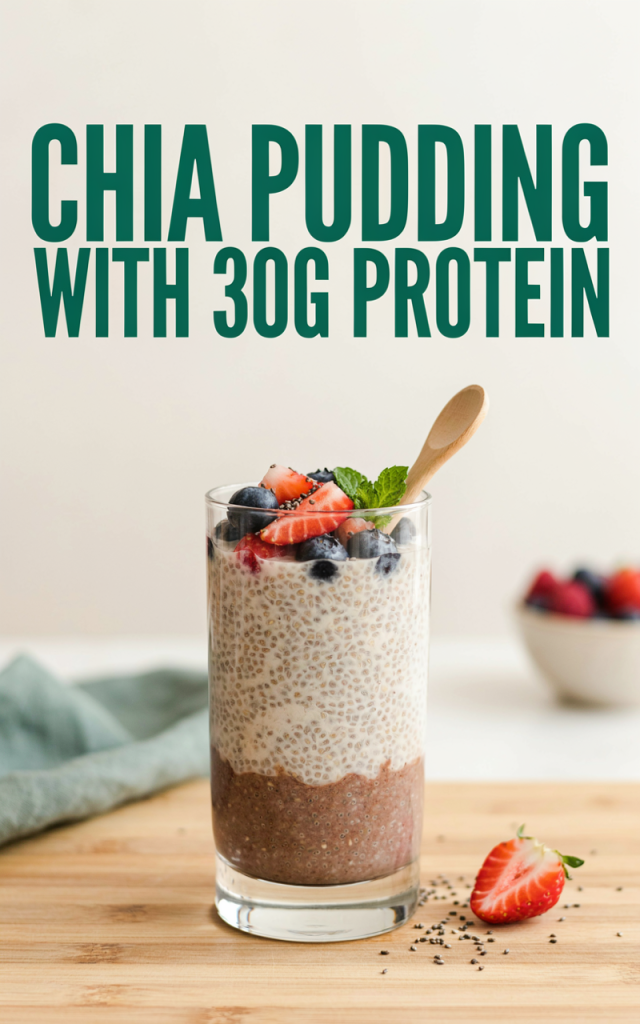
6. High-Protein Berry Chia Parfait (approx. 24 g protein)
Layered parfait that combines cottage cheese, Greek yogurt, and chia for texture and protein. Great for breakfast on the go.
Ingredients
– 2 tablespoons chia seeds (approx. 4 g protein)
– 1/2 cup plain Greek yogurt (approx. 11 g protein)
– 1/4 cup low-fat cottage cheese (approx. 7 g protein)
– 1/4 cup milk (approx. 2 g protein)
– 1/2 cup mixed berries (strawberries, blueberries)
– 1 teaspoon honey or sweetener (optional)
– 1 tablespoon sliced almonds for crunch
Instructions
1. In a small bowl, stir together Greek yogurt, cottage cheese, and milk until combined and slightly loose.
2. Mix in chia seeds and sweetener, stirring to distribute.
3. Allow mixture to rest 10–15 minutes, then stir again.
4. In a serving glass, layer half the yogurt-cottage-cheese mix, then half the berries; repeat layers.
5. Top with almonds and refrigerate if not eating immediately.
Estimated protein: ~24 g per serving.
Tips for custom swaps and flavor variations
- Want more protein? Add another 1–2 tablespoons of protein powder or swap milk for a higher-protein milk (soy or pea milk).
- Vegan adjustments: use plant-based yogurt (check protein), soy milk or pea milk, and plant protein powder.
- Lower calories: use nonfat Greek yogurt and skim milk, reduce sweeteners, and limit nut toppings.
- Flavor ideas: lemon and blueberry, cinnamon apple, vanilla almond, mocha (add instant espresso powder).
- Texture control: more milk = looser pudding; more chia = thicker gel. Blend the yogurt or cottage cheese for a silkier texture.
Quick topping ideas (not full recipes)
– Fresh berries, sliced banana, or stewed fruit
– Chopped nuts or seeds (almonds, walnuts, pumpkin seeds)
– Unsweetened coconut flakes, cacao nibs
– Drizzle of nut butter or tahini
– A spoonful of preserves or compote
When to eat high-protein chia pudding (timing & portioning)
- Breakfast: Pair with a piece of fruit or whole grain toast if you need extra carbohydrates for energy.
- Post-workout: 20–30 g of protein is often recommended post-resistance training to support recovery — these puddings fit nicely.
- Snack: A pudding with ~20 g protein can stave off hunger between meals; keep portion controlled if you’re managing calories.
- Before bed: A version with casein-rich dairy (like cottage cheese or Greek yogurt) may provide slow-digesting protein overnight.
Storage, texture, and troubleshooting
- Refrigeration: Store chia puddings in an airtight container for up to 4 days. Puddings with dairy or tofu should be eaten within 3–4 days.
- Freezing: Not recommended — chia gel becomes watery after thawing.
- Too thick: Stir in a splash of milk to loosen immediately before serving.
- Too thin: Add 1 teaspoon chia and refrigerate another hour; chia continues to thicken over time.
- Lumps: Whisk vigorously when first mixing, or blend with an immersion blender for a smooth texture.
How to calculate your exact protein
Always check product labels. To calculate:
1. Note grams of protein per serving for each ingredient (from the nutrition panel).
2. Multiply by amounts used (e.g., if your protein powder has 20 g protein per scoop and you use 1 scoop = 20 g).
3. Sum values to get total protein per recipe, then divide by number of servings.
Example: Greek yogurt chia pudding in this guide:
– Chia (3 tbsp): 6 g
– Greek yogurt (3/4 cup): 16 g
– 1/2 cup milk: 4 g
Total ≈ 26 g protein per serving.
Conclusion
Chia pudding doesn’t have to be a low-protein treat. With a few smart swaps — Greek yogurt, cottage cheese, protein powder, tofu, or high-protein milks — you can make a creamy, satisfying chia pudding that delivers 20–30 grams of protein per serving. These recipes are flexible, easy to scale, and suitable for a range of diets (including vegan options). Start with one of the recipes above, then adapt the protein source, flavorings, and toppings to match your preferences and nutrition goals. Whether you need a convenient post-workout recovery snack or a filling, portable breakfast, a high-protein chia pudding can be a delicious part of your routine. Enjoy experimenting, and remember: small adjustments to the protein source will let you dial each serving exactly where you want it.
If you want, I can create printable recipe cards for any of the recipes above or help you build a 7-day breakfast plan around these puddings. Which recipe would you like to try first?

