
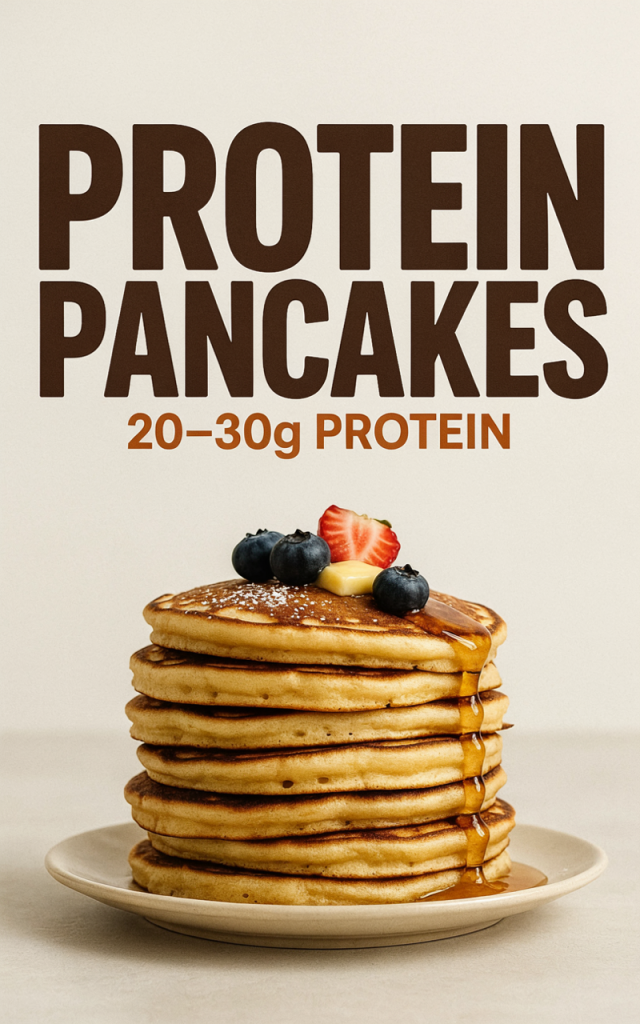
Protein Pancakes With 20–30 Grams of Protein
Protein pancakes are one of the easiest and most satisfying ways to start the day, fuel a workout, or enjoy a nourishing snack. In this guide you’ll find clear explanations, practical tips, and five tested recipes that deliver approximately 20–30 grams of protein per serving — plus three complete meal ideas built around those pancakes. Each recipe includes ingredient lists and step-by-step instructions so you can cook with confidence.
Whether you want a quick whey-based stack, a dairy-forward option, or vegan alternatives that still pack a protein punch, this post covers it. Read on for substitutions, troubleshooting, topping ideas, and meal pairing suggestions to make high-protein pancakes a regular, delicious part of your routine.
Why choose protein pancakes?
Protein pancakes are popular for good reasons:
– They increase satiety and keep blood sugar steadier than refined-carb pancakes.
– Protein supports muscle repair and growth, which makes these pancakes ideal pre- or post-workout.
– They’re versatile: you can make them dairy-free, gluten-free, or egg-free with simple swaps.
– They’re fast. Most recipes take under 15 minutes from bowl to plate.
This guide focuses on recipes that yield about 20–30 grams of protein per serving — a practical target for breakfast or a post-exercise meal.
How to get 20–30 grams of protein per serving
There are a few strategies to ensure a pancake serving hits the 20–30 g protein window:
– Combine a protein powder (whey, casein, pea, or soy) with eggs or dairy for concentrated protein.
– Use naturally protein-rich ingredients like Greek yogurt, cottage cheese, chickpea flour, tofu, or silken tofu.
– Measure portions: recipes here are scaled to deliver ~20–30 g protein per serving as written. Small adjustments (more/less protein powder or an extra egg) will alter totals.
– If you need to increase protein slightly, add a dollop of Greek yogurt or a tablespoon of nut butter on the side.
Note: protein values below are approximate and will vary based on brand and portion sizes. I’ve used conservative, commonly accepted protein values so the recipes remain in the 20–30 g range.
What to keep on hand (pantry checklist)
- Protein powder (whey or plant-based)
- Rolled oats or oat flour
- Eggs
- Greek yogurt or cottage cheese
- Chickpea (gram) flour
- Silken tofu or firm tofu
- Baking powder, salt, cinnamon
- Neutral oil or nonstick spray
Recipes — each yields ~20–30 grams protein per serving
Below are five complete recipes. Each recipe includes a bulleted ingredient list and numbered instructions. Protein estimates are included after each recipe title.
1) Simple Whey Banana Pancakes
Approx. protein per serving: ~26 grams
Ingredients
– 1 scoop whey protein powder (approx. 20 g protein per scoop — check your label)
– 1 large egg (about 6 g protein)
– 1 small ripe banana, mashed
– 2 tablespoons rolled oats or oat flour
– 2 tablespoons milk (dairy or plant-based)
– 1/4 teaspoon baking powder
– Pinch of salt
– 1/4 teaspoon cinnamon (optional)
– Cooking spray or 1 teaspoon oil for the pan
Instructions
1. In a bowl, mash the banana until smooth. Add the egg, milk, and whisk to combine.
2. Stir in the whey protein, oats/oat flour, baking powder, salt, and cinnamon until you have a thick batter. Let sit 1–2 minutes to thicken.
3. Heat a nonstick skillet over medium-low heat and coat lightly with oil or spray.
4. Pour ~1/4 cup portions of batter into the skillet. Cook 2–3 minutes until edges set and small bubbles form.
5. Flip and cook another 1–2 minutes until golden and cooked through.
6. Serve warm with fresh fruit or a small drizzle of maple syrup.
Tips: Use a low heat to prevent browning before pancakes cook through. If batter is too thick, add a teaspoon of milk at a time.
2) Greek Yogurt Protein Pancakes
Approx. protein per serving: ~28 grams
Ingredients
– 1/2 cup plain Greek yogurt (approx. 11 g protein)
– 2 large eggs (approx. 12 g protein)
– 1/2 cup oat flour (or blended rolled oats) (approx. 5–6 g protein)
– 1 teaspoon baking powder
– 1 teaspoon vanilla extract
– Pinch of salt
– 1–2 tablespoons milk if needed to adjust consistency
– Cooking spray or 1 teaspoon oil
Instructions
1. Whisk together the Greek yogurt and eggs until smooth.
2. Stir in oat flour, baking powder, vanilla, and salt. If the batter is very thick, add a tablespoon of milk to loosen it.
3. Heat a nonstick skillet over medium heat and lightly grease.
4. Drop 1/4 cup batter per pancake. Cook 2–3 minutes until bubbles appear on the surface.
5. Flip and cook 1–2 more minutes until golden and set.
6. Top with extra Greek yogurt, berries, or a sprinkle of nuts.
Tips: Greek yogurt yields a tender, cake-like pancake. Use full-fat or lower-fat yogurt depending on preference — protein remains similar.
3) Cottage Cheese & Oat Pancakes
Approx. protein per serving: ~26 grams
Ingredients
– 1/2 cup low-fat cottage cheese (about 14 g protein)
– 1/2 cup rolled oats (blended to a flour or left slightly textured — approx. 6 g protein)
– 1 large egg (approx. 6 g protein)
– 1/2 teaspoon baking powder
– 1/4 teaspoon salt
– 1/2 teaspoon cinnamon or vanilla (optional)
– Cooking spray or 1 teaspoon oil
Instructions
1. In a blender, combine cottage cheese, oats, egg, baking powder, and flavoring. Blend until mostly smooth; some texture is fine.
2. Allow batter to rest 2–3 minutes to hydrate the oats.
3. Heat a skillet over medium heat and grease lightly.
4. Spoon 1/4 cup portions of batter into the pan. Cook until edges set and bubbles form, about 2–3 minutes.
5. Flip and cook another 1–2 minutes.
6. Serve with fresh berries or a scattering of nuts for extra crunch.
Notes: Cottage cheese gives a fluffy crust and extra creaminess. If you prefer fluffier pancakes, separate the egg, whip the white to soft peaks, and fold in.
4) Chickpea Flour (Vegan) Protein Pancakes
Approx. protein per serving: ~22–25 grams (vegan)
Ingredients
– 3/4 cup chickpea (gram) flour (approx. 18–21 g protein)
– 1/2 to 3/4 cup unsweetened soy milk (soy milk provides extra protein — approx. 3–5 g protein per 1/2–3/4 cup)
– 1 tablespoon ground flaxseed + 3 tablespoons water (flax “egg”)
– 1/2 teaspoon baking powder
– 1/4 teaspoon salt
– 1/2 teaspoon cumin and chopped parsley for a savory version (optional) OR 1/2 teaspoon cinnamon & 1 tablespoon maple syrup for sweet
– 1 teaspoon oil for the pan
Instructions
1. Mix flaxseed and water; let sit 3–5 minutes until gelatinous.
2. In a bowl, whisk chickpea flour, baking powder, salt, and optional spices.
3. Add the flax mixture and soy milk to the dry ingredients and whisk until smooth. Adjust thickness with more soy milk if needed.
4. Heat a skillet with oil over medium heat.
5. Spoon 1/4 cup batter for each pancake; cook 2–3 minutes until golden and firm.
6. Flip and cook another 1–2 minutes. Serve warm with savory toppings (yogurt, greens) or sweet ones (fruit and nut butter).
Notes: Chickpea flour is naturally high in protein and fiber; soy milk boosts the protein while keeping it vegan.
5) Tofu + Pea Protein Pancakes (High-Protein Vegan)
Approx. protein per serving: ~27–30 grams
Ingredients
– 1 scoop pea protein powder (approx. 20 g protein — check your brand)
– 1/2 cup silken tofu (approx. 8 g protein)
– 3 tablespoons oat flour or 1/4 cup rolled oats (about 3 g protein)
– 1/2 teaspoon baking powder
– 1/2 teaspoon vanilla and pinch of salt
– 1–2 tablespoons plant milk to adjust consistency
– Cooking spray or oil
Instructions
1. In a blender, combine pea protein, silken tofu, oat flour, baking powder, vanilla, and salt. Blend until smooth. Add plant milk to reach pancake batter consistency if necessary.
2. Let batter rest 1–2 minutes to thicken slightly.
3. Heat a nonstick pan over medium heat and lightly grease.
4. Pour 1/4 cup portions and cook until bubbles appear and edges set (2–3 minutes).
5. Flip and cook 1–2 minutes more until firm and lightly browned.
6. Serve with fresh fruit, a smear of nut butter, or sugar-free syrup.
Notes: Pea protein powder can be denser than whey, so blending with tofu gives a smooth texture.
Meal idea combos (each includes ingredients and instructions)
These combination ideas turn the pancakes above into complete, balanced meals.
Meal Idea A — Post-Workout Stack (Built on the Whey Banana Pancakes)
Approx. protein per meal: ~35 g (the pancake portion ~26 g; added side adds extra protein if desired)
Ingredients
– 1 serving Simple Whey Banana Pancakes (recipe above)
– 1/2 cup low-fat cottage cheese or 1/2 cup Greek yogurt (optional add-on for extra protein, ~11–14 g)
– Sliced banana and cinnamon for topping
Instructions
1. Prepare Simple Whey Banana Pancakes as directed.
2. Plate pancakes and spoon cottage cheese or Greek yogurt on the side.
3. Top pancakes with sliced banana and a sprinkle of cinnamon.
4. Eat within 30–60 minutes post workout for optimal muscle recovery.
Tip: If you need the meal to stay within 20–30 g, skip the extra cottage cheese; the pancakes alone will be ~26 g.
Meal Idea B — Savory Power Plate (Built on Chickpea Flour Pancakes)
Approx. protein per meal: ~30 g
Ingredients
– 1 serving Chickpea Flour Protein Pancakes
– 1/2 cup cooked edamame or 1/2 cup firm tofu cubes (approx. 8–11 g protein)
– 1 cup mixed greens with lemon and 1 teaspoon olive oil
Instructions
1. Make chickpea flour pancakes as directed, using savory seasoning (cumin, parsley).
2. Sauté edamame or tofu cubes in a teaspoon of olive oil until warmed and slightly crispy.
3. Plate pancakes, top with edamame/tofu and serve alongside mixed greens dressed simply with lemon and oil.
4. This savory plate is great for lunch or a protein-forward brunch.
Meal Idea C — Sweet Protein Brunch (Built on Greek Yogurt Pancakes)
Approx. protein per meal: ~34 g (pancakes ~28 g + 1 tablespoon peanut butter ~6–7 g)
Ingredients
– 1 serving Greek Yogurt Protein Pancakes
– 1 tablespoon natural peanut butter (approx. 6–7 g protein)
– 1/3 cup mixed berries
Instructions
1. Make Greek Yogurt Protein Pancakes.
2. Top stack with a tablespoon of peanut butter and scatter berries.
3. If desired, add a small drizzle of maple syrup. Enjoy warm.
Note: To stay within the 20–30 g window, omit or halve the peanut butter.
Toppings and add-ons (quick ideas)
- Fresh berries (low-calorie vitamin boost)
- A tablespoon of peanut or almond butter (+6–8 g protein)
- 2 tablespoons Greek yogurt (+6–8 g protein)
- 2 tablespoons cottage cheese (+6–7 g protein)
- Sugar-free syrup, cinnamon, or a sprinkle of chopped nuts
Substitutions and swaps
- Gluten-free: use certified gluten-free oats or oat flour; chickpea and pea-protein options are naturally gluten-free.
- Vegan: use the chickpea or tofu + pea protein recipes.
- Egg-free (non-vegan): use flax “egg” (1 tbsp ground flaxseed + 3 tbsp water) or aquafaba for binding.
- To increase protein: add a side of Greek yogurt, cottage cheese, or an extra heaping tablespoon of protein powder to the batter (note: more protein powder can change texture — add a small amount at a time).
Troubleshooting common pancake problems
- Batter too thin: add a tablespoon of oat flour or let rest to thicken.
- Batter too thick: add milk 1 teaspoon at a time until you reach desired consistency.
- Pancakes burn outside, raw inside: reduce heat, cook longer at medium-low.
- Pancakes stick to pan: use a good nonstick pan or a touch more oil and preheat adequately.
- Gummy texture when using protein powder: reduce protein powder slightly and add an extra egg white or a teaspoon of baking powder to lighten.
Storage and reheating
- Refrigerate cooked pancakes in an airtight container for up to 3 days.
- Freeze individual pancakes separated by parchment paper for up to 2 months.
- Reheat in a toaster or oven (350°F/175°C for 6–8 minutes) or briefly in a skillet. Microwaving works but can make them softer.
Quick FAQ
- Can I make batter ahead? Yes — most batters hold for up to 24 hours in the fridge (stir before cooking). Chickpea batter is best used within a few hours.
- Which protein powder is best? Whey for texture and flavor; pea or soy for vegan options. Choose an unflavored or mildly flavored powder for versatile pancakes.
- How many pancakes equal a serving? The recipes are designed for about 3–4 small pancakes per serving (depending on portion size). Each recipe lists ingredients for one serving; scale up as needed.
Final tips for success
- Measure protein powder and dairy precisely if you’re tracking macros.
- Use low to medium heat for an even brown and fully cooked center.
- Experiment with spices (cardamom, cinnamon, or cacao) and mix-ins (blueberries, chopped nuts) to keep your mornings interesting.
Conclusion
Protein pancakes are a practical, flexible, and delicious way to get 20–30 grams of protein in a single serving. From protein-powder-forward mixes to dairy-rich stacks and vegan chickpea or tofu options, there’s a recipe to suit nearly every taste and dietary need. Use the five tested recipes and three meal ideas above to build breakfasts, post-workout meals, or quick lunches that support satiety, recovery, and sustained energy. Start simple — choose a recipe that matches your pantry, follow the steps, and tweak toppings or portion sizes to meet your personal protein goals. Happy cooking, and enjoy a protein-packed stack tomorrow morning!

