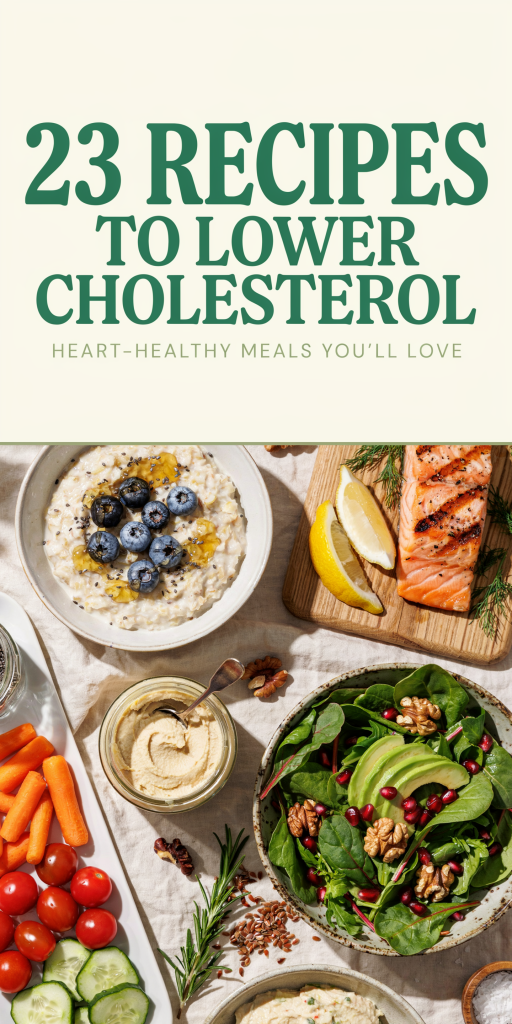
23 Recipes To Lower Cholesterol
Cholesterol management through diet is one of the most well-researched areas in nutrition, and the evidence points clearly at a handful of dietary patterns and specific foods that move the numbers in the right direction. Soluble fiber binds to LDL cholesterol in the digestive tract and carries it out of the body before it can be absorbed. Omega-3 fatty acids lower triglycerides and raise HDL. Plant sterols block cholesterol absorption at the intestinal level. Unsaturated fats from olive oil, avocados, and nuts replace saturated fats and shift the LDL-to-HDL ratio favorably.
None of this requires tasteless food. The Mediterranean diet — consistently ranked the most evidence-based dietary pattern for cardiovascular health — is built on olive oil, fish, legumes, whole grains, vegetables, and fruit. The food is excellent. The health benefits are extensive.
Every recipe in this list is built around ingredients with demonstrated cholesterol-lowering effects. Each one also notes which specific mechanism it supports so you understand why it works, not just that it does.
Key Cholesterol-Lowering Ingredients and How They Work
Soluble fiber: Found in oats, barley, beans, lentils, apples, pears, and psyllium. Forms a gel in the digestive tract that binds to bile acids (made from cholesterol) and removes them. The liver then pulls LDL cholesterol from the blood to make more bile acids — lowering circulating LDL. The FDA recognizes 3g of beta-glucan (from oats or barley) per day as sufficient for a heart-health claim.
Omega-3 fatty acids: Found in fatty fish (salmon, sardines, mackerel, trout, herring), walnuts, flaxseed, and chia seeds. EPA and DHA lower triglycerides significantly — sometimes by 20 to 30% with consistent intake — and modestly raise HDL.
Unsaturated fats: Found in olive oil, avocado, almonds, walnuts, and most nuts and seeds. Replace saturated fats in the diet to lower LDL without reducing HDL.
Plant sterols and stanols: Found naturally in nuts, seeds, and vegetable oils, and added to some fortified foods. Block cholesterol absorption in the intestine. 2g per day from food or supplements can lower LDL by 8 to 10%.
Legumes: Beans, lentils, and chickpeas provide soluble fiber, plant sterols, and plant protein — replacing animal protein in a meal reduces saturated fat intake and provides fiber simultaneously.
Soy protein: Clinical evidence supports that replacing animal protein with soy protein modestly lowers LDL. Found in edamame, tofu, tempeh, and soy milk.
Garlic and allicins: Consistent garlic consumption has shown modest but measurable LDL-lowering effects in multiple trials.
Berries and polyphenols: Blueberries, strawberries, and other polyphenol-rich foods reduce LDL oxidation — it’s oxidized LDL, not just total LDL, that drives atherosclerotic plaque formation.
What to reduce: Saturated fat (red meat, full-fat dairy, coconut oil, palm oil) raises LDL. Trans fats (partially hydrogenated oils, found in some processed and fried foods) raise LDL and lower HDL simultaneously — the worst possible combination. Dietary cholesterol has less impact than once thought, but processed foods high in saturated fat matter significantly.
Breakfasts
1. Steel-Cut Oats with Berries, Walnuts, and Flaxseed
Steel-cut oats have a lower glycemic index than rolled or instant oats and provide more beta-glucan per serving. Three grams of beta-glucan daily — about one and a half cups of cooked oatmeal — is the clinically supported amount for LDL reduction. Add walnuts for omega-3s and berries for polyphenols that protect against LDL oxidation.
Servings: 2 | Time: 30 minutes (or overnight)
How It Lowers Cholesterol
Beta-glucan soluble fiber from oats binds bile acids and removes LDL from circulation. Walnuts provide ALA omega-3s and plant sterols. Berries reduce LDL oxidation via polyphenols.
Ingredients
- 1 cup steel-cut oats
- 3 cups water
- 1 cup unsweetened oat milk or almond milk
- 1/4 tsp salt
- 1/2 tsp cinnamon
- 1 tbsp ground flaxseed
- 1 tbsp chia seeds
Toppings:
- 1/2 cup fresh blueberries
- 1/2 cup fresh strawberries, sliced
- 1/4 cup walnuts, roughly chopped
- 1 tbsp almond butter
- 1 tsp raw honey or maple syrup
- Extra cinnamon
Instructions
- Bring water and milk to a boil in a medium saucepan. Add salt and stir in oats.
- Reduce heat to low and simmer, stirring occasionally, for 20 to 25 minutes until oats are creamy and tender but still have a slight chew.
- Remove from heat. Stir in cinnamon, flaxseed, and chia seeds.
- Divide into two bowls. Top with blueberries, strawberries, walnuts, and a dollop of almond butter.
- Drizzle with honey or maple syrup and dust with extra cinnamon.
Overnight method: Combine oats, cold water, and milk in a pot. Let soak overnight. In the morning, bring to a simmer and cook for 10 minutes — the soaking dramatically reduces cook time and may increase beta-glucan availability.
2. Avocado Toast with Smoked Salmon on Whole Grain Bread
Whole grain bread provides soluble fiber, avocado provides monounsaturated fat and plant sterols, and smoked salmon provides EPA and DHA omega-3s. One of the best cholesterol-management breakfasts available.
Servings: 2 | Time: 10 minutes
How It Lowers Cholesterol
Monounsaturated fat from avocado replaces saturated fat and improves LDL-to-HDL ratio. Plant sterols in avocado block intestinal cholesterol absorption. Omega-3s from salmon lower triglycerides.
Ingredients
- 4 slices whole grain or rye bread, toasted
- 1 large ripe avocado
- 3 oz smoked salmon
- 1 lemon, juiced and zested
- 1/4 tsp red pepper flakes
- 2 tbsp fresh chives or dill, chopped
- Flaky sea salt and cracked black pepper
- Optional: 2 poached or soft-boiled eggs
Instructions
- Mash avocado with a fork, leaving some texture. Season with lemon juice, salt, and pepper.
- Spread mashed avocado generously on toasted bread.
- Drape smoked salmon over the avocado.
- Scatter chives or dill, red pepper flakes, lemon zest, and flaky sea salt over the top.
- Add poached or soft-boiled egg if using.
3. Chia Seed Pudding with Mango and Almonds
Chia seeds are one of the densest plant sources of omega-3 ALA and soluble fiber. Soaked overnight, they form a thick gel that provides sustained energy and actively lowers LDL. Almonds add plant sterols and monounsaturated fat.
Servings: 2 | Time: 5 minutes + overnight chilling
How It Lowers Cholesterol
Chia seeds provide soluble fiber and ALA omega-3s. Almonds contribute plant sterols and monounsaturated fat. Oat milk adds beta-glucan. The combined soluble fiber content is substantial.
Ingredients
- 1/2 cup chia seeds
- 2 cups unsweetened oat milk or almond milk
- 1 tsp vanilla extract
- 1 tsp maple syrup
- Pinch of cinnamon
Toppings:
- 1 ripe mango, diced (or 1 cup frozen mango, thawed)
- 1/4 cup almonds, roughly chopped or slivered
- 1 tbsp ground flaxseed
- Fresh mint
Instructions
- Whisk chia seeds, milk, vanilla, maple syrup, and cinnamon together in a bowl or jar.
- Let sit for 5 minutes, then whisk again to prevent clumping.
- Cover and refrigerate overnight (or at least 4 hours).
- In the morning, stir and add a splash of milk if too thick.
- Divide into two bowls. Top with diced mango, almonds, flaxseed, and fresh mint.
4. Barley Porridge with Apple and Cinnamon
Barley contains more beta-glucan per serving than oats and is one of the most potent single-food LDL-lowering ingredients available. Paired with apple — which provides pectin, another soluble fiber that lowers cholesterol — this is a clinically meaningful cholesterol-management breakfast.
Servings: 4 | Time: 35 minutes
How It Lowers Cholesterol
Pearl barley is the highest natural food source of beta-glucan. Apple pectin is a soluble fiber with independent LDL-lowering effects. Cinnamon may modestly improve lipid profiles with consistent use.
Ingredients
- 1 cup pearl barley
- 3.5 cups water or unsweetened oat milk
- 2 apples, one diced and one grated (leaving the skin on for extra fiber)
- 1 tsp cinnamon
- 1/4 tsp nutmeg
- 1/4 tsp cardamom
- 1 tbsp maple syrup
- 1 tbsp ground flaxseed
- Pinch of salt
Toppings:
- Sliced almonds
- Fresh apple slices
- A drizzle of honey
- Extra cinnamon
Instructions
- Bring water or oat milk to a boil in a medium saucepan. Add barley and salt.
- Reduce heat to low, cover, and simmer for 25 to 30 minutes until barley is tender and most liquid is absorbed.
- Stir in grated apple, diced apple, cinnamon, nutmeg, cardamom, and maple syrup. Cook for 5 more minutes, stirring, until apple softens and porridge thickens.
- Stir in flaxseed.
- Serve in bowls with sliced almonds, fresh apple, honey, and extra cinnamon.
Soups and Stews
5. White Bean and Kale Soup
White beans are among the highest-fiber legumes available, providing both soluble and insoluble fiber. Kale provides vitamin C, potassium, and fiber. The olive oil base provides monounsaturated fat. This soup is deeply filling and actively heart-protective.
Servings: 6 | Time: 40 minutes
How It Lowers Cholesterol
Cannellini beans provide soluble fiber and plant protein to replace animal protein. Olive oil provides monounsaturated fat. Garlic has demonstrated modest LDL-lowering effects.
Ingredients
- 3 cans (15 oz each) cannellini beans, drained and rinsed (one can mashed)
- 1 large bunch lacinato (Tuscan) kale, stems removed and roughly chopped
- 1 large onion, diced
- 4 carrots, diced
- 3 celery stalks, diced
- 6 garlic cloves, minced
- 1 can (14.5 oz) diced tomatoes
- 6 cups low-sodium vegetable or chicken broth
- 3 tbsp extra virgin olive oil
- 1 tsp dried rosemary
- 1 tsp dried thyme
- 1/2 tsp red pepper flakes
- 1 Parmesan rind (optional — adds depth)
- Salt and pepper
- Good olive oil and lemon juice for serving
Instructions
- Heat olive oil in a large pot over medium heat. Cook onion, carrots, and celery for 8 minutes until softened.
- Add garlic, rosemary, thyme, and red pepper flakes. Cook for 2 minutes.
- Add diced tomatoes, broth, whole cannellini beans, mashed beans, and Parmesan rind.
- Bring to a boil, reduce heat, and simmer for 15 minutes.
- Add kale and stir until wilted, about 4 minutes.
- Remove Parmesan rind. Taste and adjust seasoning generously — this soup needs salt.
- Serve with a drizzle of good olive oil and a squeeze of lemon juice.
6. Lentil Soup with Lemon and Cumin
Lentils are one of the most effective single foods for lowering LDL cholesterol. A 2014 meta-analysis in the Canadian Medical Association Journal found that eating one serving of legumes per day reduced LDL by about 5%. Lentils are the most convenient legume — no soaking, 25 minutes to cook.
Servings: 6 | Time: 45 minutes
How It Lowers Cholesterol
Green and brown lentils are high in soluble fiber and plant protein. Replacing animal protein with plant protein consistently improves lipid profiles. Cumin and turmeric have modest anti-inflammatory effects that protect against LDL oxidation.
Ingredients
- 1.5 cups green or brown lentils, rinsed
- 1 large onion, diced
- 3 carrots, diced
- 3 celery stalks, diced
- 5 garlic cloves, minced
- 1 can (14.5 oz) diced tomatoes
- 6 cups low-sodium vegetable broth
- 2 tsp cumin
- 1 tsp turmeric
- 1 tsp smoked paprika
- 1/2 tsp coriander
- 1/4 tsp cayenne
- 3 tbsp olive oil
- Juice of 1 large lemon
- 2 cups fresh spinach
- Salt and pepper
- Fresh parsley for serving
Instructions
- Heat olive oil in a large pot over medium heat. Cook onion, carrots, and celery for 8 minutes.
- Add garlic and all dry spices. Cook for 2 minutes until very fragrant.
- Add diced tomatoes and stir for 2 minutes.
- Add lentils and broth. Bring to a boil, reduce heat, partially cover, and simmer for 25 to 30 minutes until lentils are completely tender.
- Use an immersion blender to partially blend — leave plenty of texture.
- Stir in spinach until wilted. Add lemon juice.
- Taste and season generously. Serve with fresh parsley and a drizzle of olive oil.
7. Black Bean Soup with Cumin and Lime
Black beans have among the highest soluble fiber content of any common legume. One cup of black beans provides approximately 5 grams of soluble fiber — nearly twice the daily minimum recommended for cholesterol reduction.
Servings: 6 | Time: 40 minutes
How It Lowers Cholesterol
Black beans are exceptionally high in soluble fiber and plant sterols. Lime provides vitamin C, which protects against LDL oxidation. Olive oil provides monounsaturated fat.
Ingredients
- 3 cans (15 oz each) black beans, drained and rinsed (one can mashed)
- 1 large onion, diced
- 4 garlic cloves, minced
- 1 green bell pepper, diced
- 1 jalapeño, seeded and minced
- 1 can (14.5 oz) diced tomatoes
- 4 cups low-sodium vegetable or chicken broth
- 2 tsp cumin
- 1 tsp smoked paprika
- 1/2 tsp oregano
- 1/2 tsp cayenne
- 2 tbsp olive oil
- Juice of 2 limes
- Salt and pepper
For serving:
- Plain Greek yogurt or sour cream (instead of sour cream — lower saturated fat)
- Diced avocado
- Fresh cilantro
- Lime wedges
- Thinly sliced green onions
Instructions
- Heat olive oil in a large pot over medium heat. Cook onion, bell pepper, and jalapeño for 7 minutes until softened. Add garlic, cumin, paprika, oregano, and cayenne. Cook for 2 minutes.
- Add diced tomatoes, broth, whole black beans, and mashed beans. Stir to combine.
- Bring to a boil, reduce to a simmer, and cook for 20 minutes, stirring occasionally.
- Use an immersion blender to partially blend to create a creamy, chunky texture.
- Stir in lime juice. Taste and adjust seasoning.
- Serve topped with Greek yogurt, diced avocado, cilantro, and extra lime.
8. Split Pea Soup
Split peas are extremely high in soluble fiber and have been used as a cholesterol-lowering food in multiple clinical trials. A thick bowl of split pea soup provides more than the daily recommended beta-glucan equivalent for LDL reduction.
Servings: 6 | Time: 1.5 hours
How It Lowers Cholesterol
Split peas are one of the richest sources of soluble fiber per serving. The high fiber content binds bile acids in the intestine and significantly reduces LDL recirculation. Low in saturated fat.
Ingredients
- 1 lb dried green split peas, rinsed
- 1 large onion, diced
- 3 carrots, diced
- 3 celery stalks, diced
- 5 garlic cloves, minced
- 8 cups low-sodium vegetable broth
- 1 tsp dried thyme
- 1 tsp smoked paprika
- 1 bay leaf
- 2 tbsp olive oil
- 2 tbsp fresh lemon juice
- Salt and pepper
- Fresh parsley and a drizzle of olive oil for serving
Instructions
- Heat olive oil in a large pot over medium heat. Cook onion, carrots, and celery for 8 minutes. Add garlic, thyme, and paprika. Cook for 2 minutes.
- Add split peas, broth, and bay leaf. Bring to a boil.
- Reduce heat to low, partially cover, and simmer for 1 to 1.25 hours, stirring occasionally, until split peas have completely broken down and soup is thick.
- Remove bay leaf. Use an immersion blender to blend to desired consistency — fully smooth or partially chunky.
- Add lemon juice. Taste and season generously.
- Serve with fresh parsley and a drizzle of extra virgin olive oil.
Main Dishes
9. Baked Salmon with Olive Oil, Lemon, and Capers
Salmon is the most well-studied food for lowering triglycerides and raising HDL. Two servings per week of fatty fish is the American Heart Association’s recommendation for cardiovascular health. This preparation keeps saturated fat minimal while maximizing the omega-3 delivery.
Servings: 4 | Time: 20 minutes
How It Lowers Cholesterol
Wild salmon provides EPA and DHA omega-3s that lower triglycerides by 20 to 30% with consistent intake and modestly raise HDL. Olive oil provides monounsaturated fat. Capers contain quercetin, a flavonoid that may reduce LDL oxidation.
Ingredients
- 4 wild salmon fillets (6 oz each)
- 3 tbsp extra virgin olive oil
- 3 tbsp fresh lemon juice
- 1 tsp lemon zest
- 4 garlic cloves, minced
- 2 tbsp capers, drained
- 2 tbsp fresh dill or parsley, chopped
- Salt and cracked black pepper
- Lemon slices for serving
- Steamed broccoli, asparagus, or roasted vegetables for serving
Instructions
- Preheat oven to 400°F. Line a baking sheet with parchment.
- Place salmon fillets on the sheet. Season with salt and pepper.
- Whisk olive oil, lemon juice, lemon zest, and garlic. Spoon over each fillet.
- Scatter capers over the salmon.
- Bake for 14 to 16 minutes until salmon is opaque and flakes easily. Do not overbake.
- Garnish with fresh herbs and serve with lemon slices alongside your choice of vegetables.
10. Mediterranean Chickpea Stew
A fully plant-based main course built almost entirely from cholesterol-lowering ingredients: chickpeas for fiber and plant protein, olive oil for monounsaturated fat, tomatoes for lycopene that reduces LDL oxidation, and spinach for folate and additional fiber.
Servings: 4 | Time: 30 minutes
How It Lowers Cholesterol
Chickpeas provide soluble fiber and plant protein. Tomatoes provide lycopene, which reduces LDL oxidation. Olive oil replaces saturated fats. Garlic has modest LDL-lowering effects.
Ingredients
- 2 cans (15 oz each) chickpeas, drained and rinsed
- 1 can (28 oz) crushed San Marzano tomatoes
- 1 large onion, diced
- 5 garlic cloves, minced
- 1 red bell pepper, diced
- 3 cups fresh spinach
- 3 tbsp extra virgin olive oil
- 1 tsp cumin
- 1 tsp smoked paprika
- 1/2 tsp coriander
- 1/2 tsp turmeric
- 1/4 tsp cayenne
- 1 cup low-sodium vegetable broth
- Juice of 1 lemon
- Salt and pepper
- Fresh parsley and crusty whole grain bread for serving
Instructions
- Heat olive oil in a large skillet or Dutch oven over medium heat. Cook onion and bell pepper for 6 minutes until softened.
- Add garlic and all dry spices. Cook for 2 minutes until very fragrant.
- Add crushed tomatoes and broth. Stir and bring to a simmer.
- Add chickpeas. Simmer for 15 minutes until sauce thickens and chickpeas absorb the flavors.
- Stir in spinach until wilted. Add lemon juice.
- Taste and adjust seasoning. Serve with fresh parsley and whole grain bread for dipping.
11. Herb-Crusted Baked Sardines
Sardines are the most omega-3-dense fish per dollar — higher in EPA and DHA than salmon by weight, and significantly cheaper. Fresh sardines baked with herbs and lemon are completely different from canned sardines and are a delicacy in Mediterranean cuisines.
Servings: 4 | Time: 20 minutes
How It Lowers Cholesterol
Sardines provide the highest concentration of EPA and DHA omega-3s of any commonly eaten fish. They also provide vitamin D and B12. No saturated fat. Full omega-3 benefit with every serving.
Ingredients
- 2 lbs fresh whole sardines, cleaned (or 4 cans sardines in olive oil for a simpler version)
- 4 tbsp extra virgin olive oil
- 4 garlic cloves, minced
- 2 tbsp fresh parsley, finely chopped
- 1 tbsp fresh oregano or thyme, chopped
- 1 lemon, zested and sliced
- 1/2 tsp red pepper flakes
- Salt and cracked black pepper
- Lemon wedges for serving
- Arugula or simple green salad alongside
Instructions
For fresh sardines:
- Preheat oven to 425°F. Line a baking dish with parchment.
- Mix olive oil, garlic, parsley, oregano, lemon zest, and red pepper flakes.
- Score each sardine 2 to 3 times on each side. Season inside and out with salt and pepper.
- Arrange sardines in the dish. Spoon herb-olive oil mixture over and into each fish. Lay lemon slices between them.
- Roast for 12 to 15 minutes until fish are cooked through and slightly charred.
- Serve with lemon wedges and arugula.
For canned sardines:
- Drain sardines and arrange on a sheet pan. Top with olive oil, garlic, parsley, and lemon slices.
- Broil for 3 to 4 minutes until edges are caramelized. Serve with crusty whole grain bread.
12. Walnut and Herb Pesto Whole Wheat Pasta
Traditional pesto uses pine nuts — walnuts are a direct upgrade for cholesterol management, providing significantly more omega-3 ALA and plant sterols. Whole wheat pasta adds fiber. This dish is entirely plant-based and provides meaningful cholesterol-lowering nutrition.
Servings: 4 | Time: 20 minutes
How It Lowers Cholesterol
Walnuts provide ALA omega-3s and plant sterols. Olive oil provides monounsaturated fat. Whole wheat pasta provides soluble and insoluble fiber. Garlic contributes modest LDL-lowering allicins.
Ingredients
- 12 oz whole wheat pasta (spaghetti, linguine, or penne)
- 2 cups fresh basil, packed
- 1 cup walnuts (raw or lightly toasted)
- 3 garlic cloves
- 1/2 cup Parmesan, grated (or nutritional yeast for a fully plant-based version)
- 1/3 cup extra virgin olive oil
- 2 tbsp fresh lemon juice
- Salt and pepper
- Reserved pasta water
- Cherry tomatoes, halved, for serving
- Extra walnuts and Parmesan for garnish
Instructions
- Cook pasta in well-salted water until al dente. Reserve 1 cup pasta water.
- While pasta cooks, blend basil, walnuts, garlic, and Parmesan in a food processor until roughly combined. With motor running, stream in olive oil until a thick, glossy pesto forms.
- Add lemon juice. Season with salt and pepper. Taste and adjust.
- Toss drained pasta with pesto, adding pasta water a little at a time to reach a creamy, coating consistency.
- Serve topped with halved cherry tomatoes, extra walnuts, and Parmesan.
13. Edamame and Tofu Stir-Fry with Brown Rice
Soy protein consistently lowers LDL in clinical trials. Tofu and edamame together provide a meaningful dose of soy isoflavones, which reduce LDL absorption and improve the overall lipid profile. Brown rice adds fiber and B vitamins.
Servings: 4 | Time: 25 minutes
How It Lowers Cholesterol
Soy protein from tofu and edamame replaces saturated-fat-bearing animal protein and directly lowers LDL. Edamame provides plant sterols. Sesame seeds add plant sterols and unsaturated fat. Brown rice contributes fiber.
Ingredients
- 14 oz extra-firm tofu, pressed and cubed
- 2 cups frozen shelled edamame, thawed
- 2 cups broccoli florets
- 1 red bell pepper, sliced
- 4 garlic cloves, minced
- 2 tbsp fresh ginger, grated
- 2 tbsp avocado oil
- 1 tbsp sesame seeds
- 3 cups cooked brown rice for serving
- Green onions for garnish
Sauce:
- 3 tbsp low-sodium soy sauce or tamari
- 1 tbsp rice vinegar
- 1 tsp sesame oil
- 1 tsp cornstarch
- 1/4 cup water
Instructions
- Press tofu for 15 minutes using a towel and heavy pan to remove moisture. Cut into 1-inch cubes.
- Whisk sauce ingredients together and set aside.
- Heat avocado oil in a wok or large skillet over high heat. Add tofu in a single layer and cook without moving for 3 minutes per side until golden. Remove and set aside.
- Add broccoli and bell pepper. Stir-fry over high heat for 3 to 4 minutes.
- Add garlic and ginger. Cook for 30 seconds. Add edamame and stir to combine.
- Return tofu to the pan. Pour sauce over everything and toss for 1 to 2 minutes until sauce thickens.
- Garnish with sesame seeds and green onions. Serve over brown rice.
14. Mediterranean Baked Cod with Tomatoes and Olives
Cod is a very lean white fish with no saturated fat and a good amount of protein. The Mediterranean preparation — baked over tomatoes, olives, capers, and olive oil — makes a heart-protective plate where every component is working to lower cholesterol.
Servings: 4 | Time: 25 minutes
How It Lowers Cholesterol
Cod provides lean protein with zero saturated fat. Olive oil provides monounsaturated fat. Tomatoes provide lycopene to reduce LDL oxidation. Olives provide heart-healthy monounsaturated fat and polyphenols.
Ingredients
- 4 cod fillets (6 oz each)
- 2 cups cherry tomatoes, halved
- 1/2 cup Kalamata olives, pitted and halved
- 2 tbsp capers, drained
- 6 garlic cloves, thinly sliced
- 3 tbsp extra virgin olive oil
- 1/2 cup dry white wine or vegetable broth
- 1 tsp dried oregano
- 1/2 tsp red pepper flakes
- 2 tbsp fresh basil or parsley, chopped
- Salt and pepper
- Crusty whole grain bread for serving
Instructions
- Preheat oven to 400°F.
- In a baking dish, combine cherry tomatoes, olives, capers, garlic, olive oil, white wine, oregano, and red pepper flakes. Toss to combine.
- Nestle cod fillets into the tomato mixture. Season with salt and pepper.
- Roast for 18 to 20 minutes until cod is opaque and flakes easily and the tomatoes have burst and released their juices.
- Spoon the tomato-olive mixture over each fillet. Scatter fresh herbs over the top.
- Serve with whole grain bread to soak up the cooking juices.
15. Mackerel and Roasted Vegetable Sheet Pan
Mackerel is often overlooked in favor of salmon but provides even more omega-3s per serving and at a lower cost. Paired with a rainbow of roasted vegetables, this sheet pan dinner is one of the most complete cardiovascular meals in this list.
Servings: 4 | Time: 30 minutes
How It Lowers Cholesterol
Mackerel is among the highest omega-3 fish available, providing 2.5g of EPA and DHA per 3-oz serving. Roasted vegetables provide fiber, antioxidants, and phytosterols. Olive oil provides monounsaturated fat.
Ingredients
- 4 mackerel fillets (5 to 6 oz each), skin on
- 2 cups broccoli florets
- 1 red bell pepper, sliced
- 1 yellow bell pepper, sliced
- 1 medium zucchini, sliced into half moons
- 1 red onion, cut into wedges
- 4 tbsp extra virgin olive oil, divided
- 1 lemon, sliced
- 4 garlic cloves, smashed
- 1 tsp smoked paprika
- 1 tsp dried oregano
- Salt and pepper
- Fresh parsley and lemon for serving
Instructions
- Preheat oven to 425°F.
- Toss broccoli, bell peppers, zucchini, and red onion with 3 tablespoons olive oil, smoked paprika, oregano, salt, and pepper. Spread on a large sheet pan. Scatter garlic and lemon slices over the vegetables.
- Roast vegetables for 15 minutes.
- Push vegetables to the sides. Place mackerel fillets skin-side up in the center. Brush with remaining olive oil. Season with salt and pepper.
- Roast for 10 to 12 minutes until mackerel skin is crispy and flesh flakes easily.
- Serve from the pan with fresh parsley and lemon wedges.
16. Tempeh Tacos with Avocado and Lime Slaw
Tempeh is fermented soy — it provides more soy isoflavones than tofu due to the fermentation process and has a firm, meaty texture that works beautifully in tacos. Combined with avocado and a slaw on whole grain or corn tortillas, this is a complete cholesterol-management meal.
Servings: 4 | Time: 25 minutes
How It Lowers Cholesterol
Tempeh provides soy protein and isoflavones that lower LDL and plant sterols that block cholesterol absorption. Avocado provides monounsaturated fat and plant sterols. Cabbage slaw adds soluble fiber.
Ingredients
Tempeh:
- 16 oz tempeh, crumbled into small pieces
- 2 tbsp olive oil
- 3 tbsp soy sauce or tamari
- 1 tbsp smoked paprika
- 1 tsp cumin
- 1 tsp garlic powder
- 1 tsp chili powder
- 1 tbsp lime juice
Lime Slaw:
- 3 cups green cabbage, shredded
- 2 tbsp lime juice
- 1 tbsp olive oil
- 1/2 tsp cumin
- Salt to taste
For serving:
- 8 corn or whole wheat tortillas
- 2 avocados, sliced
- Fresh cilantro
- Lime wedges
- Hot sauce
- Greek yogurt (instead of sour cream)
Instructions
- Mix soy sauce, paprika, cumin, garlic powder, chili powder, and lime juice. Toss crumbled tempeh in the marinade.
- Heat olive oil in a large skillet over medium-high heat. Cook tempeh for 8 to 10 minutes, stirring occasionally, until browned and slightly crispy at the edges.
- Make slaw: toss cabbage with lime juice, olive oil, cumin, and salt. Let sit for 10 minutes.
- Warm tortillas. Fill with tempeh, slaw, and avocado.
- Finish with cilantro, lime, and hot sauce.
17. Grilled Mackerel with Chimichurri
Grilled mackerel with a herb chimichurri made from parsley, olive oil, and garlic — all of which are heart-protective. Serve with a simple salad dressed in olive oil and lemon.
Servings: 2 | Time: 20 minutes
How It Lowers Cholesterol
Mackerel delivers the highest omega-3 content of any commonly grilled fish. Olive oil in the chimichurri provides monounsaturated fat. Parsley provides vitamin C to reduce LDL oxidation.
Ingredients
- 2 whole mackerel or 4 mackerel fillets
- 2 tbsp olive oil
- Salt and cracked black pepper
Chimichurri:
- 1 cup fresh flat-leaf parsley, packed
- 1/4 cup fresh cilantro
- 4 garlic cloves
- 3 tbsp red wine vinegar
- 1/2 cup extra virgin olive oil
- 1/2 tsp red pepper flakes
- 1/2 tsp salt
To serve:
- Mixed greens with olive oil and lemon dressing
- Whole grain bread
Instructions
- Make chimichurri: pulse parsley, cilantro, garlic, red wine vinegar, red pepper flakes, and salt in a food processor. With motor running, stream in olive oil until a rough sauce forms. Taste and adjust. Let sit at room temperature while cooking.
- Heat grill or grill pan to high. Brush mackerel with olive oil. Season generously with salt and pepper.
- Grill for 4 to 5 minutes per side until skin is charred and flesh flakes.
- Serve immediately with chimichurri spooned over, alongside greens and whole grain bread.
18. Roasted Vegetable and Lentil Bowl with Tahini
A fully plant-based bowl that addresses every cholesterol mechanism: lentils for soluble fiber and plant protein, roasted vegetables for antioxidants and polyphenols, tahini for plant sterols, and olive oil for monounsaturated fat.
Servings: 4 | Time: 40 minutes
How It Lowers Cholesterol
Lentils provide soluble fiber. Tahini (sesame paste) provides plant sterols and unsaturated fat. Roasted vegetables provide polyphenols that reduce LDL oxidation. Everything here is free of saturated fat.
Ingredients
Roasted Vegetables:
- 1 large sweet potato, cubed
- 1 head broccoli, cut into florets
- 1 red bell pepper, sliced
- 1 red onion, cut into wedges
- 2 tbsp olive oil
- Salt, pepper, cumin, smoked paprika
Lentils:
- 1 cup French green lentils or Puy lentils
- 2.5 cups water or vegetable broth
- 1 bay leaf
- 1 garlic clove
- Salt
Tahini Dressing:
- 3 tbsp tahini
- 2 tbsp fresh lemon juice
- 1 garlic clove, pressed
- 2 to 4 tbsp warm water
- Salt
For serving:
- 4 cups arugula or mixed greens
- Pomegranate seeds or sliced red onion
- Fresh parsley
- Lemon wedges
Instructions
- Preheat oven to 425°F. Toss vegetables with olive oil, salt, pepper, cumin, and paprika. Roast for 25 to 30 minutes, tossing once, until caramelized and tender.
- Simmer lentils in broth or water with bay leaf and garlic for 20 to 25 minutes until just tender. Drain, remove bay leaf and garlic. Season with salt.
- Whisk tahini dressing: combine tahini, lemon juice, and garlic. Add warm water until pourable. Season with salt.
- Build bowls: arugula base, lentils, roasted vegetables on top. Drizzle tahini dressing generously.
- Scatter pomegranate seeds, parsley, and extra lemon juice over the top.
19. Oat-Crusted Baked Chicken Breast
A lean chicken breast baked in an oat crust instead of breadcrumbs — the oats provide beta-glucan and fiber while the crust gets golden and crispy. Served with a side salad or roasted vegetables, this is a low-saturated-fat, high-fiber dinner.
Servings: 4 | Time: 30 minutes
How It Lowers Cholesterol
Oat crust provides beta-glucan — even in small amounts, each meal’s contribution adds up toward the 3g daily target. Lean chicken breast provides protein with minimal saturated fat. Olive oil replaces butter or lard.
Ingredients
- 4 boneless skinless chicken breasts, pounded to even thickness
- 1.5 cups rolled oats, pulsed into a coarse flour in a food processor (leave some texture)
- 1/4 cup Parmesan, grated
- 1 tsp garlic powder
- 1 tsp smoked paprika
- 1 tsp dried Italian seasoning
- 2 eggs, beaten
- 2 tbsp Dijon mustard
- Olive oil spray
- Salt and pepper
Instructions
- Preheat oven to 425°F. Line a baking sheet with parchment and place a wire rack on top.
- Mix oat flour, Parmesan, garlic powder, paprika, and Italian seasoning in a shallow dish.
- Whisk eggs and Dijon mustard in another shallow dish.
- Season chicken with salt and pepper. Dip in egg-mustard mixture, then press firmly into oat crust to coat both sides.
- Place on the wire rack. Spray generously with olive oil spray.
- Bake for 20 to 24 minutes until crust is golden and chicken is cooked through to 165°F.
20. Garlic and Herb Poached Salmon with Green Salad
Poaching keeps salmon moist without adding any fat and concentrates the omega-3s in the fish itself. A simple herb poaching liquid adds flavor. Serve over a large green salad dressed with olive oil.
Servings: 4 | Time: 25 minutes
How It Lowers Cholesterol
Poached salmon delivers maximum omega-3 EPA and DHA without added saturated fat. Olive oil dressing provides monounsaturated fat. Mixed greens provide fiber and polyphenols. Walnuts in the salad add ALA omega-3s.
Ingredients
Poached Salmon:
- 4 salmon fillets (5 to 6 oz each)
- 2 cups low-sodium vegetable or chicken broth
- 1 cup dry white wine (or additional broth)
- 1 lemon, sliced
- 4 sprigs fresh dill
- 4 sprigs fresh parsley
- 1 bay leaf
- 5 black peppercorns
Green Salad:
- 6 cups mixed greens (arugula, spinach, watercress)
- 1 cucumber, sliced
- 1 cup cherry tomatoes, halved
- 1/4 cup walnuts, toasted
- 2 tbsp capers
- 1/4 red onion, thinly sliced
Olive Oil Dressing:
- 3 tbsp extra virgin olive oil
- 2 tbsp fresh lemon juice
- 1 tsp Dijon mustard
- Salt and pepper
Instructions
- In a wide shallow pan, combine broth, wine, lemon slices, dill, parsley, bay leaf, and peppercorns. Bring to a very gentle simmer — just barely bubbling.
- Add salmon fillets. Partially cover and poach for 10 to 12 minutes until opaque and flaking gently. Remove with a wide spatula.
- Whisk dressing ingredients together.
- Toss greens, cucumber, tomatoes, walnuts, capers, and red onion with dressing.
- Plate salad and place poached salmon fillet on top. Garnish with fresh dill.
Snacks and Sides
21. Guacamole with Flaxseed Crackers
Avocados are one of the most effective whole foods for improving lipid profiles — the combination of monounsaturated fat, plant sterols, and fiber consistently improves the LDL-to-HDL ratio. Flaxseed crackers add ALA omega-3s and lignan fiber. This snack is built entirely from heart-protective ingredients.
Servings: 4 | Time: 40 minutes
How It Lowers Cholesterol
Avocado monounsaturated fat and plant sterols lower LDL and raise HDL simultaneously. Flaxseed provides ALA omega-3s and lignans — a type of soluble fiber with independent cholesterol-lowering effects.
Ingredients
Guacamole:
- 3 ripe avocados
- 2 tbsp fresh lime juice
- 1/4 white onion, finely minced
- 1 jalapeño, seeded and minced
- 2 tbsp fresh cilantro, chopped
- Salt to taste
Flaxseed Crackers:
- 1 cup ground flaxseed
- 1/2 cup water
- 1/2 tsp garlic powder
- 1/2 tsp onion powder
- 1/2 tsp smoked paprika
- 1/4 tsp salt
Instructions
Flaxseed Crackers:
- Preheat oven to 350°F. Line a baking sheet with parchment.
- Mix ground flaxseed, water, garlic powder, onion powder, paprika, and salt. Let sit for 5 minutes until it forms a thick, spreadable paste — flaxseed gels when hydrated.
- Spread the paste as thinly and evenly as possible on the parchment — aim for about 1/8-inch thickness.
- Bake for 20 to 25 minutes until crisp and golden, checking after 15 minutes. If the center is still soft, score into crackers and continue baking.
- Let cool completely — they crisp further as they cool. Break into crackers.
Guacamole:
- Mash avocados to desired texture.
- Fold in lime juice, onion, jalapeño, and cilantro. Season with salt.
- Serve immediately with flaxseed crackers.
22. Overnight Oats with Apple, Almond Butter, and Chia
A grab-and-go cholesterol-fighting breakfast that requires no morning cooking. Three soluble-fiber sources — oats, apple, and chia seeds — plus ALA omega-3s from chia and plant sterols from almond butter.
Servings: 2 | Time: 5 minutes + overnight
How It Lowers Cholesterol
Oat beta-glucan, apple pectin, and chia soluble fiber all act independently to bind bile acids and lower LDL recirculation. Almond butter adds plant sterols. Combined fiber content makes this one of the most effective single-meal cholesterol interventions in this list.
Ingredients
- 1 cup rolled oats
- 1.5 cups unsweetened oat milk
- 1 tbsp chia seeds
- 1 tbsp ground flaxseed
- 1/2 tsp cinnamon
- 1 tsp maple syrup or honey
- Pinch of salt
Toppings:
- 1 apple, diced (leave skin on for pectin)
- 2 tbsp natural almond butter
- 1 tbsp walnuts, chopped
- 1 tbsp pumpkin seeds
- Extra cinnamon
Instructions
- Combine oats, oat milk, chia seeds, flaxseed, cinnamon, maple syrup, and salt in two jars or containers. Stir well.
- Refrigerate overnight.
- In the morning, stir and add a splash of milk if too thick.
- Top with diced apple, almond butter, walnuts, and pumpkin seeds. Dust with cinnamon.
23. Dark Chocolate Bark with Almonds, Walnuts, and Dried Berries
Dark chocolate (70% or higher) contains flavonoids that reduce LDL oxidation — the process that converts LDL into the form that actually builds plaque. It also contains modest amounts of plant sterols. Combined with almonds and walnuts for plant sterols and omega-3s, and dried berries for polyphenols, this is a genuinely heart-protective dessert.
Servings: 12 small pieces | Time: 20 minutes + chilling
How It Lowers Cholesterol
Dark chocolate flavonoids reduce LDL oxidation. Almonds provide plant sterols and monounsaturated fat. Walnuts provide ALA omega-3s and plant sterols. Dried cranberries and blueberries provide polyphenols.
Ingredients
- 10 oz dark chocolate (70% or higher), roughly chopped or chips
- 1/2 cup almonds, roughly chopped
- 1/4 cup walnuts, roughly chopped
- 1/4 cup dried blueberries or cranberries (unsweetened or low-sugar)
- 2 tbsp pumpkin seeds
- 1 tbsp ground flaxseed
- 1/2 tsp flaky sea salt
Instructions
- Line a baking sheet with parchment.
- Melt chocolate using a double boiler or microwave: microwave in 30-second intervals, stirring between each, until completely smooth.
- Pour melted chocolate onto the parchment in a thin, even layer — about 1/4 inch thick.
- Immediately scatter almonds, walnuts, dried berries, and pumpkin seeds evenly over the surface. Press lightly to adhere.
- Sprinkle flaxseed and flaky sea salt over the top.
- Refrigerate for at least 30 minutes until set. Break into irregular pieces.
- Store in an airtight container in the refrigerator for up to 2 weeks.
Building a Cholesterol-Lowering Eating Pattern
The evidence hierarchy. Individual foods lower cholesterol modestly — meaningful changes in LDL, HDL, and triglycerides come from consistent dietary patterns sustained over weeks and months. The Mediterranean diet and the Portfolio Diet (a plant-based pattern specifically designed around cholesterol-lowering foods) have the strongest clinical evidence.
The Portfolio Diet’s four pillars: Plant protein (legumes, tofu, tempeh replacing animal protein), soluble fiber (oats, barley, psyllium, beans, fruits), plant sterols (from nuts, seeds, and fortified foods), and nuts (especially almonds and walnuts). Adherence to all four pillars has produced LDL reductions of 25 to 30% in clinical trials — comparable to some statin medications.
What to increase: Soluble fiber from oats, barley, beans, lentils, and fruit. Omega-3 fats from fatty fish, walnuts, flaxseed, and chia. Monounsaturated fat from olive oil, avocados, and almonds. Soy protein as a partial replacement for animal protein. Polyphenol-rich foods (berries, dark chocolate, olive oil, vegetables) that protect against LDL oxidation.
What to reduce: Saturated fat is the dietary factor most strongly linked to elevated LDL. The primary sources are fatty cuts of red meat, full-fat dairy (butter, cheese, cream), and tropical oils (coconut oil, palm oil). Reducing saturated fat and replacing it with unsaturated fat — not with refined carbohydrates, which raise triglycerides and lower HDL — is the most evidence-based dietary shift for cholesterol management.
Trans fats: Partially hydrogenated oils (trans fats), found in some margarines, commercial baked goods, fried fast food, and some packaged snacks, raise LDL and lower HDL simultaneously. They are the most harmful dietary fats for cardiovascular risk and should be eliminated entirely.
Dietary cholesterol: Less of a driver than once believed. For most people, dietary cholesterol has minimal impact on blood cholesterol. The exception is a small subset of people called hyper-responders. Saturated fat remains the primary dietary target.
Consistency and timing: Most dietary changes take four to eight weeks to measurably affect fasting lipid panels. A single salmon dinner doesn’t move numbers. A consistent diet rich in the ingredients above, sustained over months, does.
This article is for informational purposes only and does not constitute medical advice. Dietary changes can be a meaningful complement to cardiovascular treatment but should be discussed with your healthcare provider, especially if you are currently taking cholesterol-lowering medications.